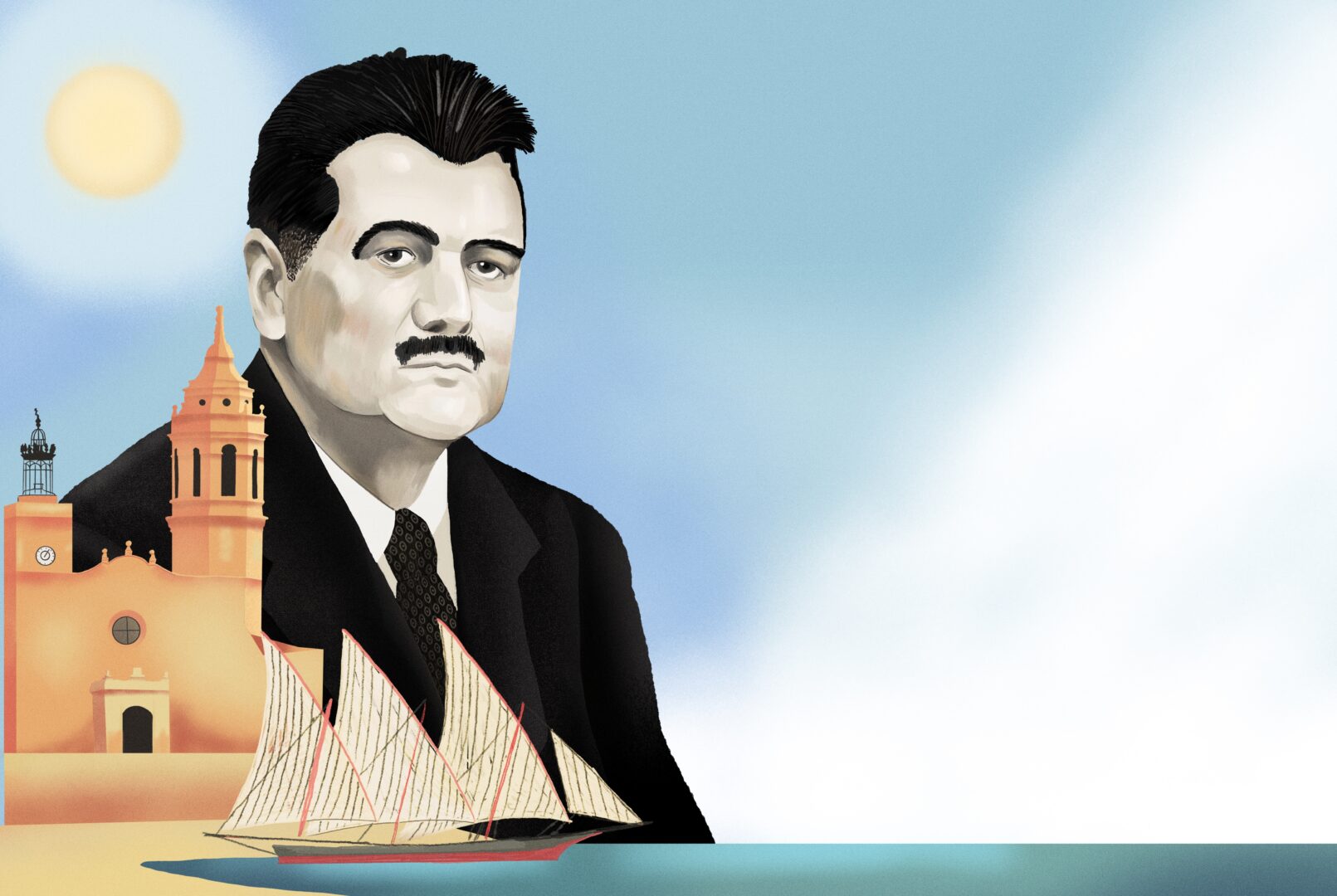
Only those born near the sea know how much a person’s coastal status can mark them. Emerencià Roig i Raventós, born in Sitges in 1881, despite trying to avoid his fate by graduating in Pharmacy in 1906, had to abandon the profession of apothecary due to health problems to dedicate himself to another activity much more suited to his Sitges origin: researching, documenting and portraying the Catalan maritime world. Son of the painter and landscape painter Joan Roig i Soler, Emerencià’s life from the beginning was developed next to the sea and the sand, the ports and the shipyards; the same navy that his father would first represent and he would later document.
Before it gets lost
And Emerencià Roig was neither a historian nor a journalist; he was a curious person. The solidity and consistency of his written works can only be understood in the mind of a person fascinated by a maritime world that delighted him for many reasons: because it was part of his roots, because they were the remnants of the Golden Age of the Catalan-built sailing navy —a name coined by Josep Ricart Giralt— and because he knew that those sailing ships had their days numbered in the face of the new ships built with steam engines and internal combustion engines. Faced with the threat of industrialization, Roig used words and engravings to prevent the oblivion of some vessels that were pivotal in the trajectory of the Catalan navy: this also means that they were pivotal in the history of Catalonia.
Roig’s maritime Catalonia
He largely achieved his goal: during the 1920s, Roig published different works that aimed to show what Catalan ships were like in the 19th century, but also everything that surrounded the Catalan coasts of Sitges, Blanes and Barcelona, from the people who kept the maritime environment alive to collecting all the characteristic words that nourished their chatter and structured the vision of the coastal world. With this motivation, he published major works in Catalan naval history, such as La pesca a Catalunya (1926), La marina catalana del vuit-cents (1929), El vocabulari de l’art de la navegação i de la pesca (1924) or Vocabulari de la pesca (1926). He also wrote Recull de termes aplegats en una terrisseria de Blanes (1925); Blanes Marítim (1924) and Sitges dels nostres avis (1934), published just a year before his death and dedicated to his father, Joan Roig.
After closing the pharmacy where he worked on the Rambla in Barcelona, Roig not only wrote books, but also collaborated in the press of the time. On July 30, 1919, he published his first article entitled “Els antics vailles catalans” in the magazine Catalunya Marítima , and shortly after he would begin writing for El Eco de Sitges , La Veu de Catalunya , La Marina Mercante or La Publicitat .
With the conviction that the Catalans could not let a portion of history that was disappearing, nor the people who were part of it, escape, Roig was not content with immortalizing what everyone could see from the outside, but went further, collecting oral testimonies and giving value to the most technical words, but also to the most mundane anecdotes. “He looked for captains, pilots and nostramos, good-natured enthusiasts of the trade, to be able to visit frigates, bric-a-bracs, pollacres and brigantines. Through these conversations he began to educate himself (…) about life on board, meteorology, nautical instruments, maneuvers and the complicated mechanism of the mast.”
This fragment, taken from the “Warning” of his book La marina del vuit-cents , reflects Emerencià Roig’s desire to x-ray the naval sector of the Principality in the most direct and real way possible, relying more on what people could say than on historical documents and archives. Roig could sense the future of those sailboats that so enchanted him, which promised a more secure future in exhibition halls than sailing the seas. In the same book, Emerencià Roig already warned us that “hung on the vaults of the hermitages as in a museum of naval art, one, when contemplating them, will think of their history, so golden” .
The sailor’s language
Emerencià Roig i Raventós was aware that it is with words that we shape the world, and that without them no phenomenon can be assimilated. Thus, his research on Catalan marine ethnology also led him to collect the words that articulated life by the sea. He and the folklorist Joan Amades Gelats (Barcelona, 1890-1959) published two collections in the pages of the IEC’s Butlletí de Dialectologia Catalana , a compilation of more than two hundred pages filled with words related to Catalan seafaring. Vocabulari de l’art de la navegação i de la pesca (1924) and Vocabulari de la pesca (1926) are the titles of the two publications, which forever recorded the words of our ancestors. Roig’s contribution to the Catalan-Valencian-Balearic Dictionary by Mossèn Alcover i F. de Borja Moll, which he rounded out with seafaring words, is also no less significant. To top it all off, in 1923 the Institute of Catalan Studies awarded him the award as the best author of maritime vocabulary.
Drawing as a legacy
In honor of his father, Emerencià not only used the pencil to write, but also to draw. The information that the Sitges native left for posterity is complemented by a large number of drawings and portraits of ships made by himself, which did not let a single word or stroke escape. With more scientific and ethnological than artistic pretensions, Emerencià Roig turned drawing into another artifact to capture the essence of what he had in front of him: in this way, every time he wrote down an explanation, he also released a small masterpiece. Made mainly with pencil or charcoal, sometimes with colors, his drawings show precisely what the last Catalan sailboats were like, while also revealing his artistic talent. Aware of the difficulties of mentally reproducing a ship and the limitations of photography in capturing details, drawing allowed him to control which part of the anatomy of a naval vessel to emphasize. Joan Roig did not want his children to be painters, but talent is not chosen and vocation cannot always be avoided.
Marine collection
Single and childless, on February 16, 1935 Emerencià Roig died at his home in Barcelona, in the Pedralbes neighborhood, at the age of fifty-three. Right after, his heir and brother, Josep Roig, donated to the Sitges City Council a collection of objects related to seafaring that Emerencià Roig had been compiling throughout his life and which, without knowing it, would form the first maritime museum in Catalonia at the Palau de Maricel in Sitges in 1936, under the name of “Collection of Catalan Seafaring”.
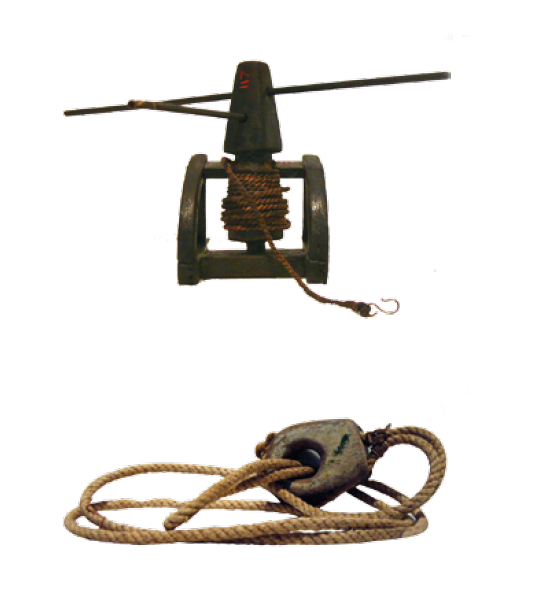
Roig’s interest in the ships of the Catalan coast was not only transformed into the published books and the drawings that complemented them, but he also gathered an entire collection of miniature ships and boats, some acquired and others made by himself, as well as paintings of sailboats by other artists. More than three hundred objects make up the exhibition, between ships of different types, elements of navigation or illustrations by Roig himself, a set of great value that tells us of a past history but of a current loss. Once again, Roig’s fascination, accompanied by a good intuition, led him to value before anyone else a historical legacy that few had time to capture, granting it a special place in the history of Catalan ethnology and our culture. Without museum pretensions, rather moved by curiosity, Emerencià Roig brought together in a few objects a historical heritage that his books had already narrated.
Looking to posterity, Emerencià Roig i Raventós leaves us a rich ethnological, documentary and artistic legacy that speaks to us of our ancestors and gives us lessons for the future: in a world where time passes vertiginously quickly, the importance of preserving collective heritage and traditional culture seems a duty to fulfill. A century has passed, but photography continues to have its limitations: there are aspects of our lives that are too difficult to explain, that require more effort to make them last, and Emerencià Roig i Raventós was aware of this.
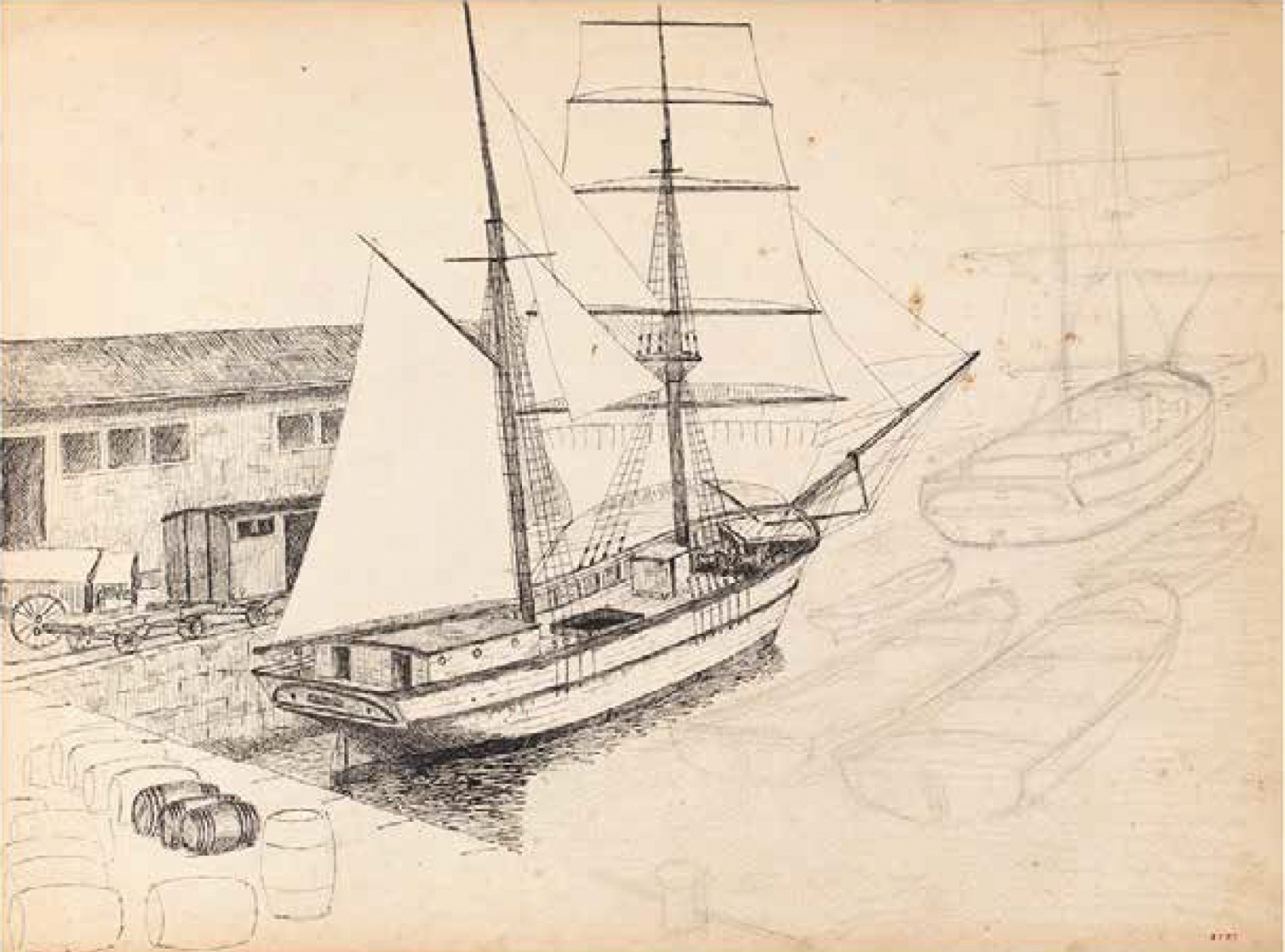 Unfinished drawing
by Emerencià Roig i Raventós. Collection: Santiago Rusiñol Popular Library.
Unfinished drawing
by Emerencià Roig i Raventós. Collection: Santiago Rusiñol Popular Library.
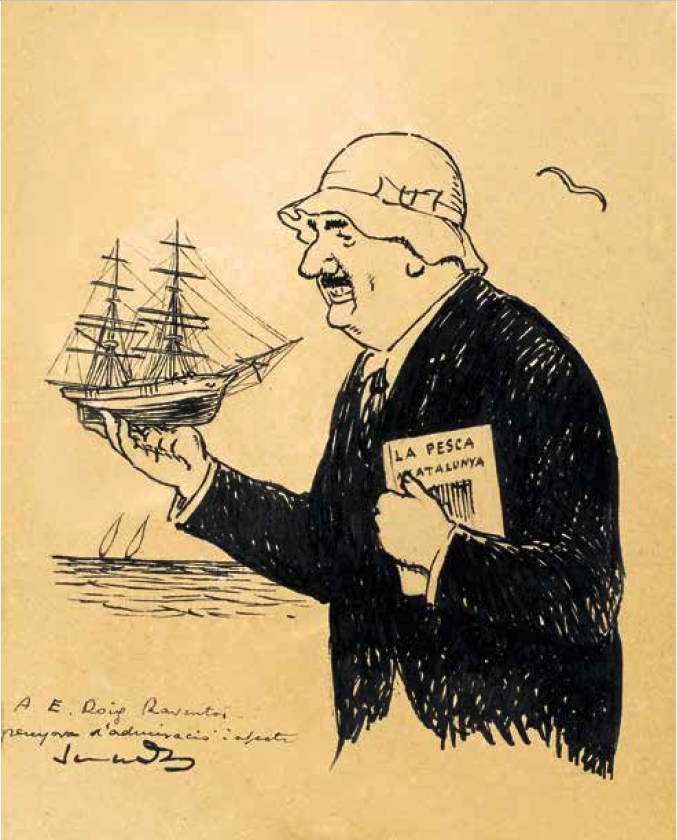 A Sea Wolf. Caricature of Emerencià Roig, work by Joan García Junceda. Collection: Sitges Museum.