“When I learned to flow was when I discovered who I really am”
You are a merchant marine captain and an ocean sailor. How do the two facets reinforce each other?
I thought it would be easy to combine them, but the truth is that it’s always been very hard for me. When I wanted to do an important regatta, I had to give up my work. Commercial shipping and ocean sailing, in practice, don’t really go together. But luckily I have always found work again when I finish. The sea, in one way or another, has always taken care of me.
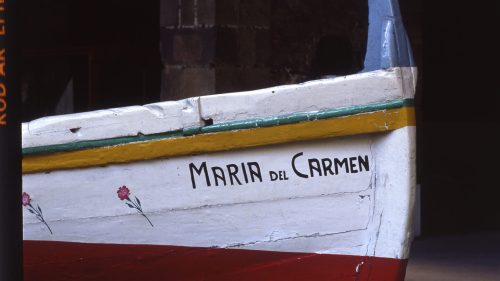
Your boat is called Peter Punk. Who is behind this name?
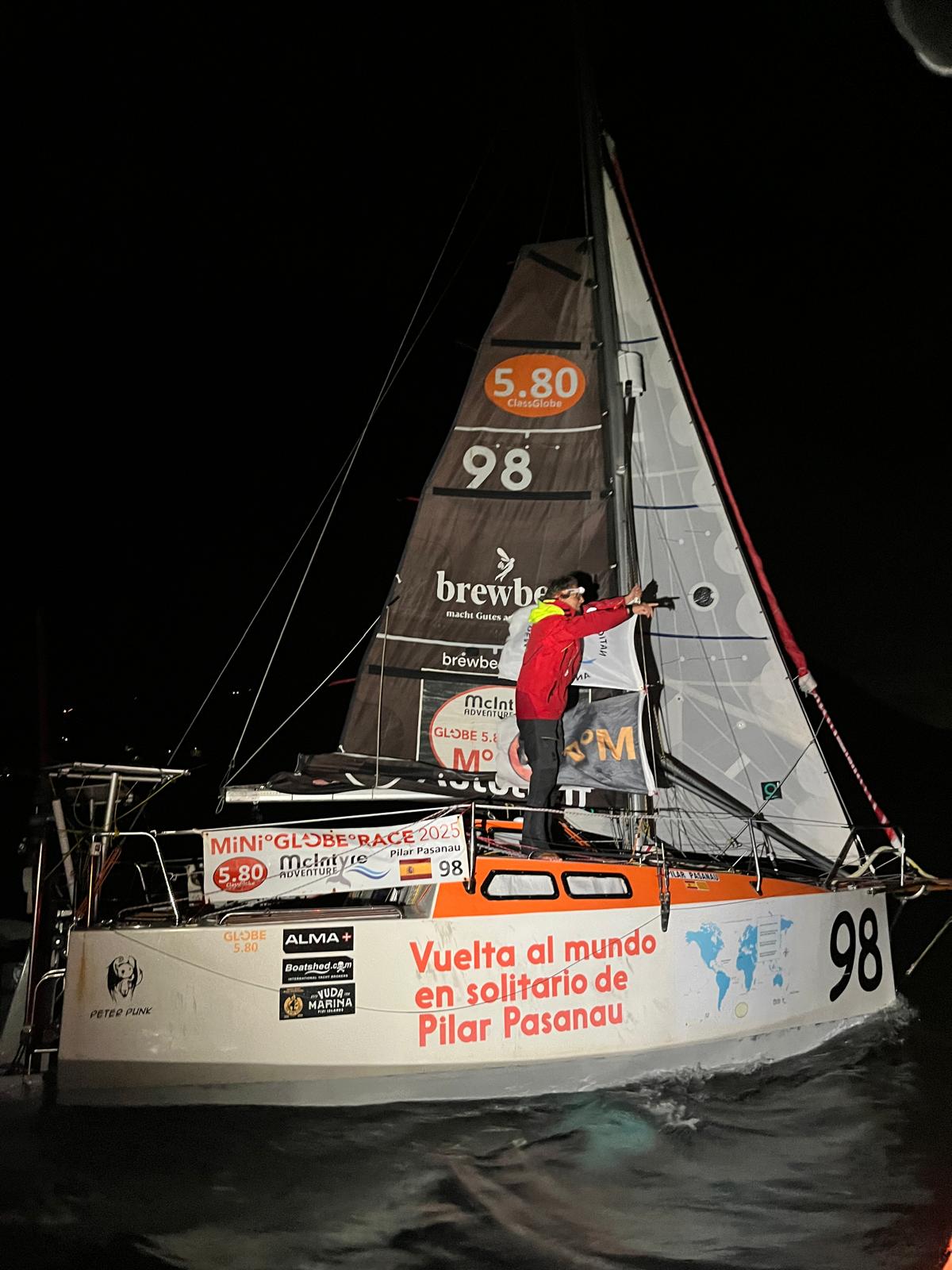
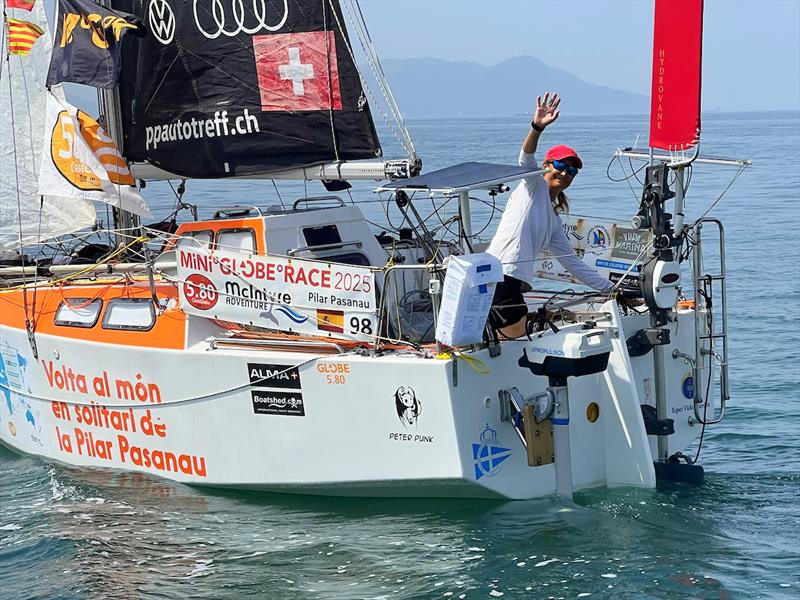
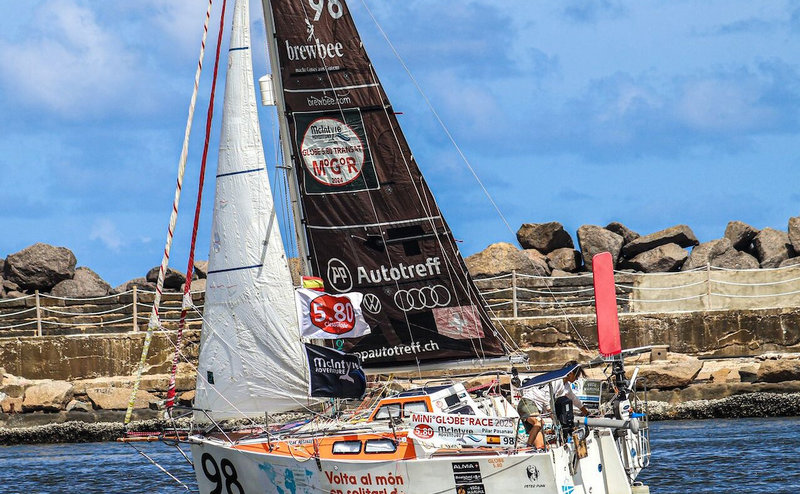
The name comes from Peter Pan, but I wanted to give it a bit more energy, a little more strength, so I went from Pan to Punk. Every boat I’ve sailed with has had the same name because, for me, Peter Punk is like a guardian angel, a companion inside me. When you sail alone, you need someone, not a physical person, but rather a mental one. I talk to the boat, even if I do it in my head. I talk to it, I listen to it, I notice when it’s going well or when something is wrong. So, with this name I’ve ended up taking with me everything I’ve learned in every race, in every stage of life. It’s as if all my experiences travel with me under this name.
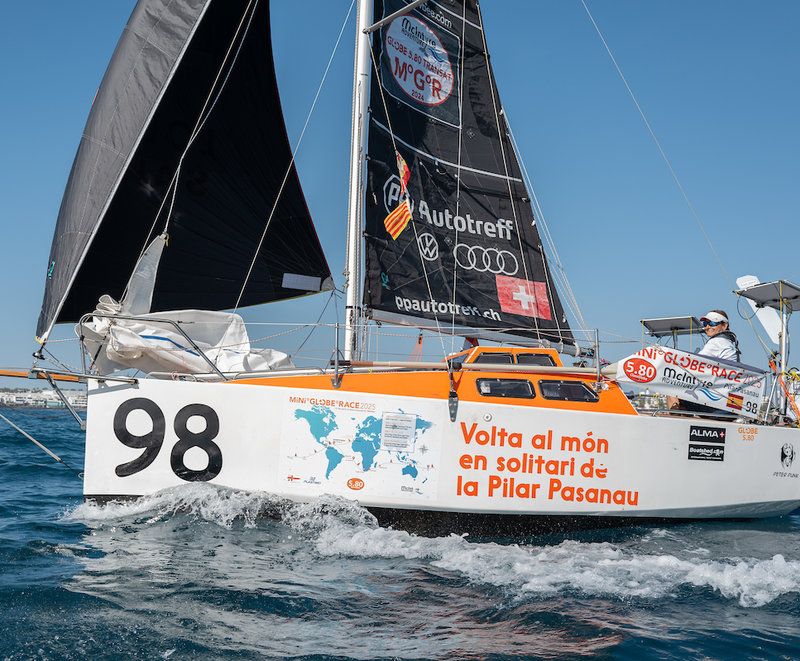
Five metres and eighty centimetres. How does the relationship between sailor and sea change on such a small boat?
If you take away the bulkhead and the non-living space, you’re left with about two cubic metres of habitable space. I slept inside for safety, though I spent a lot of time outside, in the cockpit, luckily in tropical and warm areas. You couldn’t stand up inside. In the Indian Ocean with its constant movement, I was tied up because the waves threw me against the bulkhead. Cooking was difficult, personal hygiene was hard… Even going to the toilet involved acrobatics. Yet your body and mind adapt. When you accept that this is going to be your life until the end of the race, you stop fighting it and everything becomes lighter.
Solo sailing involves weeks without any real human contact. How do you manage the loneliness?
I am an introvert by nature. My mother always said that she had four children and Pilar, because I always went to my room and she didn’t have to look after me. When I sail alone I don’t feel loneliness as an absence. On the contrary. At some point in the regatta I got to feel so comfortable that I no longer put on music, I didn’t seek the company of others when I arrived at port. It was as if nothing was missing. At first, in the initial stages, I was scared, I told myself that it was too hard. But when I arrived in Lanzarote and they told me that I had finished second in my division, I thought: “if I had a hard time, the others did too”. So I kept going.
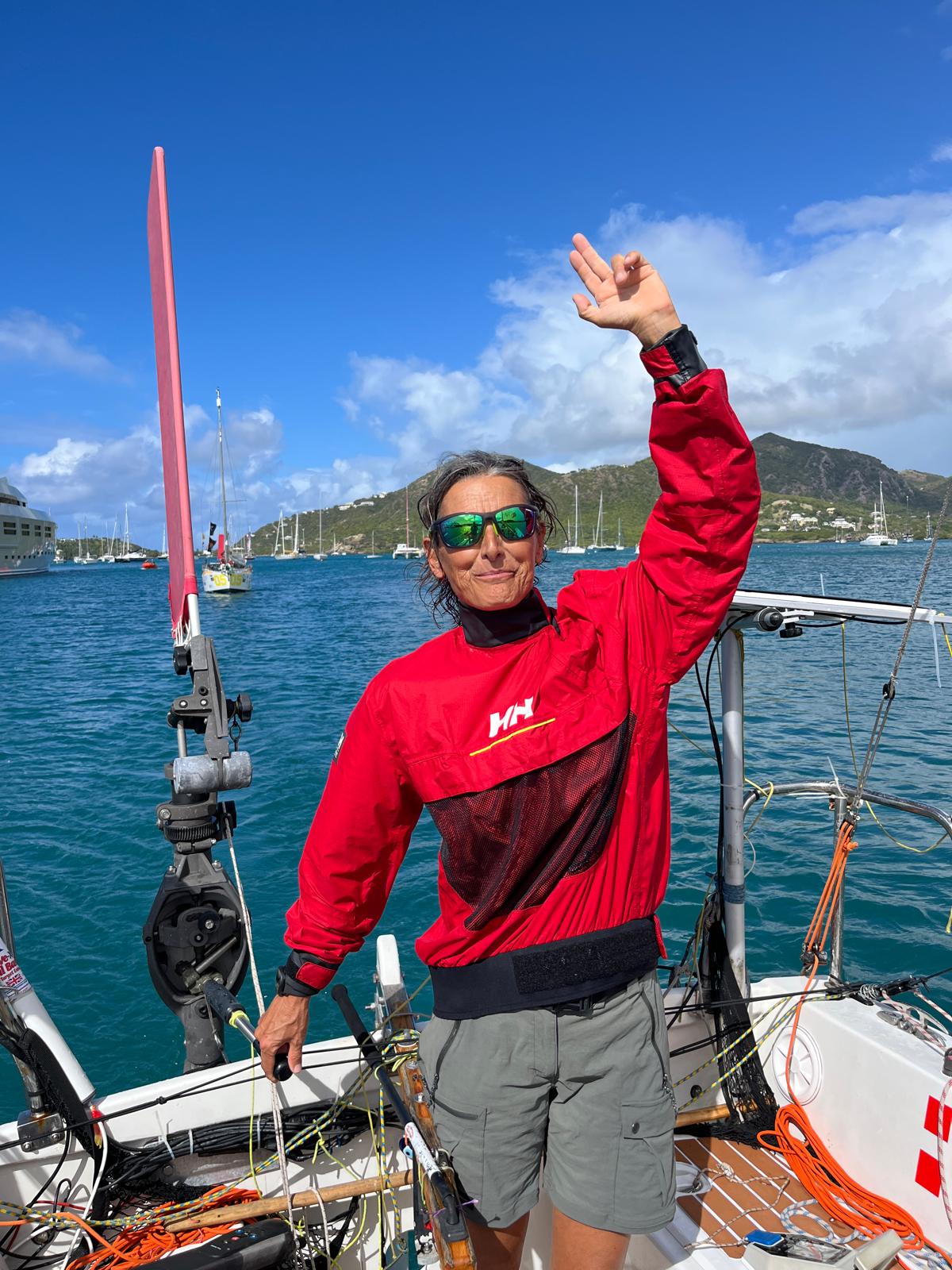
Upon arriving in Antigua, you said you were in a sweet spot, emotionally, mentally and physically speaking. Can the sea teach you things about yourself that would be impossible to learn on dry land?
I don’t want to compare the two worlds, but I can say that, because of the way I live, I’ve learned a lot more about life while sailing. When I learned to flow, which means nothing more than stopping fighting against what you can’t control, was when I discovered who I really am. I realised that I was doing better, that I was more comfortable, that the boat was opening up to me. Everything that the sea has given me, I now apply on land. Meditation, silence, the ability not to worry abotu what’s out of your control… Things that seem simple but that are actually quite difficult.
Your achievements set a standard for women in the maritime world. How have you experienced the issue of gender in the competition?
In the regatta, absolutely not. Among us I was simply another colleague, another sailor. At first there was competition, of course, but also a certain degree of mutual respect and support. Together with the other first two or three sailors, those of us who were always out in front, we would share tricks, advice, and experiences. We would warn each other about fishing areas, oil rigs, currents and the like. In that context, the distinction between men and women disappeared. In general, in my professional life, I have faced obstacles, but in the regatta the sea is the only judge.
Twenty-four thousand miles through many ports and highly diverse cultures. Which stop made the greatest impression on you?
The Cocos Islands, in the Indian Ocean; it’s a remote island, very remote from any continent. The food that arrives at the market is months out of date because supplies come every three or four months. There’s nothing fresh. But you walk down the street, you greet people and everyone answers you… It was like a village. They were very clear about where everything was done. Where the foreigners were partying, where they lived, where their own space was. That sense of community, of respect, of place struck me. The part where we were was idyllic. White sand, palm trees, sharks, manta rays and colourful fish. In that place I went to help collect plastics that arrive from the currents of Indonesia. There were tonnes of plastic. That contrast between the beauty of the place and what arrives there really makes you think.
What issue or emergency situation tested your seamanship skills to the limit?
When I left Panama for the Pacific, the electric pilot filled with water due to the rain and waves and was unusable. There is a photo on Instagram that shows everything rusty and damaged, beyond repair. I had to start up a wind pilot that I had bought right in Panama; it was a better product, but that I didn’t know how to operate it. I spent the entire Pacific testing it and learning about it until I became an expert. In the end I was able to sail as fast as my companions who had electric pilots. It was perhaps the best school of the entire regatta.
You embody a long tradition of seafarers. Is sailing alone a way to connect with that history?
I hadn’t thought of it in those terms, but when you’re alone in the ocean, without sophisticated positioning technology, and you’re dependent on the wind and the weather, you realise that you’re a tiny dot in something vast. You also understand that many people, for centuries, entrusted their lives to boats not much bigger than mine, without the tools that I have. Maybe there is a certain connection, a continuity in that act of going out to sea and trusting in it. It’s nature and you realise how tiny you can become. For me, meditation and arhatic yoga were fundamental to keeping me centered and connected to everything around me.
Traveling the world’s great oceans, what are your direct observations about the state of the marine environment?
I expected to see a lot more plastic than I did. In the North Atlantic there was a lot less than on previous crossings, which was a nice surprise. However, what is real and very serious are microplastics. In other words, the plastic that degraded into small particles that you no longer see but that does a lot of harm. I’ve already mentioned that in the Cocos Islands, on the side where the currents from Indonesia arrive, the quantities of plastic were impressive. We went to help collect them. The problem is that in Indonesia there are no waste collection systems or sewage systems, and everything goes into the sea. The currents carry it there. There is a very clear connection between poverty, lack of infrastructure and the state of the oceans.
You said: “After so many months of sailing, my mind is still sailing.” How are you coping with the return?
It was a shock. Arriving from Antigua, which is a small and quiet island, and landing in Barcelona… The people, the noise, the traffic, the speed of everything… It all seemed invasive to me. My circle of safety had become quite narrow, and suddenly finding myself surrounded by a lot of people caused me a great deal of anxiety. In certain situations with a lot of people, I had to stop, step away for five minutes and go back in. But I’ve gained a connection with myself that I haven’t lost. When I want to, I know how to get back there. Meditation has given me this tool. Finding that state of balance no longer depends on the ocean, but on myself.
What’s next on the horizon?
Now I have to plug the financial hole left by an adventure like this. I work for the Barcelona Capital Nàutica Foundation, running training boats, teaching merchant marine professionals, running regatta courses and more. All freelancers have to combine jobs. I have some things in mind for the long term, but for now I’m keeping them to myself. First I need to recover.