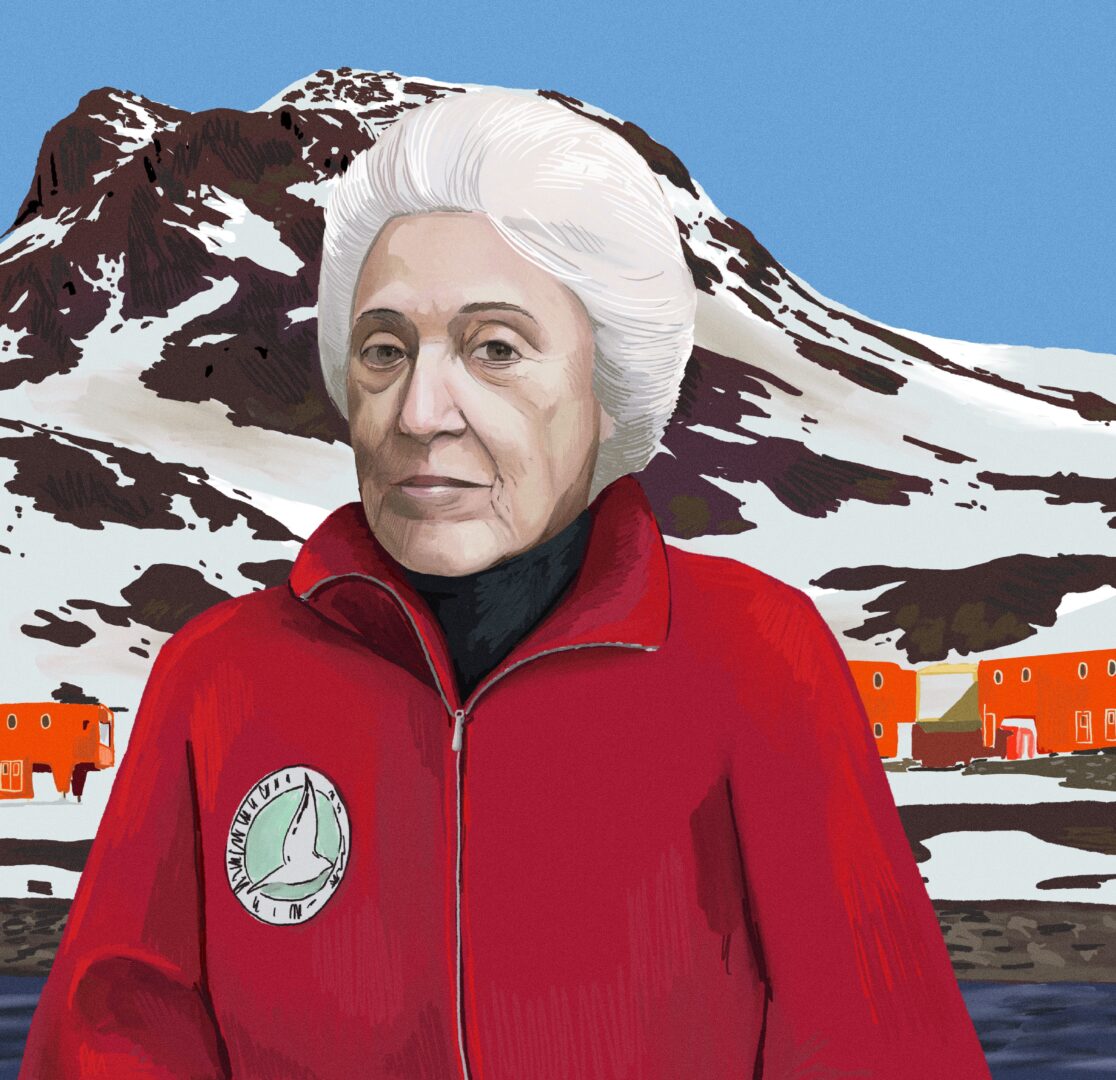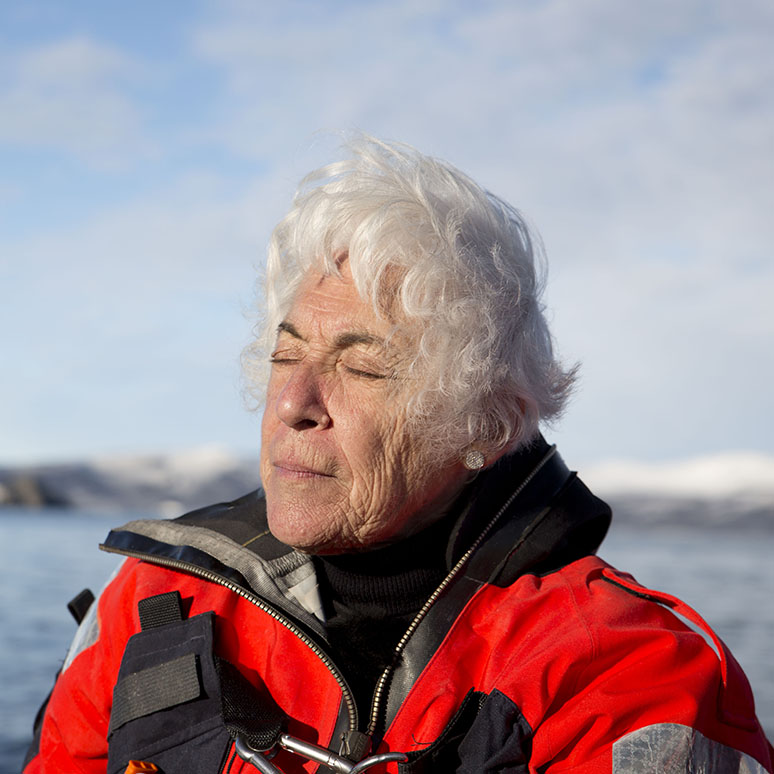
On 2 February 2026, Barcelona bid farewell to Josefina Castellví i Piulachs (Barcelona, 1935-2026), a resident of the city for ninety years and a scientist renowned for being the first woman to lead a scientific expedition to Antarctica.
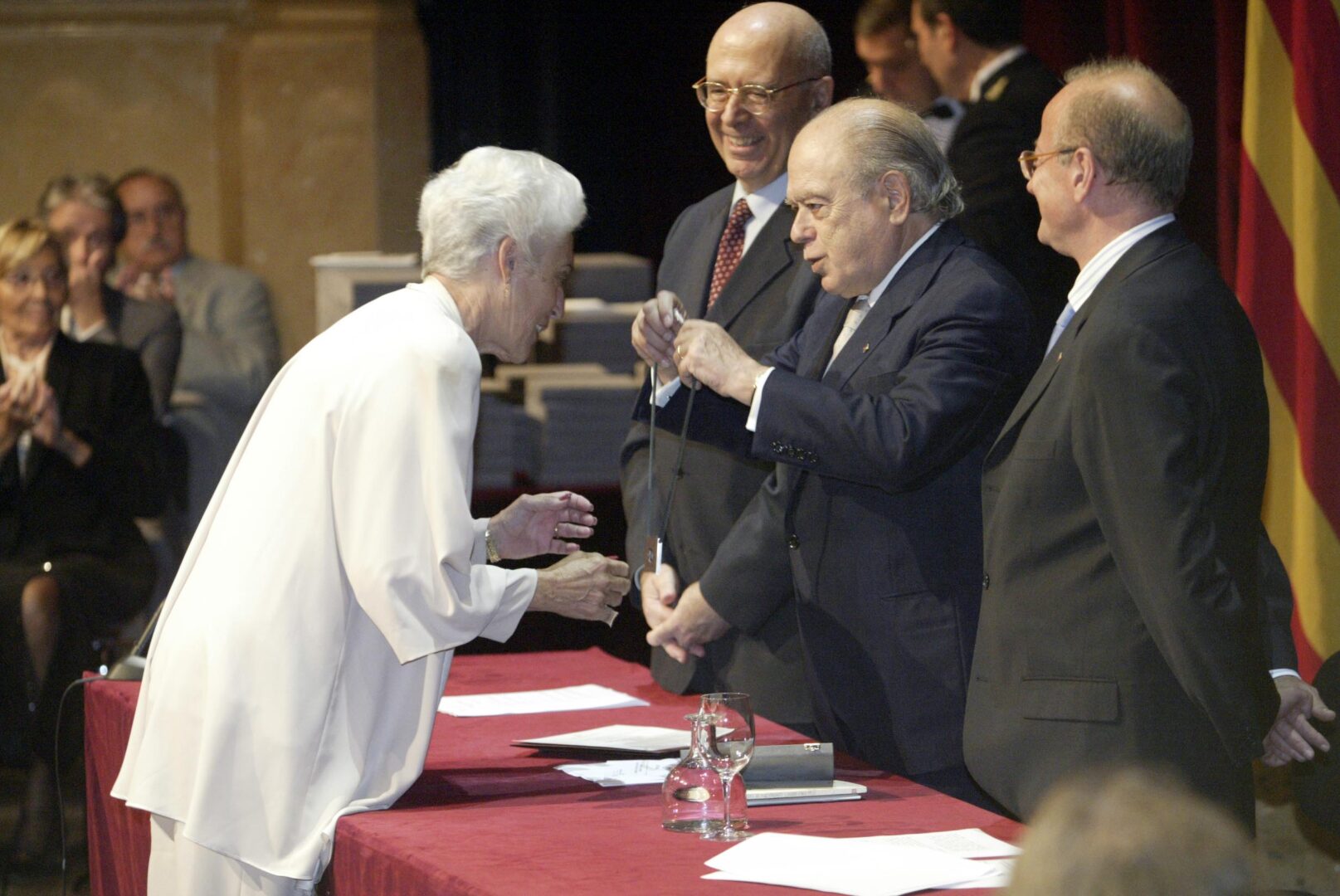
A biologist and oceanologist, Pepita, as she was often called, dedicated her life to science and research, published more than seventy scientific works and was awarded some of the highest distinctions, including the Creu de Sant Jordi in 2003 and the Gold Medal of the Government of Catalonia in 2021. The white continent made such an impact on her that she herself claimed that her life was split into two parts: the one before Antarctica and the one after.
Background and studies
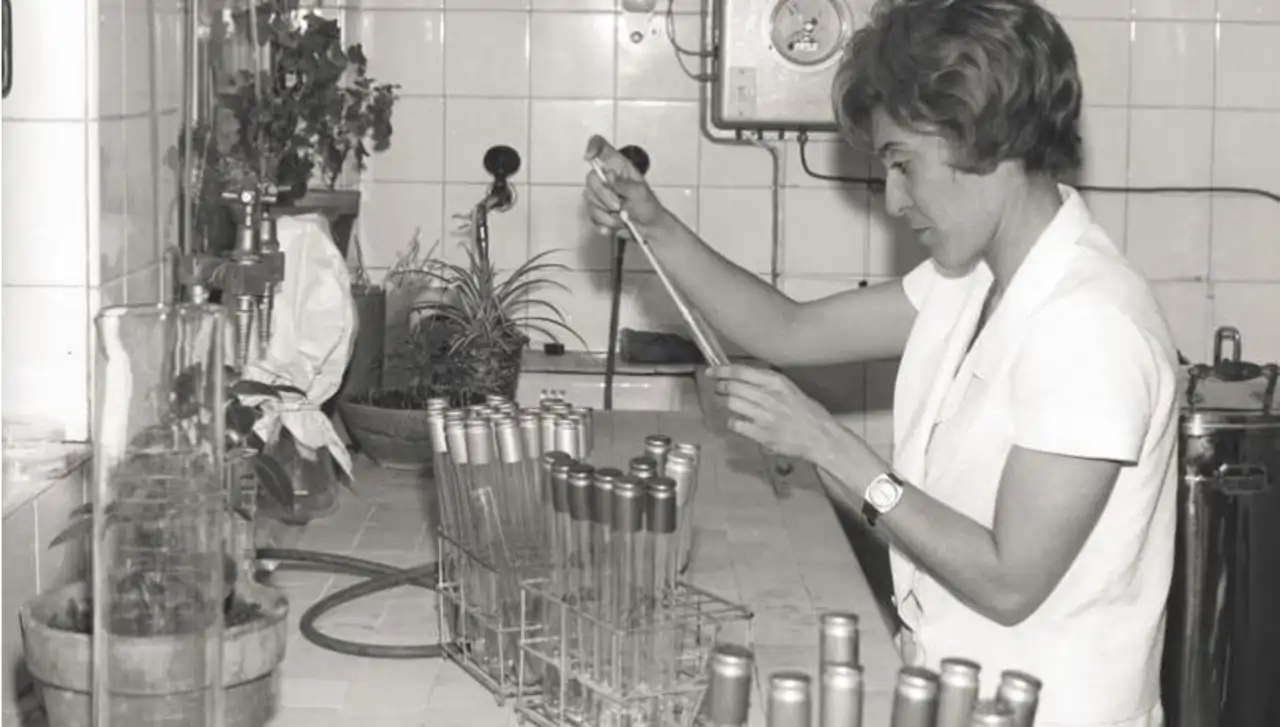
Josefina Castellví i Piulachs was born in Barcelona’s Eixample district in 1935, a neighbourhood where she lived her entire life except for the seasons she spent on the other side of the world. The daughter of a doctor and a housewife, in more than one interview the scientist explained that her devotion to nature started during her childhood, during the summer holidays in Castelldefels: “I grew up immersed in the Mediterranean, and my great pastimes in the summer were going fishing and to the beach”, she said in an interview with Els matins on TV3 in 2013. This curiosity towards nature and parents who were determined that their daughter study led Castellví to graduate in Biological Sciences from the University of Barcelona in 1957. Right after that she went on a scholarship to the Sorbonne in Paris to specialise in marine bacteriology, a subject matter that was not taught in Spain. Upon her return, Castellví obtained her doctorate at the University of Barcelona in 1969 and began working as a fellow at the Institute of Fisheries Research, currently the Barcelona Institute of Marine Sciences (ICM) – Spanish National Research Council. Despite the reluctance of some men who did not accept the presence of a woman, she would begin to participate in oceanographic expeditions.
Arrival in Antarctica
At the ICM, Josefina Castellví met Antoni Ballester, an oceanographer and chemist who had been petitioning the Spanish government for two decades for the country to participate in scientific expeditions to Antarctica. Despite the rejections from the political sector, Ballester began to establish contacts with researchers from other countries in order to make progress with what he was convinced would be the future Spanish base at the southern tip of the planet. In 1984, Ballester, Castellví and fellow scientist Marta Estrada managed to make the first expedition to Antarctica as guests of the Argentine campaign. That trip would forever mark Pepita’s career, who from that moment on would direct her research towards the frozen continent.
Political support would not arrive until the 1980s, following the renewal of the Antarctic Treaty, when Spain showed interest in taking part in it. With this aim in mind, the institutions promoted the Antarctic scientific project, which Ballester directed and which included Castellví. “As both a young person and a woman, no one paid any attention to me until you trusted me,” Castellví would later recall.
In December 1986, Antoni Ballester, Josefina Castellví, Joan Rovira and Agustí Julià travelled to Livingston Island to study the terrain where the future Spanish Antarctic base would be installed. With scarce resources and the help of Polish scientists, a year later the Spanish Antarctic Base Joan Carles I became a reality. Unfortunately, in the spring of 1988, months after the inauguration, Ballester suffered a stroke that forced him to withdraw from the project. Faced with the loss of his leader, Josefina Castellví took over the operation, becoming the first woman in history to direct an Antarctic scientific base, a position she held between 1989 and 1995. It was no easy task, since in reality she was the one doing all the work behind the Spanish Antarctic Campaign. Expeditions, logistics, base maintenance and shopping at the supermarket to survive the three months of the expedition were tasks that she managed practically on her own.
Between 1994 and 1995, once her Antarctic expeditions were over, Josefina would become director of the Institute of Marine Sciences. She returned shortly after, in 2000, although she continued to be involved for many years in raising awareness and advocating for the environment and the Antarctic continent.
Antoni Ballester, a special friendship
Although she did not have Antoni with her on the expeditions, Pepita recalled on more than one occasion that the fact that she had managed to go to Antarctica was thanks to him. In 2013 Josefina returned to Antarctica to record the documentary Els records glaçats (Frozen Memories). directed by Albert Solé, a short film that commemorated the 25th anniversary of the Spanish Antarctic Base. She had not been there for eighteen years. The film combines images from the trip to the southern polar region with others that the scientist was able to record during her previous excursions to the frozen continent. The voice-over that drives the thread of the documentary is Castellví speaking to Ballester, in an open letter full of gratitude, nostalgia and a lot of emotion. The film has sequences of the two scientists together, with her walking him in his wheelchair through the streets of Barcelona, reading him poetry and talking on the phone once she is on the other side of the world. Together they reminisce about the past, saddened by what they have left behind but satisfied that they still have each other: a relationship of mutual respect and admiration that lasted for more than three decades.
A heroic woman
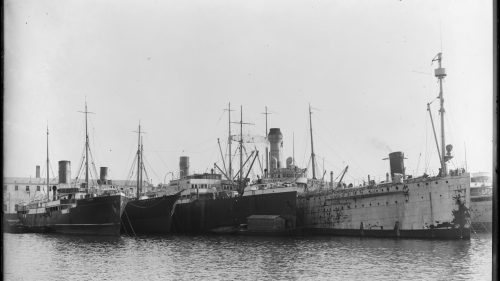
Over the years we tend to normalise historical endeavours, but if we stop to think about it for two seconds, they are extraordinary and true examples of courage. Pepita’s case is one of them. Josefina Castellví traveled to Antarctica more than ten times, most of them to stay there for more than three months. Each time the expedition took place, she had to go to South America, to Chile or Argentina, from where she took a ship that crossed the so-called Drake Passage, the maritime stretch that separates the Americas from Antarctica, and which has earned the reputation of having some of the most turbulent waters in the world. The 1991 voyage aboard the ship Heweliusz was like “being inside a salt shaker rattled by a giant hand,” as she recounted in the book Yo he vivido en la Antártida (I Have Lived in Antarctica), written by Castellví in 1995 in which she shares her experience on the frozen continent. If just getting to Antarctica was already a daunting experience, life there was not always pleasant either. In the book, Castellví shares dangerous moments in which her own life and those of her companions were in danger. From sailing surrounded by whales that with a simple blow of their tails would have caused them to sink, to heading in a boat under the grotto of an iceberg and having it collapse shortly after they had left it. In the book, she confesses that, before each expedition, she anticipated the tragedy by leaving “everything that I thought my [relatives] would need if I did not return” in visible places. However, Castellví would be annoyed if we said that not suffering any accidents was a matter of luck, since in one of the last interviews she gave, on the Noms propis programme on La 2 in 2016, she assured that the teams “worked hard to be lucky”, and that many expeditions were suspended if their safety was not guaranteed.
Despite the adversities, Castellví also showed in both the book and the documentary that she had a keen sense of humour. A scene in the film follows Pepita during the medical check-up she had to undergo before travelling to Antarctica. When the doctor asks her if she does any sport, she answers seriously “I don’t know if you can call it sport, but I have a very big garden.” Once in Antarctica, she and another colleague made a video call with a school to talk about their stay at the South Pole. When introducing herself to the children, she addressed her age ironically: “You may be surprised to see a grandmother with white hair in Antarctica, but it perfectly matches the white of the ice”.
A compassionate scientific legacy
Josefina Castellví did not like being recognised as a pioneer because she believed it did not do justice to the explorers who had reached Antarctica before her. She did not define herself as an adventurer either, she simply believed that her work had forced her to move. Even so, the Barcelona native did acknowledge that she opened doors: to the women who entered the Institute of Marine Sciences after her and to the researchers who would receive the institutional support that her team lacked when they began their explorations on the frozen continent.
Therefore, Josefina Castellví not only leaves an immense scientific legacy, which includes more than seventy publications, but also the compassion and ethics with which her scientific work was carried out are also a valuable gift. Recalling Castellví, Valentí Sellarès, the current director of the Institute of Marine Sciences, said that she had demonstrated that quality research “requires determination and a compassionate vision that she knew how to convey until the very end”. Over the years, artists and photographers asked to accompany her to Antarctica, but she always rejected their proposals because she considered that people went to the continent to work, not to go for a stroll.
She had such appreciation and respect for the natural environment that in the book she confessed that “with each new expedition I feared that I would become numb to Antarctica’s beauty”, revealing how she feared that she would end up normalising a landscape that “belonged to no one and was the heritage of everyone”.
It is not a bold statement to say that Josefina Castellví dedicated her life to science; she herself reflects on this fact in her documentary: “I often ask myself what all this great effort of scientific research is for; I suppose it is as much as asking myself what my life is for”. In an interview, when asked if she had sacrificed anything in her life for her work, she said no. In the same interview with La 2, when she was already 81 years old, she said: “I have not made any sacrifices, none at all. I have asked myself many times what I have had to give up, and I have not given up anything. I suppose they tell me that because now I live alone, I have no husband and I have no children. […] For ten years, when I was leaving, the last phone call was to my sister, to tell her: ‘listen to me, you will not hear from me for four months, don’t worry’. I wanted to be free from chains, obstacles, ties that would make me think about here. And it didn’t go badly for me, I enjoyed it a lot.”
She was a woman fully satisfied with the path her life had taken, even if it did not follow what others might have expected. The conclusion is clear: “I can say with all certainty that I have lived in Antarctica. And I am certain that I can live off its memories for the rest of my life.”