When we talk about the destruction of the Costa Brava, the image that often comes to mind is one of an excavator opening a new housing development on a cliff, a hotel planned in the middle of a coastal forest or a massive villa occupying a stretch of virgin coast. For decades, this has been the great battlefront of the environmental movement on Girona’s coast. And it continues to be so. However, today there is another Costa Brava under threat that often goes unnoticed; asilent destruction, invisible to most people, that takes place underwater. This slow but constant deterioration affects some of the most valuable ecosystems in the Mediterranean.
Shining a light on the issue
This is where SOS Costa Brava has started to broaden the focus of its struggle. Created in 2018 as a space for coordination between local platforms to defend the area, the federation was founded to stand up to urban speculation and the rapid degradation of the Girona coastline. Within just a few years, it has become one of the main environmental voices in the region, filing legal actions, leading campaigns to denounce excesses, mobilising local residents and monitoring dozens of urban projects.
From opposition to the massive villa in El Golfet to the defense of the coastal walking paths, including the preservation of coastal pine forests, historic gardens and urban sectors projected on forest areas, the federation has contributed to placing the debate on the future of the Costa Brava at the centre of public opinion. Yet the members of SOS Costa Brava have long warned that the pressure on the region does not end on land.
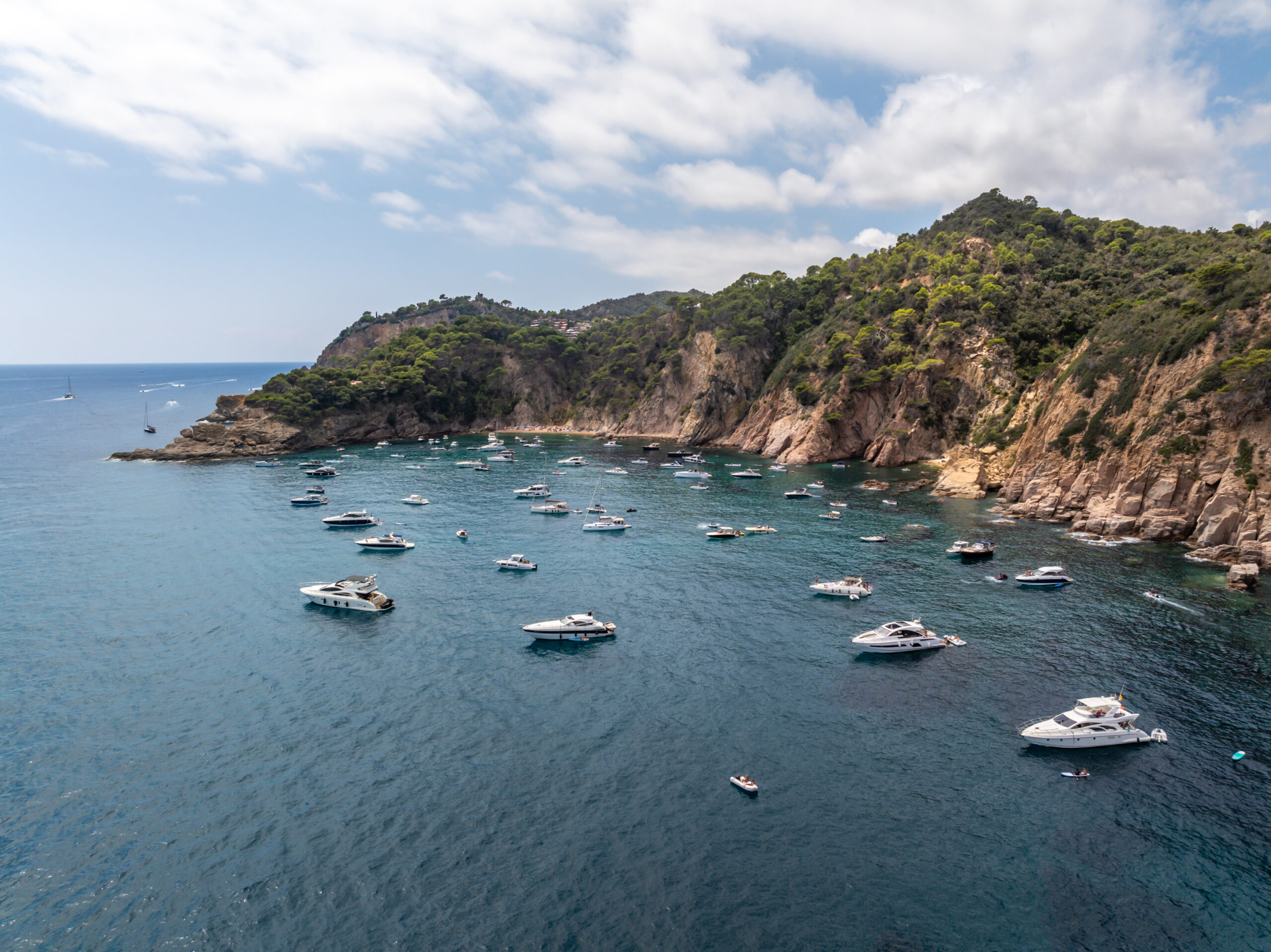
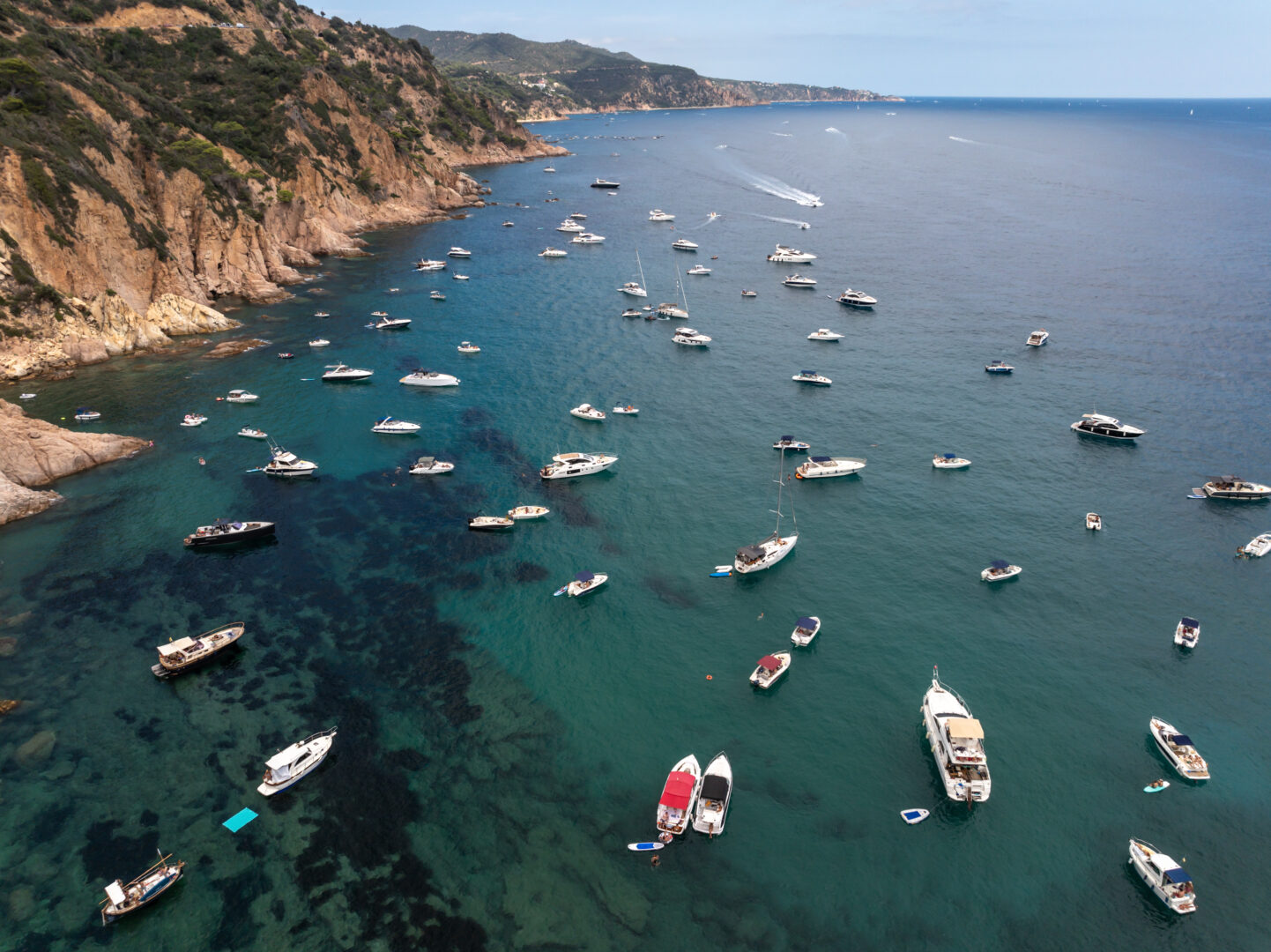
The Costa Brava is also experiencing destruction underwater, often in a much less visible way. The federation’s Marine Environment Commission is working to put this right. This change in perspective has been gaining momentum in recent years. While the main conflict revolved around cement and coastal urban development for decades, today mass tourism is also happening on the sea. The number of recreational boats has grown exponentially while the coves, seabeds and bathing areas are experiencing increasing pressure.
More than a thousand new recreational boats are registered in Catalonia every year. Various estimates place the total number of boats between 35,000 and 40,000, with a significant concentration on the Girona coast during the summer months. The consequences of this pressure are particularly visible on the Posidonia oceanica.
Posidonia in danger
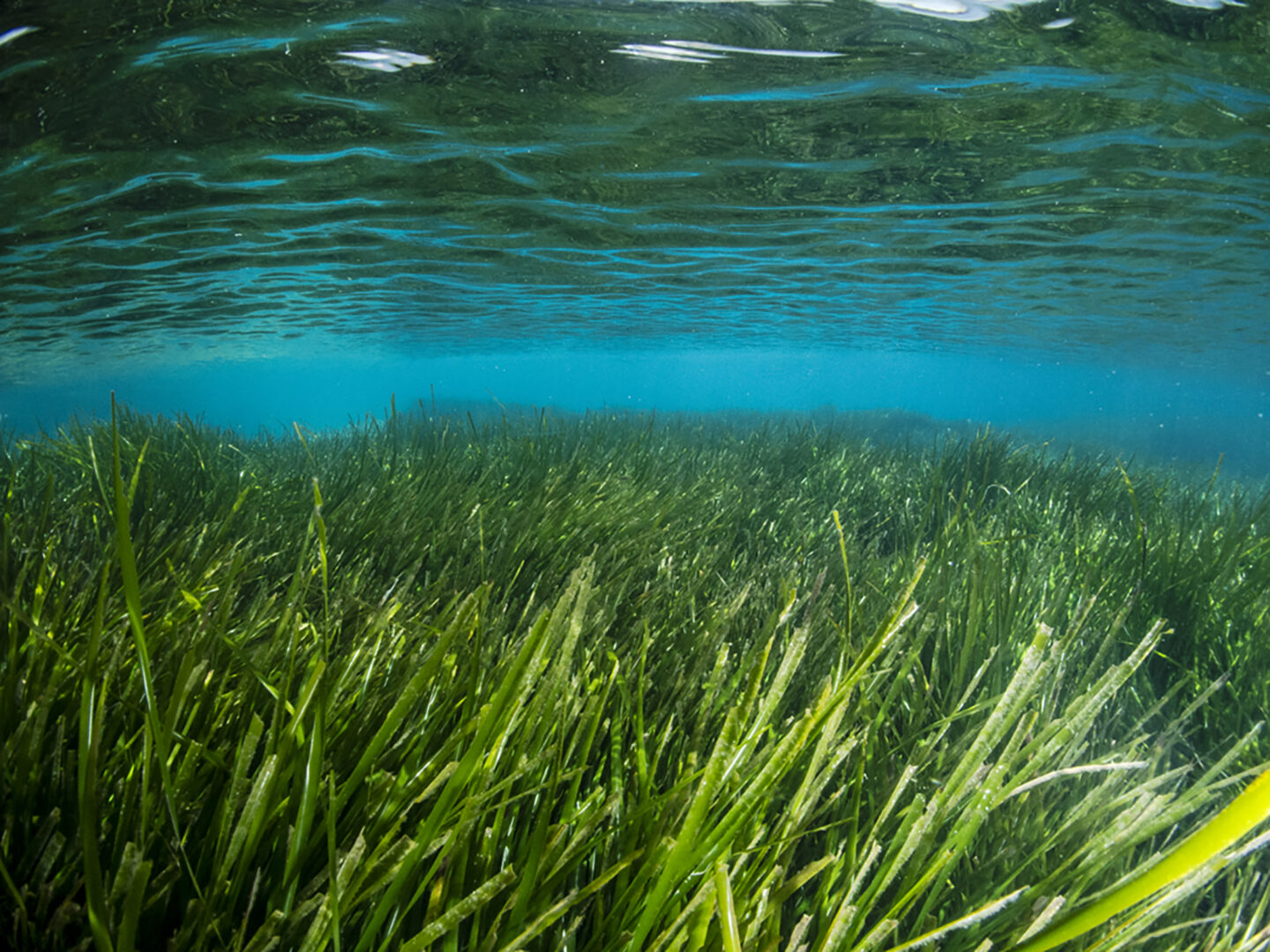
Posidonia is not seaweed. It is a marine plant native to the Mediterranean that forms veritable underwater forests. In Catalonia it occupies more than 9,000 hectares and carries out essential ecological functions: it produces oxygen, captures carbon dioxide, protects beaches from erosion and serves as a habitat for thousands of species. It is also an extremely fragile ecosystem. Anchors and boat chains can rip out its roots and open scars on the underwater meadows. The main problem is that these ecosystems recover very slowly. In some cases, they can take decades or even centuries to regenerate.
Posidonia is the impact indicator and, when it disappears, it means that the ecological limit has already been exceeded. The situation is particularly worrying on the Costa Brava. According to various scientific estimates, nearly 40% of the posidonia meadows have already been lost on the Girona coast. In areas with high levels of tourist pressure, degradation may exceed 85%.
Despite this, the problem remains invisible to a large part of the population. When a coastal forest disappears, everyone sees it, but when an underwater forest disappears, practically no one notices it. This invisibility is precisely one of the elements that SOS Costa Brava wants to combat with the campaign “Let’s protect our vital green spaces”. The initiative was founded with a dual aim: to document the impact suffered by the marine ecosystems of the Costa Brava and to pressure the administrations to enforce a regulation which, according to the federation, is systematically ignored today.
Lack of control
Regulations exist; anchoring boats on posidonia is illegal. The Government of Catalonia offers the FanCat application to identify posidonia meadows and warn boats of sensitive areas. There are also limitations on safety distances with respect to swimmers as well as vulnerable activities. The information exists, but the lack of control is the problem. The law exists. What does not exist is someone to enforce it. SOS Costa Brava emphasises shared responsibility. On the one hand are the boats that fail to comply with the regulations. On the other are the public administrations, which have the legal obligation to act.
Many municipalities do not install the necessary demarcation buoys, do not utilise ecological anchoring systems, do not adequately mark protected areas and do not impose fines for the infractions that occur season after season. SOS Costa Brava also criticises the lack of surveillance resources by the Government of Catalonia as well as the absence of a coordinated strategy for coastal protection: without buoys, surveillance and sanctions, regulations are worthless.
However, the problem does not only affect marine biodiversity. It also has direct consequences for people’s safety. The regulations establish that swimming areas in unmarked zones extend up to 200 metres from any beach or cove and up to 50 metres from the rest of the rocky coastline. These areas should be reserved for people in the water and activities such as swimming, snorkeling, kayaking and paddle surfing.
However, the reality is very different. In many coves on the Costa Brava, these areas have become true anchorage sites. Boats anchored or in constant motion share space with swimmers, snorkelers and divers. These are not isolated cases, it is a situation that happens every summer. The Marine Environment Commission of SOS Costa Brava has documented several critical points along the coastline.
Let’s protect our vital green spaces
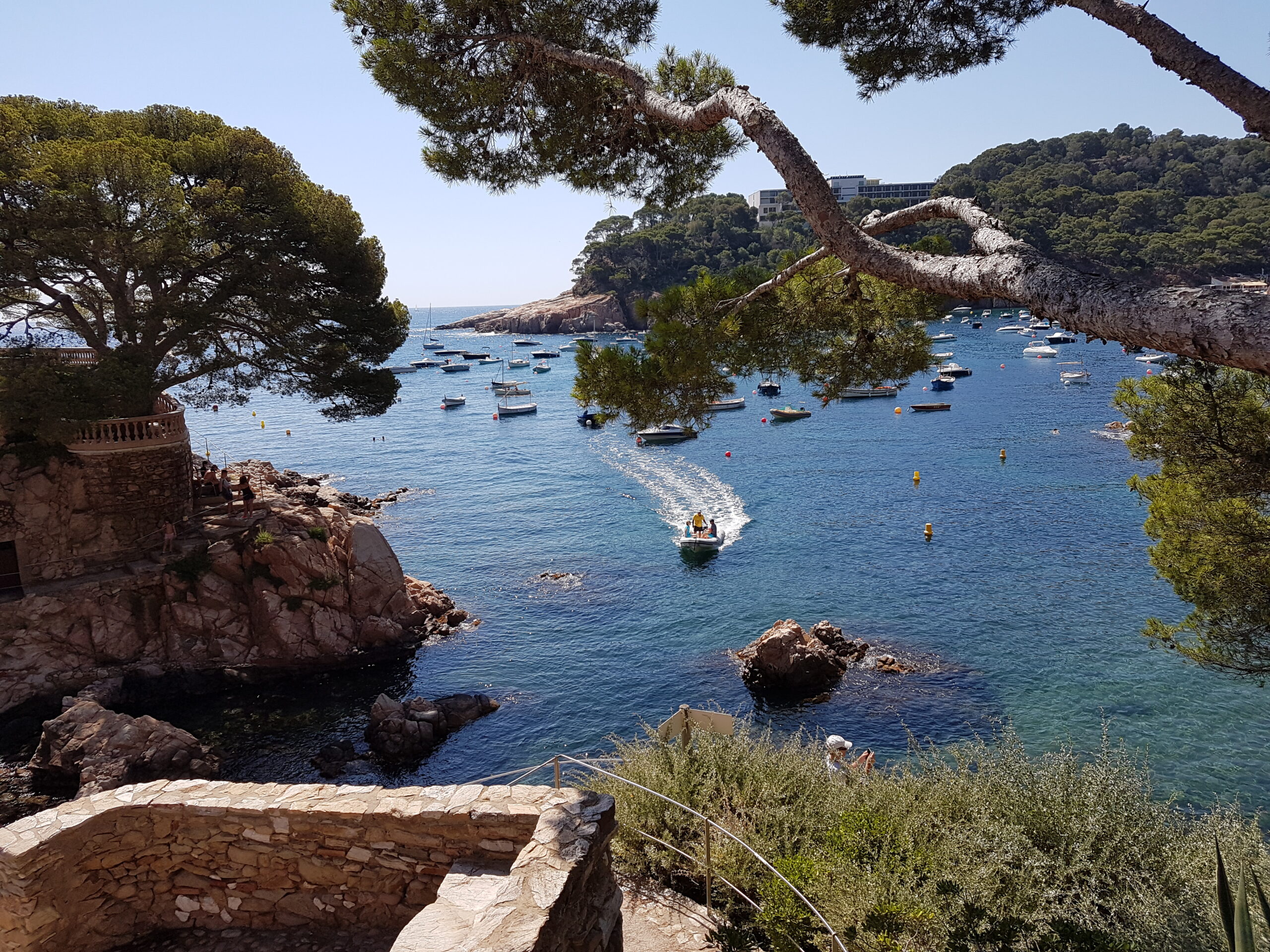
In the bay of El Golfet, in Palafrugell, boats anchor in particularly sensitive areas. At the back of the port of Llafranc, ecologically important underwater meadows continue to suffer the impact of anchoring. In the bay of Palamós, forests of Cymodocea and posidonia coexist with boats anchored a few metres away. In Cala Garbet, in Alt Empordà, and Cala Futadera, in Tossa de Mar, the same pattern is repeated in some of the best preserved natural spaces on the coast. For SOS Costa Brava, these cases are not exceptions, they are examples of a model of overcrowding that has become normal. It is precisely in the face of this normalisation that the federation wants to promote a collective response.
The campaign “Let’s protect our vital green spaces” aims to raise funds to organise three monitoring days during the summer of 2026 and produce a short documentary about the impact suffered by the underwater forests along the Costa Brava. The days will be open to civic participation and will serve to document violations, collect evidence and file complaints with the competent administrations. The idea is to combine environmental action, awareness-raising and institutional pressure.
This model of civic action also represents an evolution in the forms of environmental activism on the Costa Brava. While the first major ecological struggles on the coast focused on avoiding urban development, roads and real estate projects, today the conflict is much broader and more complex. It includes managing tourism, the intensive use of the coast, the overcrowding of the sea and the increasing fragility of marine ecosystems in the face of the climate crisis.
It also involves rethinking society’s relationship with the region. For years we have turned our backs to the sea, we have become accustomed to looking at the Costa Brava only from land. For this reason, the campaign wants to showcase a reality that is often hidden beneath the surface.
Defending the Costa Brava is no longer just about avoiding new buildings or preserving coastal pine forests, it also involves protecting underwater ecosystems, guaranteeing the safety of swimming areas and limiting tourist pressure that exceeds the ecological capacity of the coast each and every summer.
In this sense, SOS Costa Brava considers that the posidonia has become a symbol, an indicator of the extent to which the Mediterranean is reaching its limit, and also a reminder that some impacts only become visible when the damage is already irreversible. Therefore, protecting the posidonia is much more than protecting a marine plant, it means protecting the sea. And protecting the sea is protecting what allows us to live.