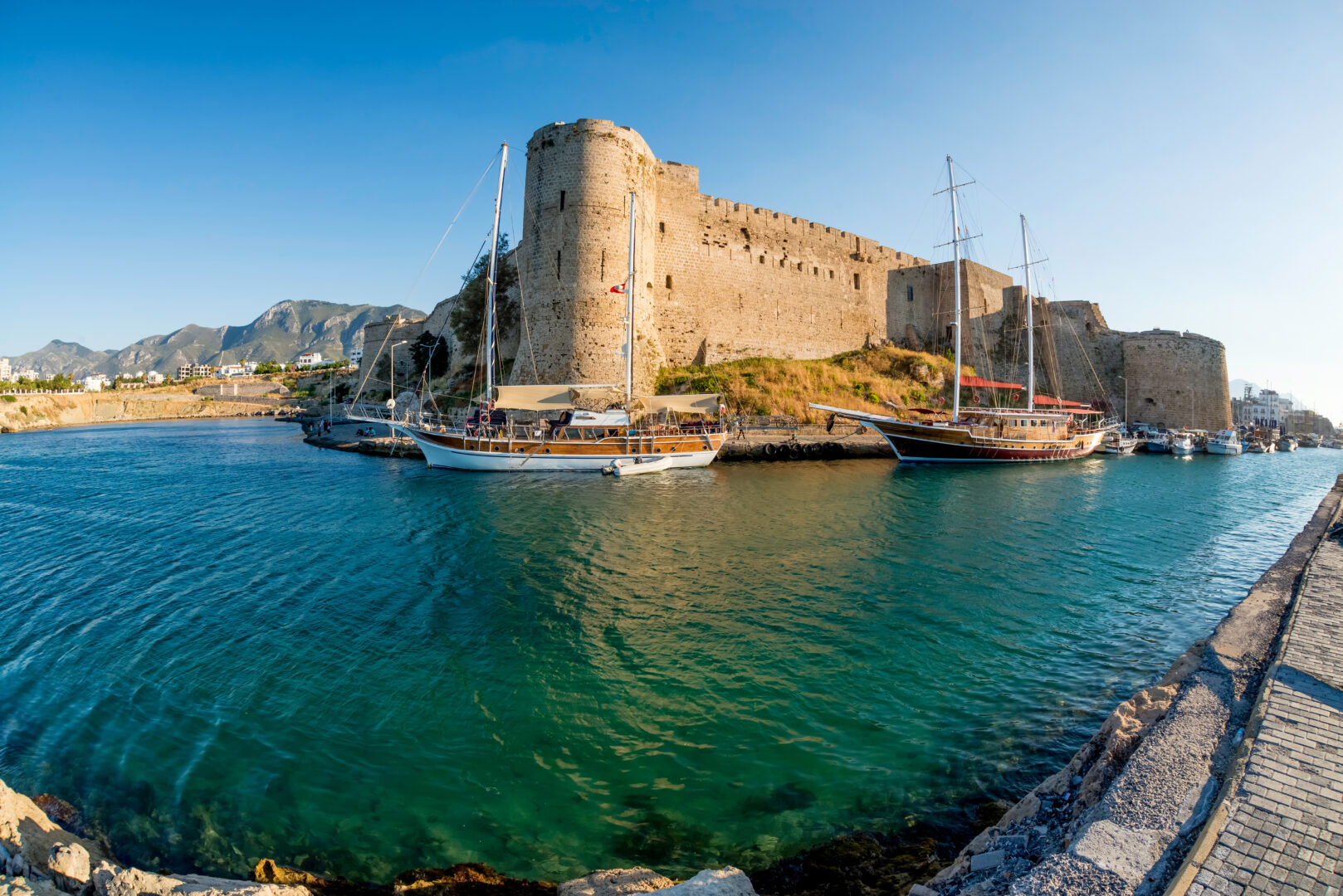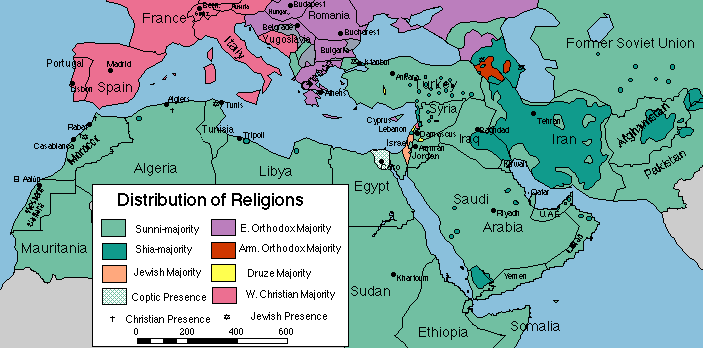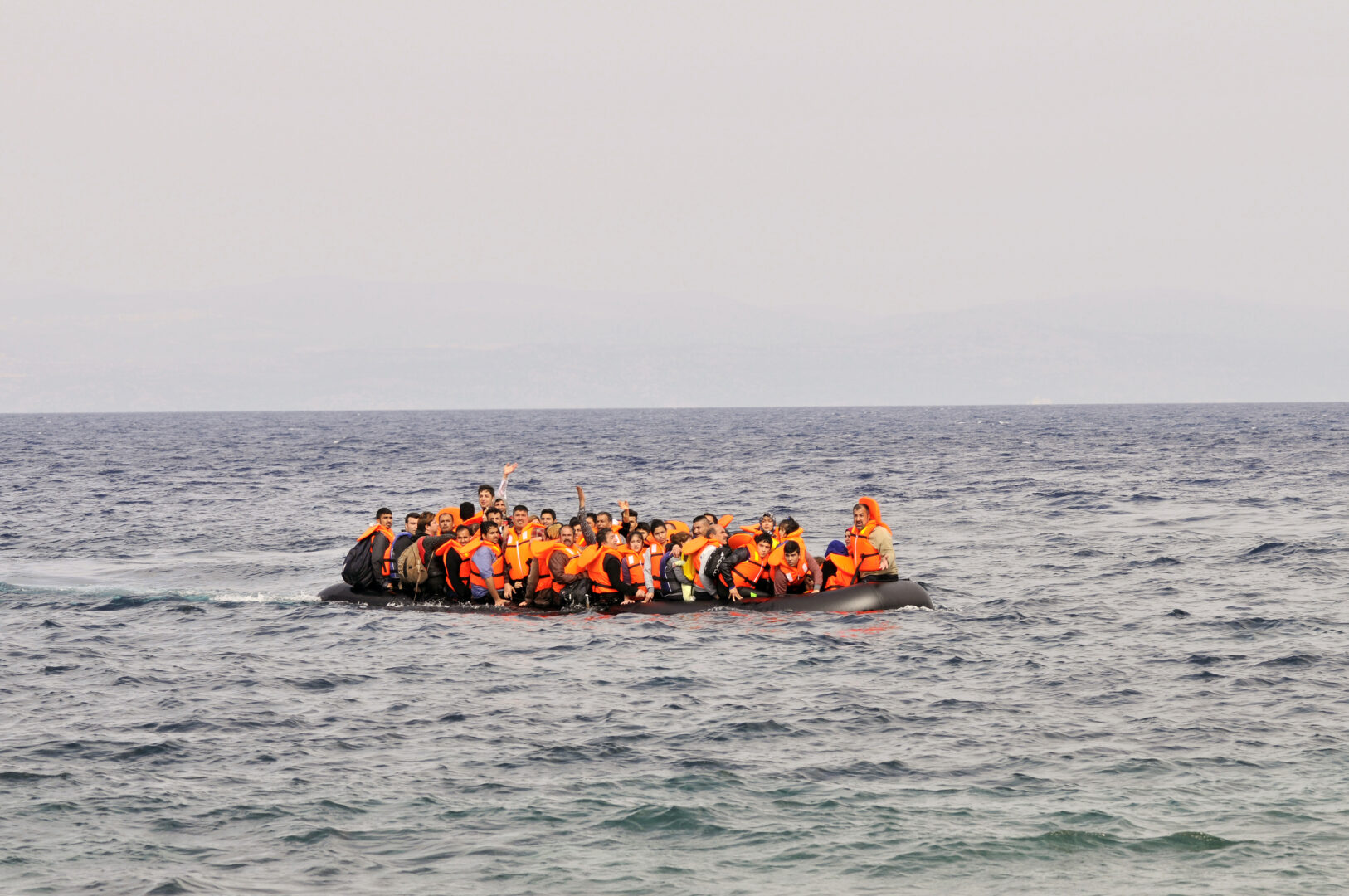
Whatever definition of coastline we choose, the population living along the shores of the Mediterranean exceeds 200 million inhabitants. There is another important demographic fact to take into account: the Mediterranean is a prime tourist destination, with a total number of visitors that doubles the number of its permanent residents year after year. Likewise, every year some 220,000 ships sail there, transporting some 650,000 tonnes of crude oil, along with other goods. The Mediterranean also faces certain disadvantages. It is an almost completely closed sea, it features intense maritime traffic (which entails crude oil washing and accidental oil spills) and it faces other factors, including the proliferation of harmful algae and invasive species. Meanwhile, the Mediterranean generates particularly serious pollution problems, proportionally higher than those of other open seas. All of this makes for a good introduction. However, we will now carry out an analysis with a more strictly geopolitical focus.
A historical space of power and conflict
From the Peloponnesian and Punic Wars to the convoy battles of World War II, through the Crusades, Lepanto and Trafalgar, the Mediterranean has always been a crossroads of civilisations and empires: a scene of constant struggles for power. The adjacent seas —those almost touching the Mediterranean— such as the Black and the Red Sea, have in recent years been the epicentre of vitally important conflicts as the ones in Ukraine or Gaza, with spillovers towards Iran.
The first conclusion is clear: the Mediterranean is condemned —or destined— to be a space of conflict, due to its privileged location, regardless of the era or the powers involved. It is no coincidence that the great theorists of world geopolitics have given it exceptional prominence. Both Halford Mackinder and Nicholas Spykman emphasised the importance of an area that they call, respectively, the inner crescent and the Rimland. This strip extends throughout the Mediterranean basin, from the Iberian Peninsula to the Middle East, passing through Italy and Greece, including the large islands (Mallorca, Corsica, Sardinia, Sicily and Crete). From here, its geopolitical interest continues to project itself towards the east.
For Mackinder, in Democratic Ideals and Reality (1919), the Mediterranean is a defensive belt that protects the countries of the Heartland, but it can also become the ideal bridgehead if control is lost. Spykman, in The Geography of the Peace (1944), goes even further: whoever dominates the Rimland will dominate the Heartland and, by extension, the world. In other words: the Mediterranean holds the key to global order.
That’s the theory, but what happens on the ground?
A sea that unites…
Spykman not only delimits spaces, but also analyses their consequences. He goes so far as to state that Africa “begins” south of the Sahara, so that the two shores of the Mediterranean would form a single geopolitical space, with more similarities than differences in terms of climate, mindset and economics.
Historically, the Mediterranean corridor has been an umbilical cord that has facilitated trade from west to east. In Mohammed and Charlemagne (1970), Henri Pirenne argues that the Mediterranean allowed the Roman spirit to survive well beyond the formal fall of the Empire (476). Despite their bad reputation, the Crusades kept this route open until the fall of Constantinople almost a thousand years later. Pirenne calls this Mediterranean culture that endured for centuries Romania.
For his part, Christopher Dawson, in The Making of Europe (1931), agrees that it is difficult to speak of a single Europe, but it is still possible to speak of a “Mediterranean cultural unity”, thanks to Greco-Roman logic being more embedded on the shores of the sea than in the centre and the north of the continent. This would allow for a true cultural unity with political and geopolitical projection, at least in the Mediterranean basin.
…but also a sea that divides
Despite these arguments, the Mediterranean also divides. In the current contest for global hegemony between a power that does not want to cede leadership (the USA) and another that aspires to assume it (China), with Russia as a third actor seeking to compensate for the limitations of its glacial ports with access to warm waters, the Mediterranean continues to be a central space, despite the fact that none of these powers is Mediterranean or European.
Even if Russia were to lose influence, the Mediterranean would remain an essential route for the Chinese 21st Century Maritime Silk Road, which passes through the Malacca and Bab el-Mandeb Straits along with the Suez Canal before reaching the major ports of northern Europe (Rotterdam, Antwerp and Hamburg, among others). Despite the extensive Chinese railway network to Europe, the sea continues to dominate world trade, as Mahan had already envisaged in The Influence of Sea Power upon History (1890). UN data confirms this: 80-85% of the volume of the world’s goods is transported by sea, equivalent to 70-75% of its value.
This reality, set against the backdrop of a rivalry among the great powers, is potentially conflictive. This is not a new phenomenon. Napoleon tried to control the Mediterranean with a chain of bases; the British achieved it with their triad (Gibraltar, Valletta and Alexandria); the US 6th Fleet operates from Rota to Souda, and China has achieved key positions in Piraeus, Venice, Genoa, Valencia and Cherchell. At the same time, the Russian-Indian International North-South Transport Corridor, which passes through Iran, also affects the Mediterranean.
In addition to all this is the growing role of Turkey, driven by Erdogan’s neo-Ottomanism with a military presence in Somalia, Qatar and Libya. The Turkish future is uncertain: will it remain in NATO? Will it join the BRICS? Will it distance itself definitively from the EU? Will re-Islamisation increase? It is likely that all these dynamics will move forward in parallel, with an ambiguous Turkey moving farther from the EU, closer to Russia and being more sensitive to the Muslim world.