The perseverance of naval sailing
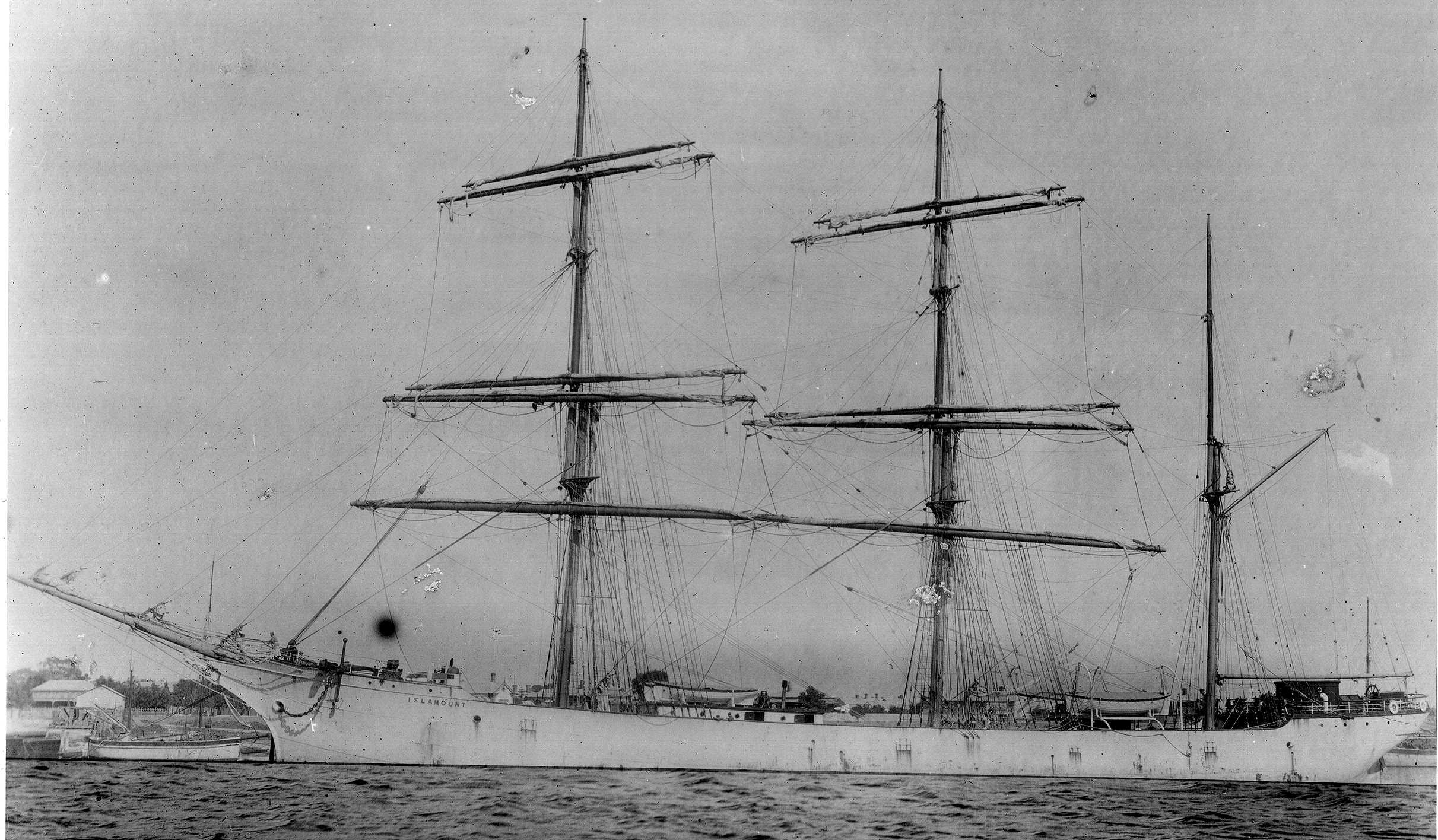
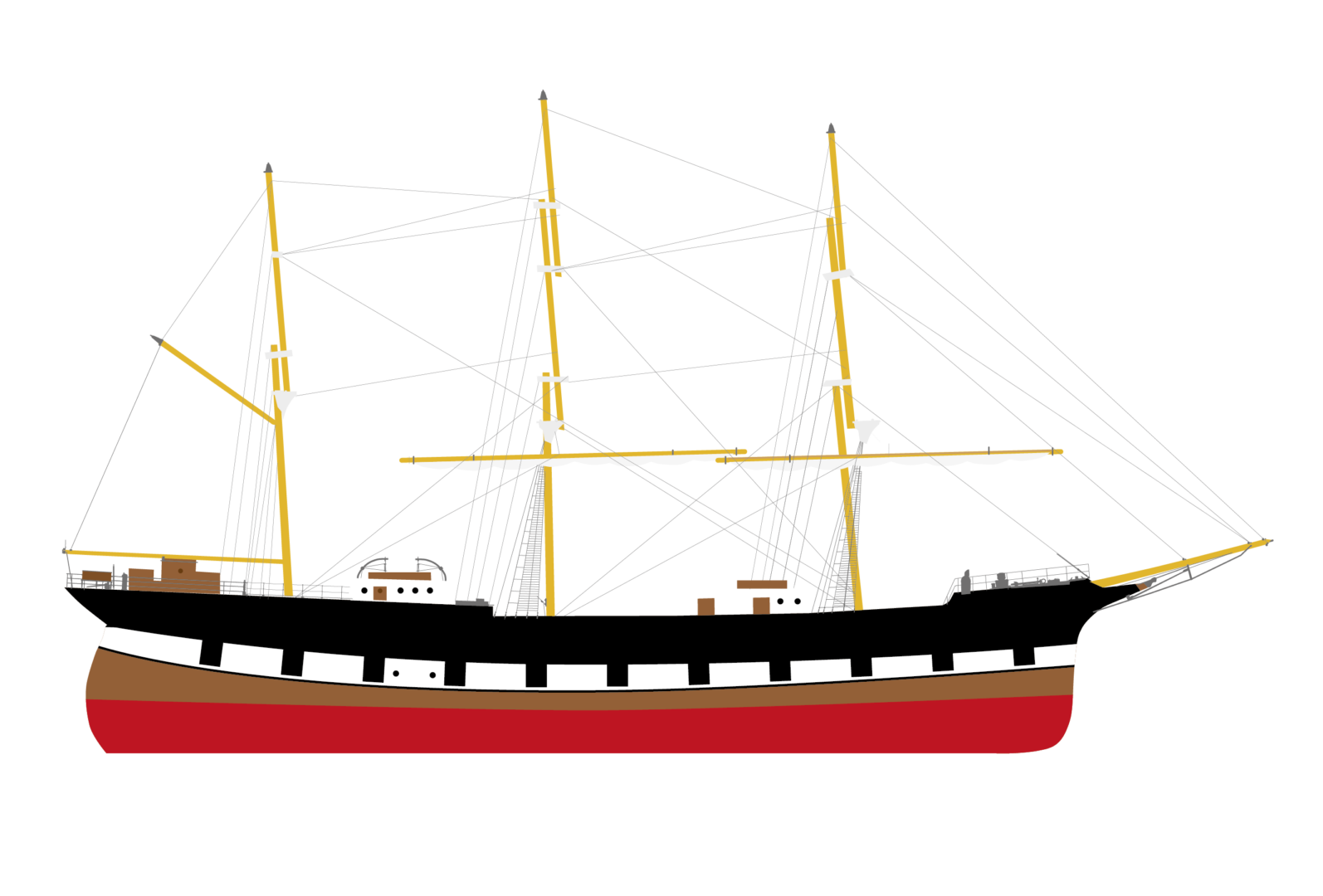
The Glenlee was built in 1896 at the Bay Yard in Port Glasgow as a three-masted corvette or barque. A few years before the end of the 19th century when mechanical propulsion was already victorious, the construction of iron sailing ships was the response to a technological challenge. It represented a history of sailing that dates back more than 5,000 years of sailing fighting back against the steam engine: wind, cleanliness and silence against coal, grease and noise. In a way, it was the final battle put up by iron sailing ships that refused to disappear. Ever since its construction, this iron-hulled ship sailed carrying goods, persevering against the pressure of steam, a technology that put an end to thousands of years of sailing.
Her life as a merchant ship was typical of vessels that were contemptuously called windbreakers. She was the Glenlee and Islamount under the British flag until 1919. Then she passed to the Italian flag with the name Clarastella and enjoyed a second life, now as a motorsailer with two diesel engines. A series of circumstances brought her to Spain to serve in the Navy as a training ship. She was to be accompanied by another Italian sailboat, but her poor condition discouraged this and, in the following years, she would be replaced by the Juan Sebastián de Elcano.
Sailing on training boats
We should recall that in the past, and in fact still today, there was the idea that sailing ships were the true school for seafarers, especially for officers, even for those who would never sail. The philosophy holds that sailing was the ultimate battle area, the place where a man (and now a woman) was forged in the fight against the elements. Values such as responsibility, teamwork, improvisation, and camaraderie, among others, were acquired at all costs. This idea is still alive and that is why many navies around the world still keep their training ships. Even some merchant navies also adopt this philosophy.
Thus, from 1925 (after the relevant repairs and transformations were made) the old Glenlee entered into service for the Spanish Navy under the name Galatea, serving as a training vessel for different generations of cadets. Before serving on modern ships, the cadets went through the experience of sailing, thus forging an old-fashioned esprit de corps. Yet her life in this role was cut short, since in 1928 she was replaced by Juan Sebastián de Elcano as the main ship for training officers. The Galatea remained as a kind of second course, active but on a secondary level. She continued to sail, survived the Spanish Civil War, and even a storm on 3 October 1946 that almost sank her off the Azores. The wind tried again in 1954 near New York, but once again she survived.
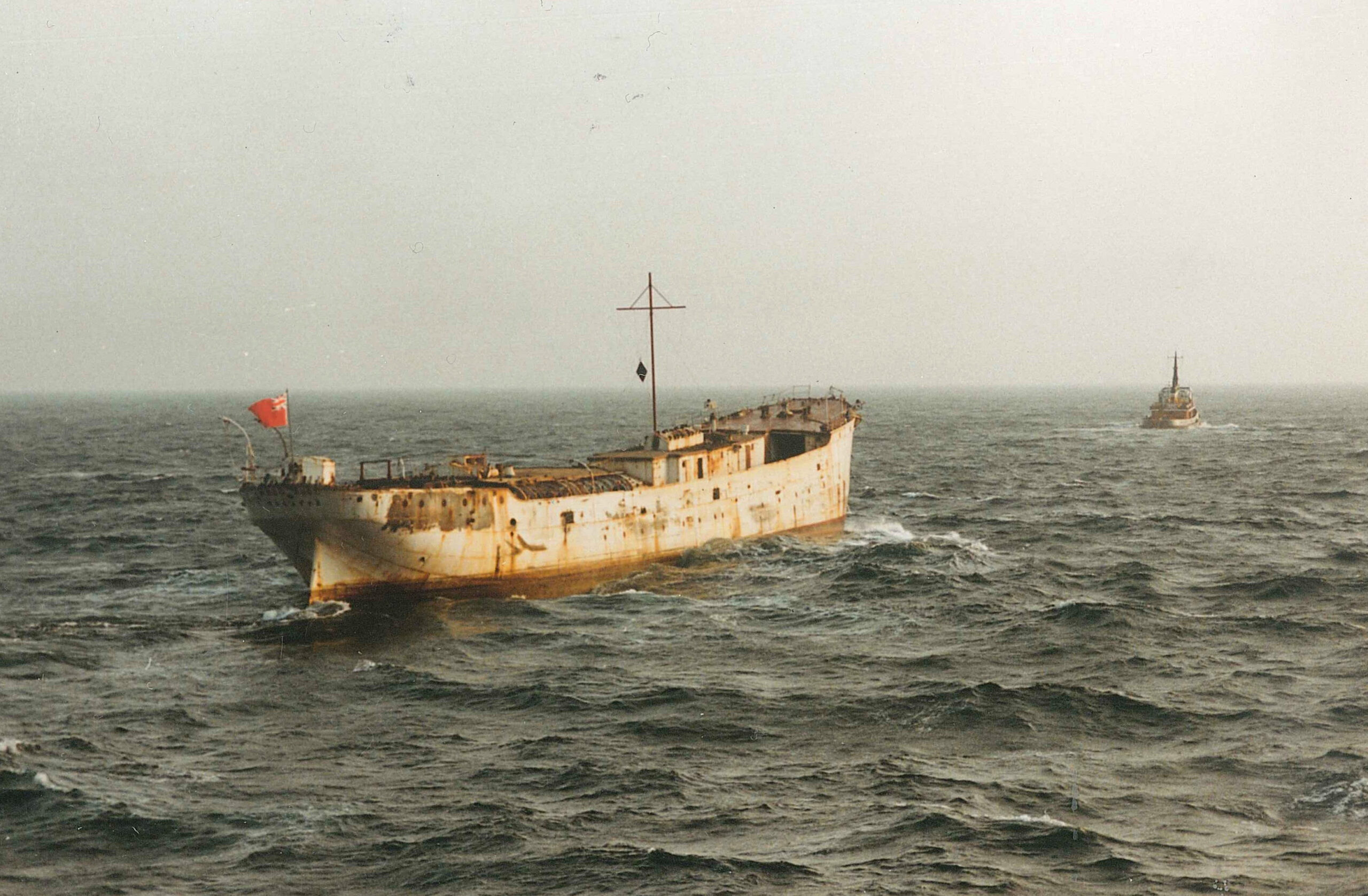
On 15 December 1959, the Navy withdrew it from active service, and it was moored at the Ferrol arsenal as a manoeuvring school, but it no longer set sail, and it gradually aged until it was definitively decommissioned in 1982. However the Navy did not decide to give the order to scrap it due to vocal protests and fearing that it would give the navy a bad image. The ship was plundered day by day, devoured little by little by scrap metal or souvenir seekers. Many materials are surely in private homes today. A worthy future was sought for it as a museum or floating exhibition and it was taken to Seville, anchored in the Guadalquivir, and finally moored awaiting its end. However, when a decision was made to sell it at auction, salvation arrived. A British institution, the Clyde Maritime Trust in Glasgow, purchased the ship.
Resurrection beyond the sea
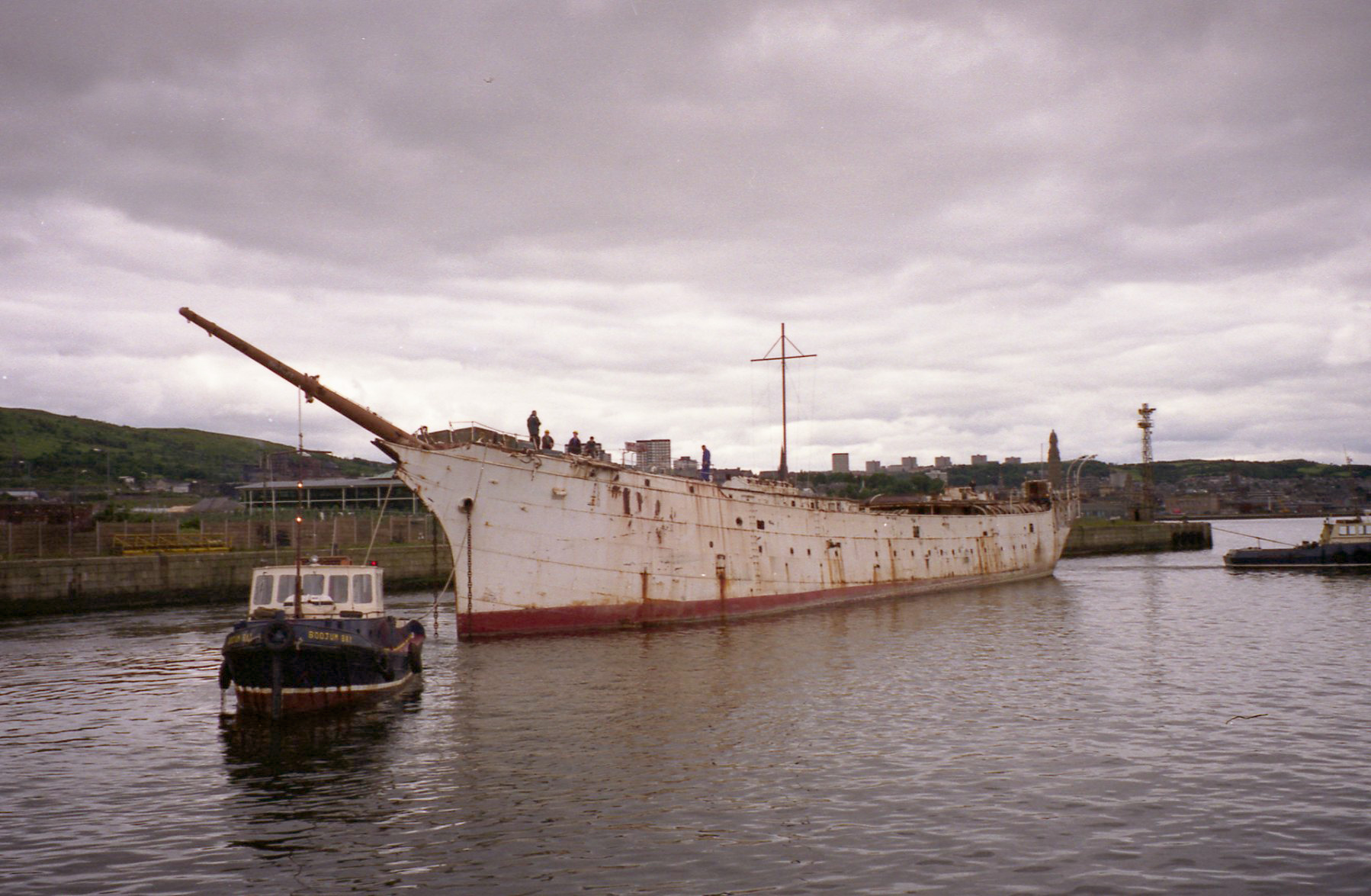
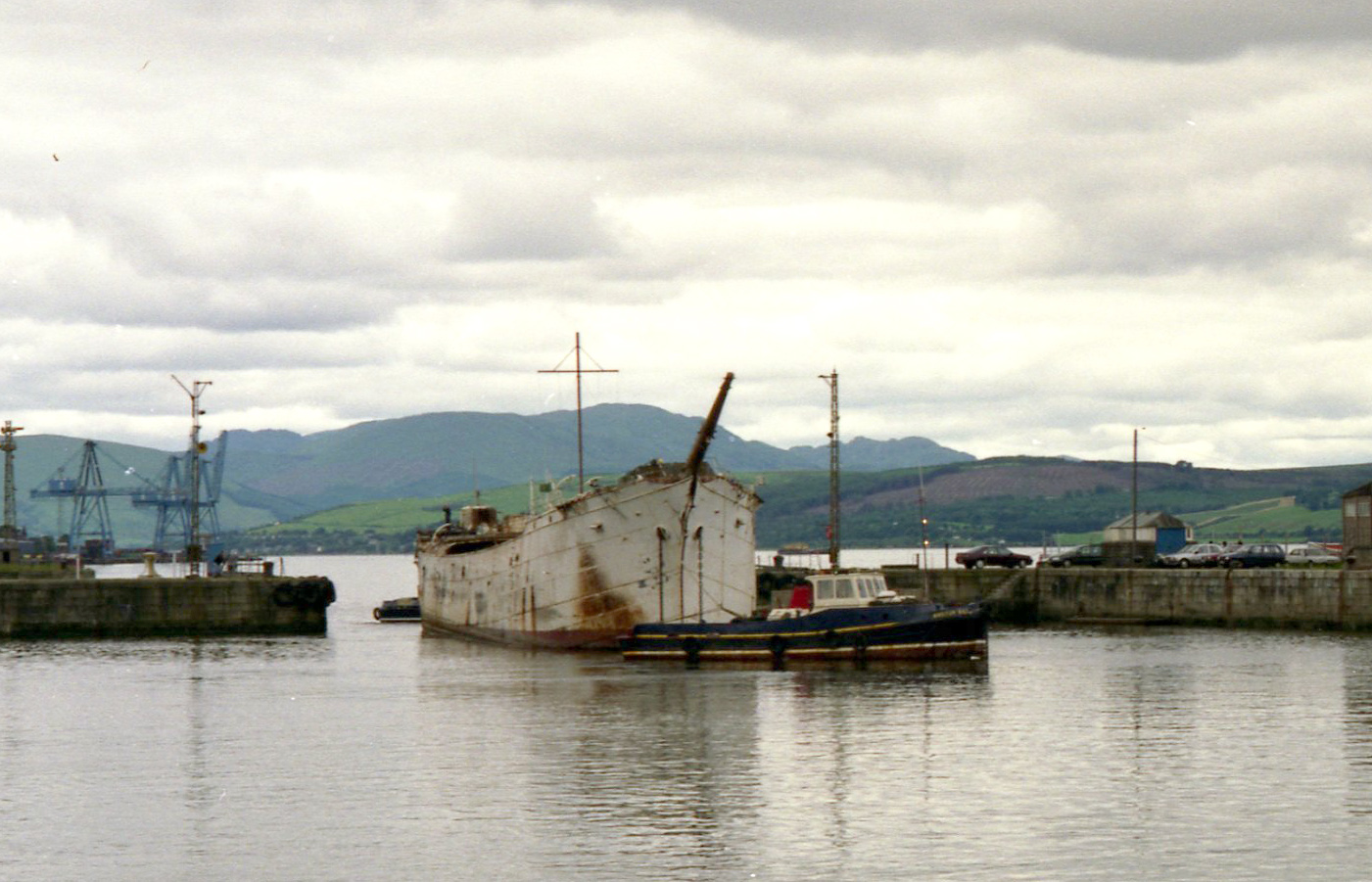
In 1993 she was towed to Greenock and later to Glasgow. There, the Glenlee was restored and converted into a floating museum. After some preliminary work in dry dock, a six-year restoration process began. Some elements were brought from Spain, such as the original masts. The new owners tried to recover the original figurehead, which remains on display in La Graña, Ferrol (A Coruña). Having failed in their mission, they commissioned a replica. Rumour has it that the Spanish Navy said that the figurehead would not be returned until the British returned Gibraltar. Whether fact or fiction, it’s certainly believable. On 6 July 1993, she was christened again with her original name, Glenlee, in a highly emotional ceremony. Now the sailboat is a true Scottish monument and a tourist attraction on the Riverside in Glasgow.
At the time of writing, the ship is undergoing restoration work on the equipment. If you want to go and see it, it may be worth waiting a while for the work to be finished and the ship to regain its splendour. You can find more information on the website.
As a curiosity, the Museu Marítim de Barcelona preserves some of the furniture from the commander’s room. The pieces likely date back to the 1940s or 1950s and were added to the Museum’s collection in 1983. Of course, in the Museum Library you can find some fascinating publications about this vessel and the people who sailed on it.