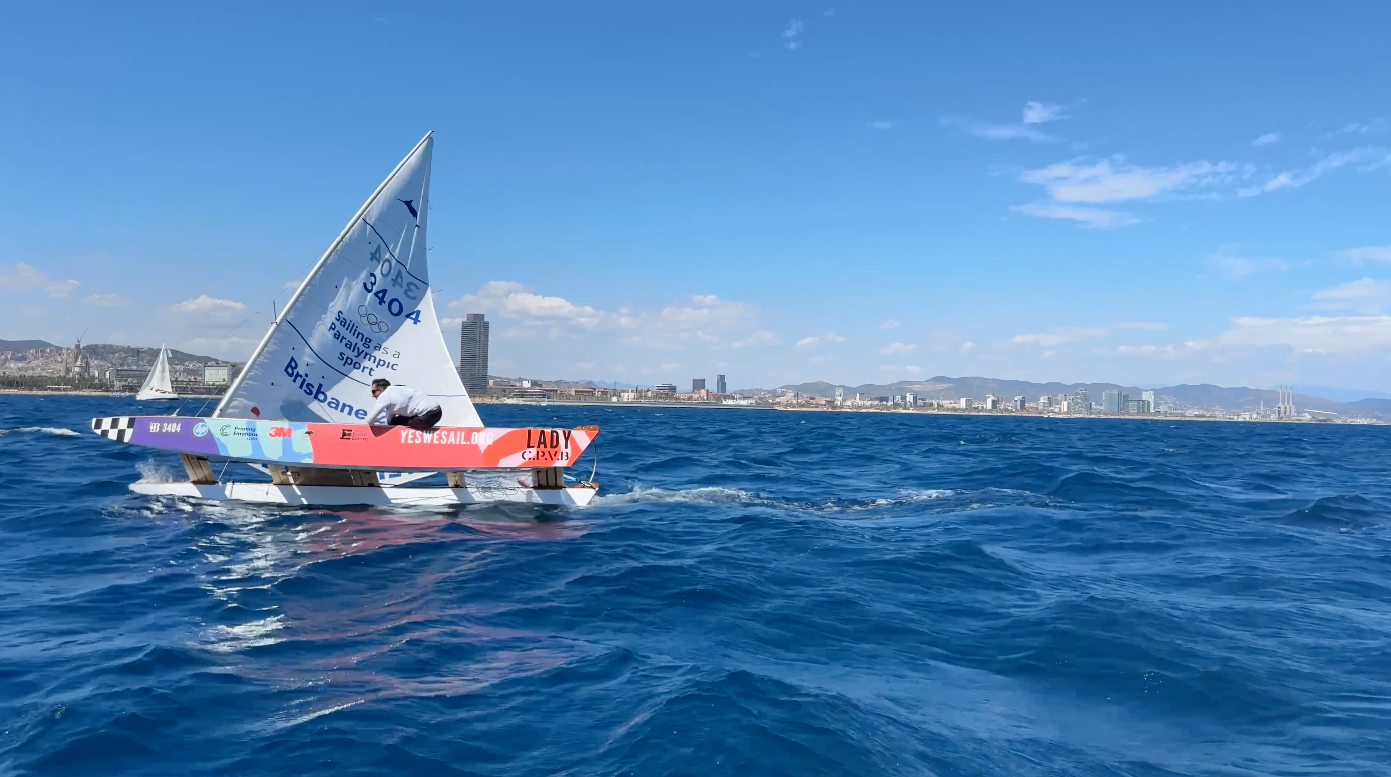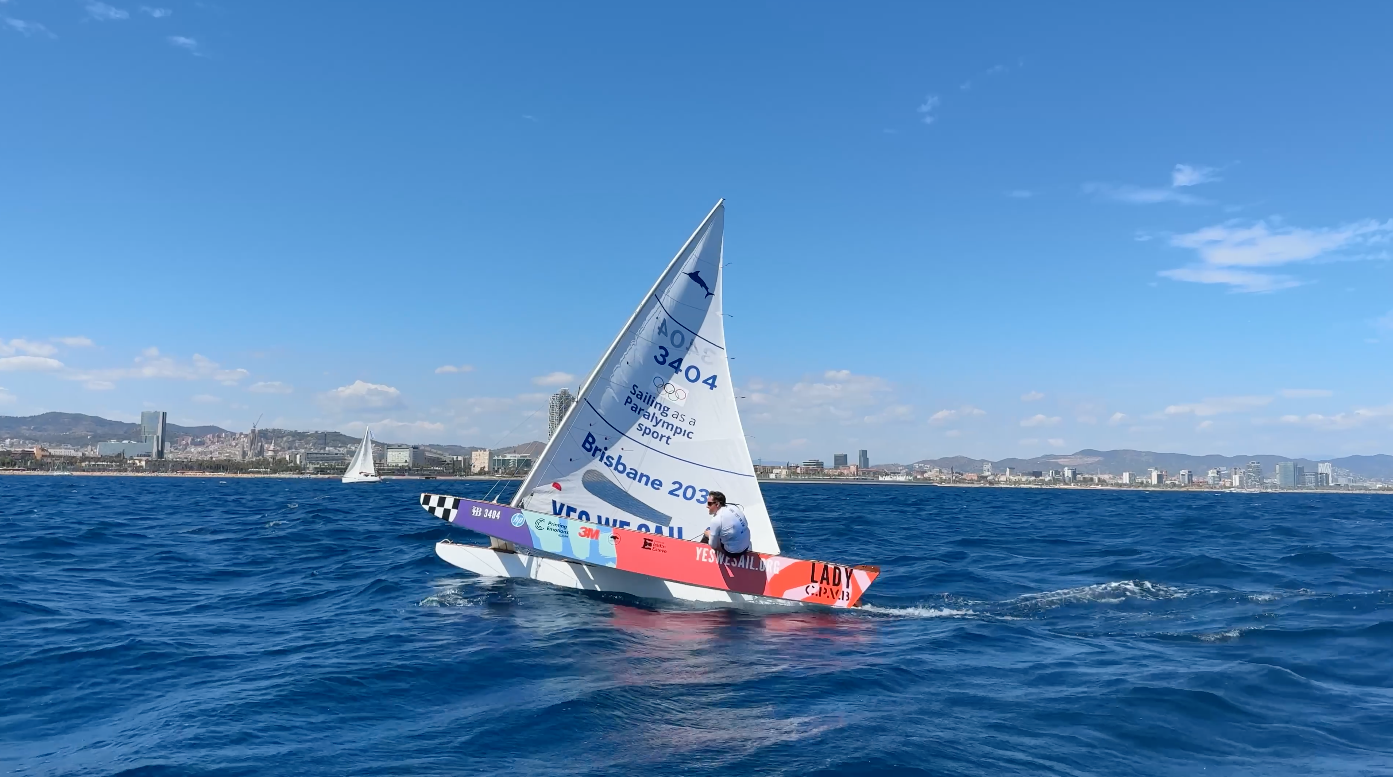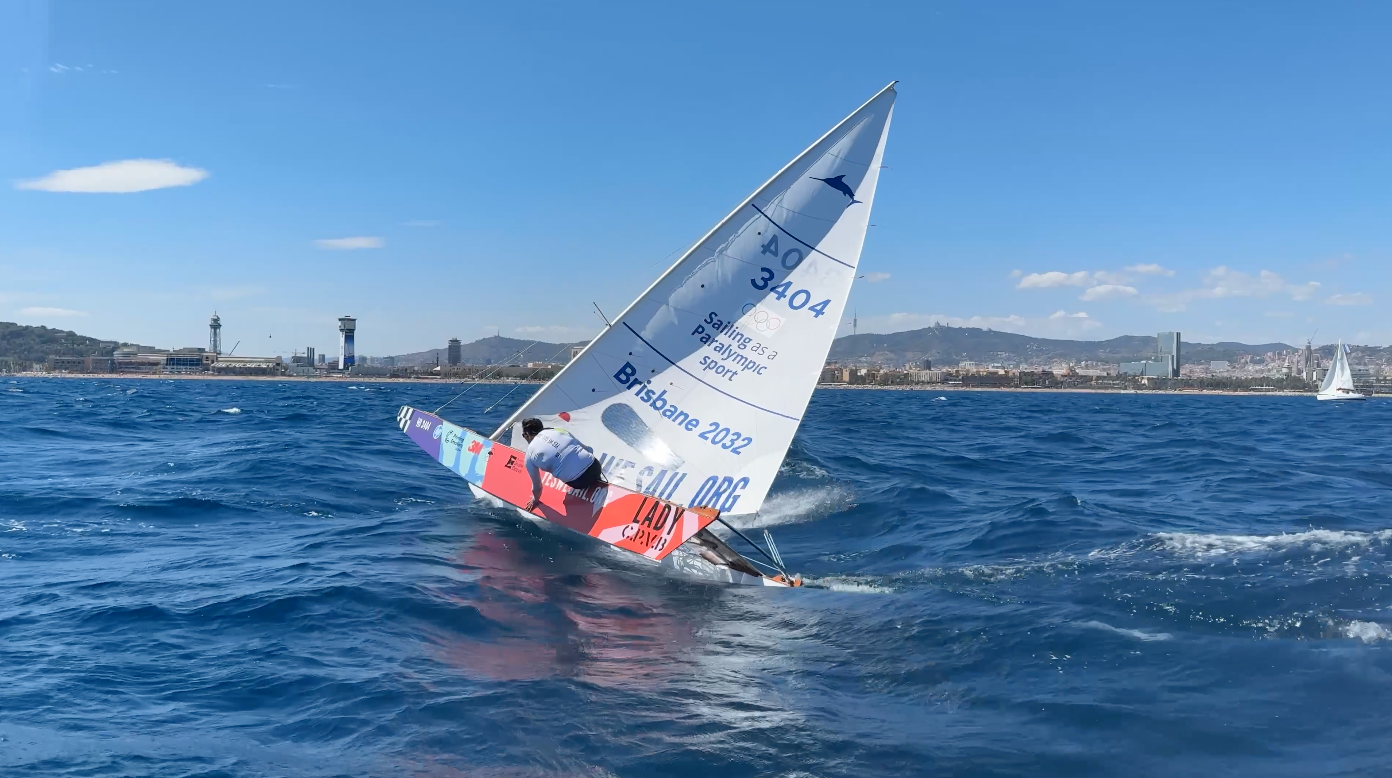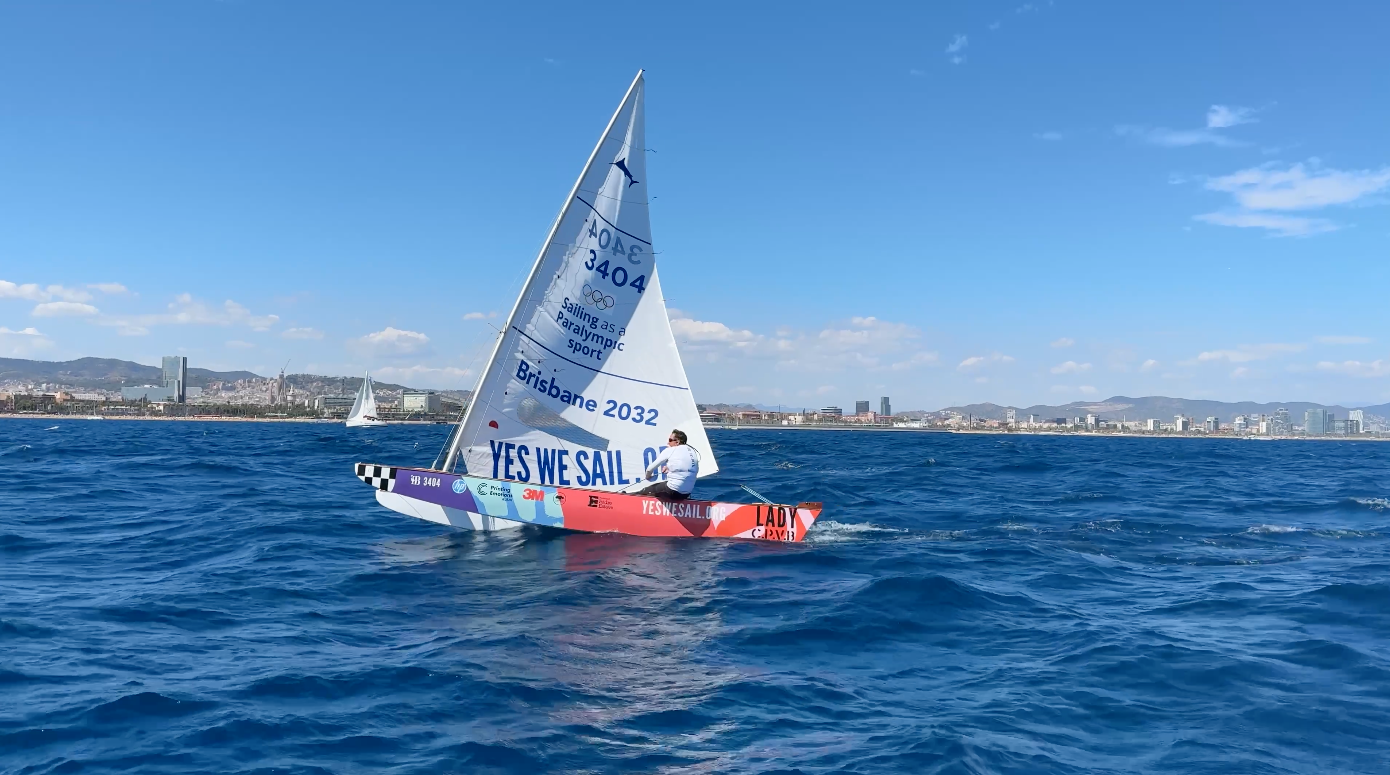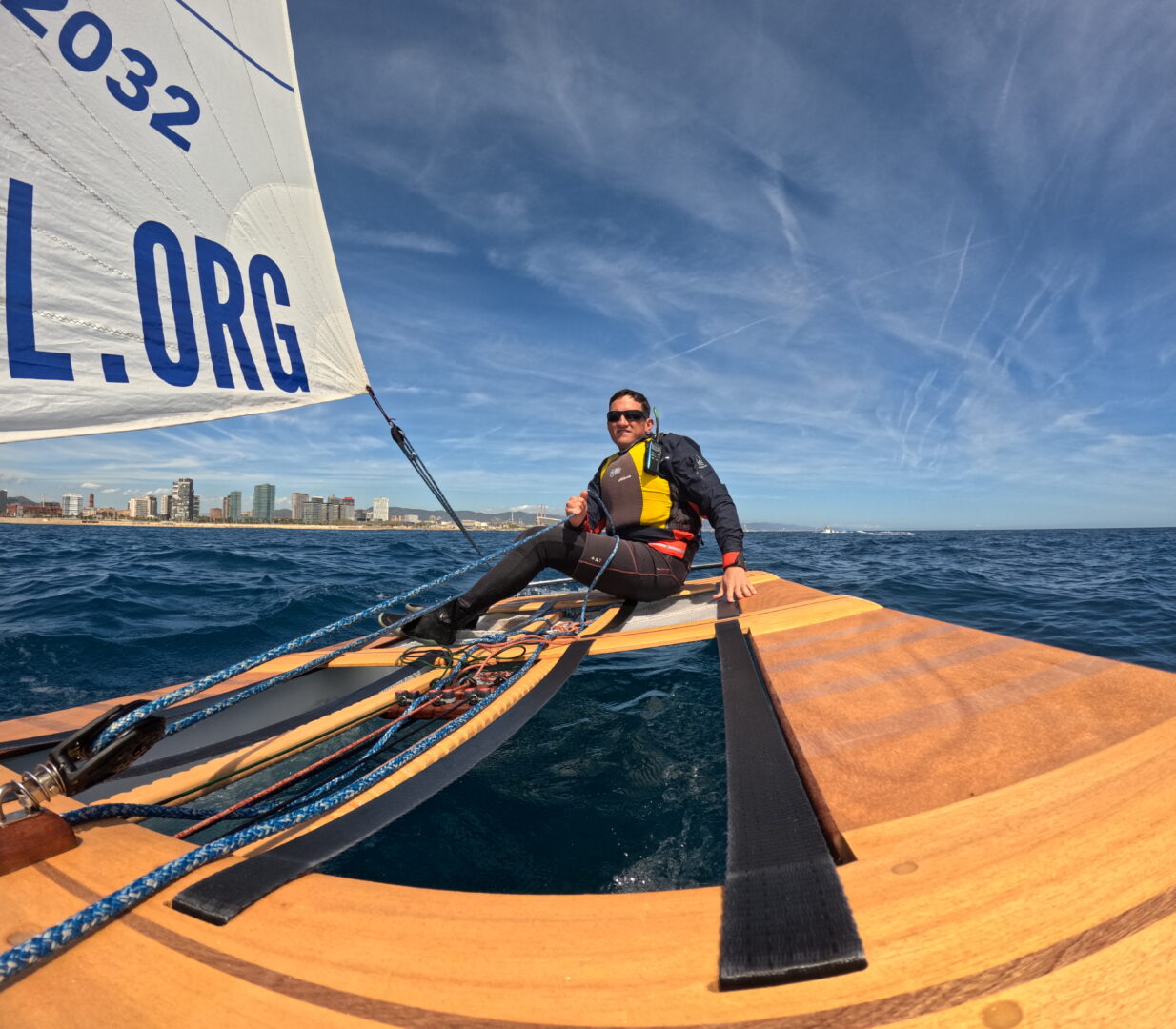
Dani Anglada is in love with the sea. He has been since he was a child, when his father would drop him off at a summer camp in El Masnou while he was commuting from Barcelona to Mataró to work. The sensations he experienced sailing captivated him so much that he not only wanted to train during the winters but also dedicated his studies and profession to it. Anglada graduated in Nautical Science and Maritime Transport and became a merchant marine captain and charter skipper.
In 2018, however, when he was only 31 years old, his life was turned upside down. Anglada suffered an accident at sea while transporting methane gas on a large vessel in the middle of the Pacific Ocean. A fire extinguisher exploded in his face and he lost his sight. “My world collapsed. From being in charge of vessels over 300 meters long, sailing all his life and being an autonomous and very active person, you go from having to lack an input that is sight,” he explains.
After more than three years locked up at home and when he saw everything lost, his mother’s words and the company of his dog became the most comforting help Dani needed to cling to life again, a turning point that led him to want to sail again.
Yes We Sail , a call for more inclusion
Returning to the water after the accident was an emotionally shocking and contrasting experience for Dani. On the one hand, he was experiencing again what made him happiest: the feeling of freedom, the splashes of water, the wind in his face and the warmth of the sun. But, on the other hand, he realized that he had to start from scratch to make sailing inclusive for people with visual impairments: “If we take into account physical disability, we can talk about inclusion in sailing, but when we talk about sensory or cognitive disabilities, this inclusion does not exist.”
Dani’s crusade is to empower people with visual impairments in sailing, both recreationally and professionally. To achieve this, he has launched the Yes We Sail project (‘Yes, we sail’), from where he wants to publicize the innovative protocol and technology that he and his team have developed to make sailing inclusive: “The great added value of Yes We Sail is that it provides a protocol made by blind people for blind people,” points out Anglada.
This guide, developed after hours and hours of sailing, provides all the theoretical and practical knowledge so that a blind person can enjoy sailing independently and safely. One of the key points is knowing how to read the wind correctly in order to orient the boat: “You have to be present with yourself, with the sensations that the wind produces in your face, in how to look for it, in how the different parts of the wind are decreed – the close, the back, the longs – or in how we can know the degrees of intensity”, he points out.
The protocol offers the guidelines that must be followed to process all this information: “We apply the theory of sailing to a theory that we are able to understand, in a simple, but efficient and elaborate way.”
In addition, one of the fundamental tools that helps the sailor to interpret the wind with maximum precision is the vibration provided by two straps tied to the waist. The Mataró company OnRails, which is already working on the design of a smart jacket so that blind people have more autonomy, has been responsible for developing this haptic sensory technology, which uses the sense of touch to communicate information. “Now we know where we want to go and where the wind is coming from. The next step will be to be able to detect objects and act according to RIPA or COLREG, which is the international regulation for the prevention of collisions.”
The adventure on the Isle of Wight
With the aim of giving visibility to his project, obtaining maximum funding and becoming a draw for the international media, Dani Anglada has set out to be the first blind person to circumnavigate the Isle of Wight (United Kingdom) in an adapted sailing dinghy, non-stop and with assistance. This is not a random destination, but in 1851, the first America’s Cup, known at the time as the Hundred Guineas Cup, was held on this island. This is a major challenge that has become a reality at the beginning of August 2025, coinciding with the great Cowes Week regatta, held from 2 to 8 August in the north of the island.
With this great purpose, Anglada not only wants to demonstrate the validity of his technological solutions, but also wants to generate maximum media impact so that his project gains support to grow and become a suitable and safe option for people who cannot see: “The only thing I wanted was to live again and have a vision in life, feeling as dignified as possible with a condition that segregates people as much as the lack of sight,” he says.
And for Anglada, inclusion in sailing for people with visual impairments does not consist of having an assistance boat that indicates the steps to follow, but rather that the person who cannot see becomes a co-skipper of the boat on equal terms, and is able to process the information about what is happening and make the right decisions. “Inclusion is not about taking me out for a spin sailing. That is a lack of respect because it is considering me less valid (…). And that is what I have experienced and I want to break it, and more so with a sport and an experience as unique as being on the water,” he says.
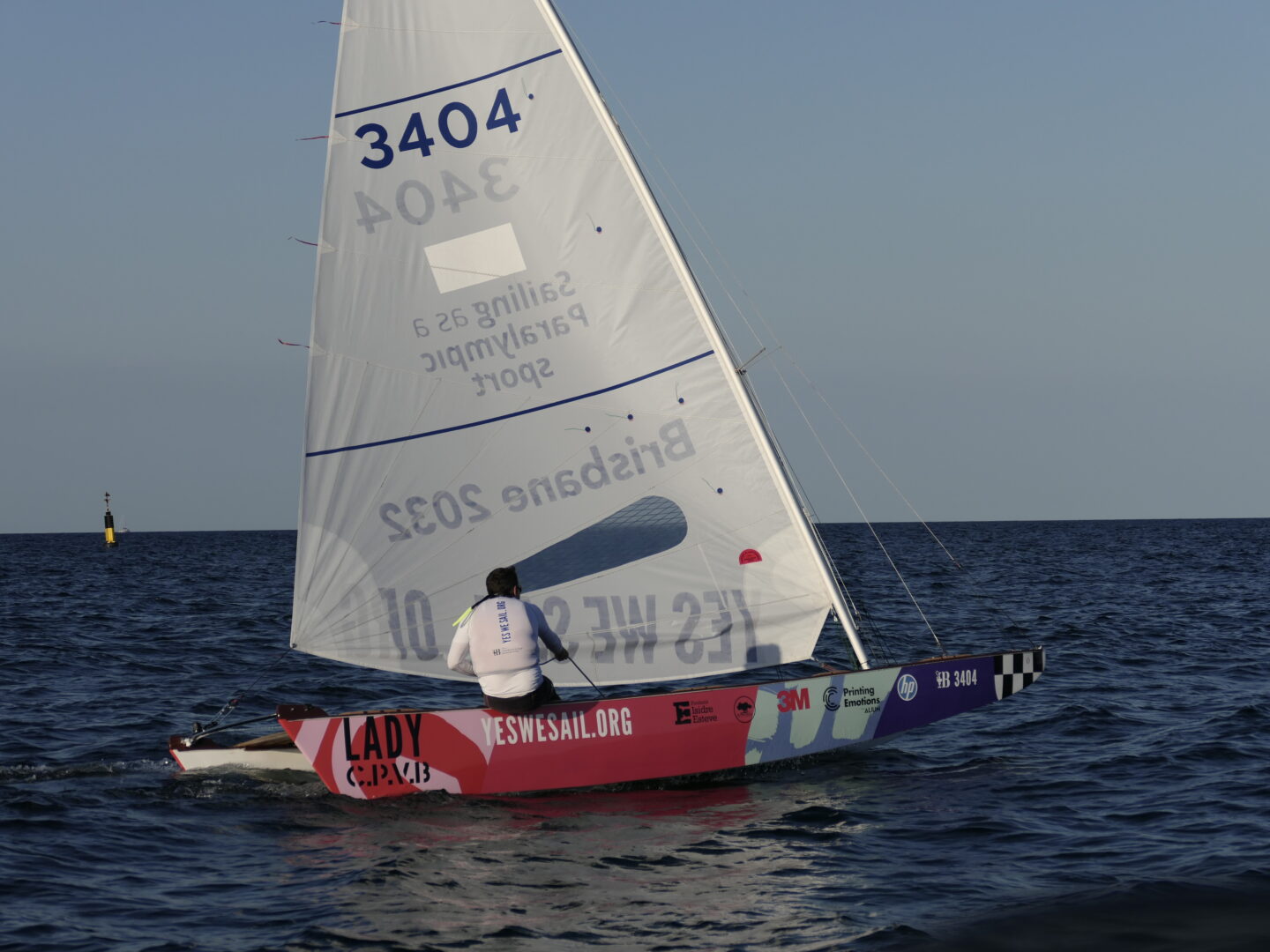
The young athlete assures that the International Sailing Federation is already waiting for him “with open arms” and wants to take advantage of the British experience to thank the unconditional support that he has received from the first day from the executive director of the America’s Cup Event, Grant Dalton, godfather of the launch of the Lady , the first Catalan yacht adapted for blind people, which was presented in July 2024 within the framework of the America’s Cup in Barcelona.
Goal: Brisbane 2032
In addition to circumnavigating the Isle of Wight, Anglada and his team already have other challenges planned for the return trip. One of the most ambitious is to ensure that sailing is once again a recognised sport at the Paralympic Games in Brisbane (Australia) in 2032.
Today, there are already two leading boats in adapted sailing, the Hansa 303 and the RS Venture Connect . The purpose of the Yes We Sail project is to provide pioneering technological solutions focused on visual impairment so that blind people can also compete: “We have always had a Paralympic sailing focused on physical disability. Now we are focusing on having this technology necessary and accepted by the International Sailing Federation so that sensory disability is included and we can all compete together.”
With her sights set on Brisbane 2032, Anglada has already managed to sign an agreement with Port Masnou and Club Nàutic Masnou to have a base from which to work for the inclusion of people with visual disabilities. “Blind people (…) should have the option of being able to try it and if they like it it will be a sport more in contact with nature, a completely different experience, where you work on the feeling of freedom and autonomy, because you end up sailing by your own means. This gives us confidence in ourselves and helps us overcome the obstacles of day to day life”, she concludes.