Magazine dedicated to the maritime culture and heritage of the Mediterranean, published by the Barcelona Maritime Museum.

View of the port of Barcelona

Painted by Francesc Soler i Rovirosa from Barceloneta in 1889

|

This large painting, which portrays the Barcelona waterfront with great precision, is a remarkable work from the art collection of the Barcelona Maritime Museum.

This work allows the identification of numerous architectural elements of the city and the port, but also brings to the observer different types of boats, sailors at work and scenes of the city’s daily life. Thanks to its realism and meticulousness of detail, it has great value as a graphic representation of the city’s maritime history at the end of the 19th century.
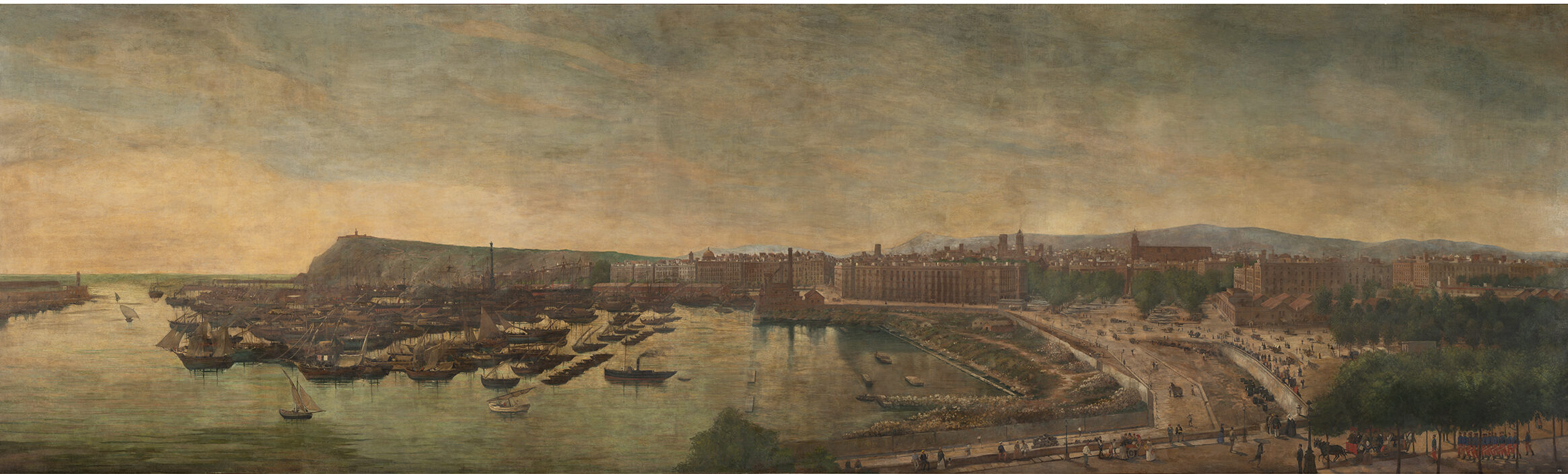
View of the port of Barcelona from the Barceloneta. 1889. Author: Francesc Soler i Rovirosa. MMB Fund. ARGO 15. Maritime Museum of Barcelona.
View of the port of Barcelona from the Barceloneta. 1889. Author: Francesc Soler i Rovirosa. Photo: MMB Collection

Before painting this scene in tempera on a cotton canvas over 8 meters long, the renowned painter and set designer Francesc Soler i Rovirosa made the sketches and color tests from the roof of a building, now gone, which was located on the corner of the current Passeig de Borbó and Carrer de Ginebra. From the height of a fourth floor in Barceloneta he created this panoramic view of the port area and the city.

When and why was it painted?

On the ground floor of the corner of Passeig de Gràcia with Carrer de Casp, where the Casa Antoni Rocamora now stands, in 1882 Ignasi Elias commissioned the architect Salvador Viñals to build the Cafè Novedades. It was a spacious premises of more than 1,500 m 2 , with 160 coffee tables and 23 billiard tables. The creation of this portrait of Barcelona is related to the renovation in which Francesc Soler Rovirosa participated, and to the reopening that was held on 31 October 1889, a social event announced days earlier in the Barcelona newspapers and about which several chronicles were subsequently written. One of them referred to this painting and its author: “On the front there is a view of Barcelona with its port, of large dimensions, and in the other paintings we remember, among other views, the Cathedrals of Burgos, León and Seville, the Alhambra of Granada, the Escorial, the Royal Palace of Madrid, Toledo and San Sebastián (…). This restoration has been directed by the architect Don Salvador Viñals and the painter Francisco Soler y Rovirosa. All the decorations and paintings belong to Señor Soler” . Another chronicle mentioned the thirteen paintings painted on glue that were located on the upper part of the walls. Unfortunately, we do not have any photographs of this painting inside the café nor any plans of the Café Novedades building to know the dimensions and shape of the wall where it was located.

In the catalogue written by Rossend Casanova, for the exhibition “Portrait of Maritime Barcelona. A vision of Francesc Soler i Rovirosa”, which was organised by the MMB in 2009, there is a very detailed and documented description of the main painted elements that can be identified.

In this catalog Rossend Casanova locates and describes up to thirty architectural elements of Barcelona.

The author

Francesc Soler i Rovirosa (Barcelona, ​​1836-1900) is considered one of the innovators of Catalan scenography, especially for his technical contributions and creative solutions. He developed a new conception of scenic space, his perspective abandoned rigidity and became atmospheric, while maintaining the realistic tradition in the formal sphere.

At a young age, while studying drawing and painting, first at the Lorenzo Ferris Academy and then at the Llotja, he began training as a set designer with Mariano Carreras in the Odeon Theatre workshop. He also attended Josep Planella’s workshop at the Teatre Principal; Fèlix Cagé’s at the Liceu, and Lluís Rigalt’s at the Principal de Gràcia. At the age of eighteen he began to paint his first sets.

In 1856 he continued his training by learning and working in France, Belgium and England. In Paris he delved into the possibilities of French stage design. There he met the great European stage designers of the time, and soon became the head of the layout and perspective section of Cambon’s workshop, and head of Thierry’s workshop. At the age of thirty-three, when he returned to Barcelona, ​​his great specialty was large-scale stage shows, stage production, costumes and machinery for magic comedies and large-scale shows. He obtained great recognition both in artistic conception and in technical resolution. The success achieved by the perfection and spectacularity of his work led him to tour Havana and New York in 1880. Upon his return, he was the one who trained the main stage designers of the following generation.

He worked on other commissions other than stage design and was artistic advisor to the Universal Exhibition of Barcelona in 1888. He also worked as a decorator for establishments, among which we would like to highlight the Cafè Novedades (1889), where we find the origin of this painting that is currently part of the MMB collections.

Journey to the MMB

In 1914 the Café Novedades was demolished, but his family kept this painting. Years later his daughter donated it, along with other works by her father, to the Institut del Teatre.

As recorded in the Maritime Museum’s entry register, on October 10, 1941, from the Theatre Institute, an 8.22 x 2.17 m canvas described as a reproduction of a view of the port of Barcelona and attributed to Francesc Soler i Rovirosa was deposited at the Museum.

The fact that it is described as a canvas rather than a painting and its dimensions suggest that it arrived rolled up, as it had probably been preserved in recent years. We do not know in what conditions of conservation the painting arrived at the Museum, as no written documentation has been found of its state of conservation or of restorations prior to 2006. The oldest photograph in the Museum’s archive is a glass plate from around 1940 where the sky and the entire painting have more brightness.
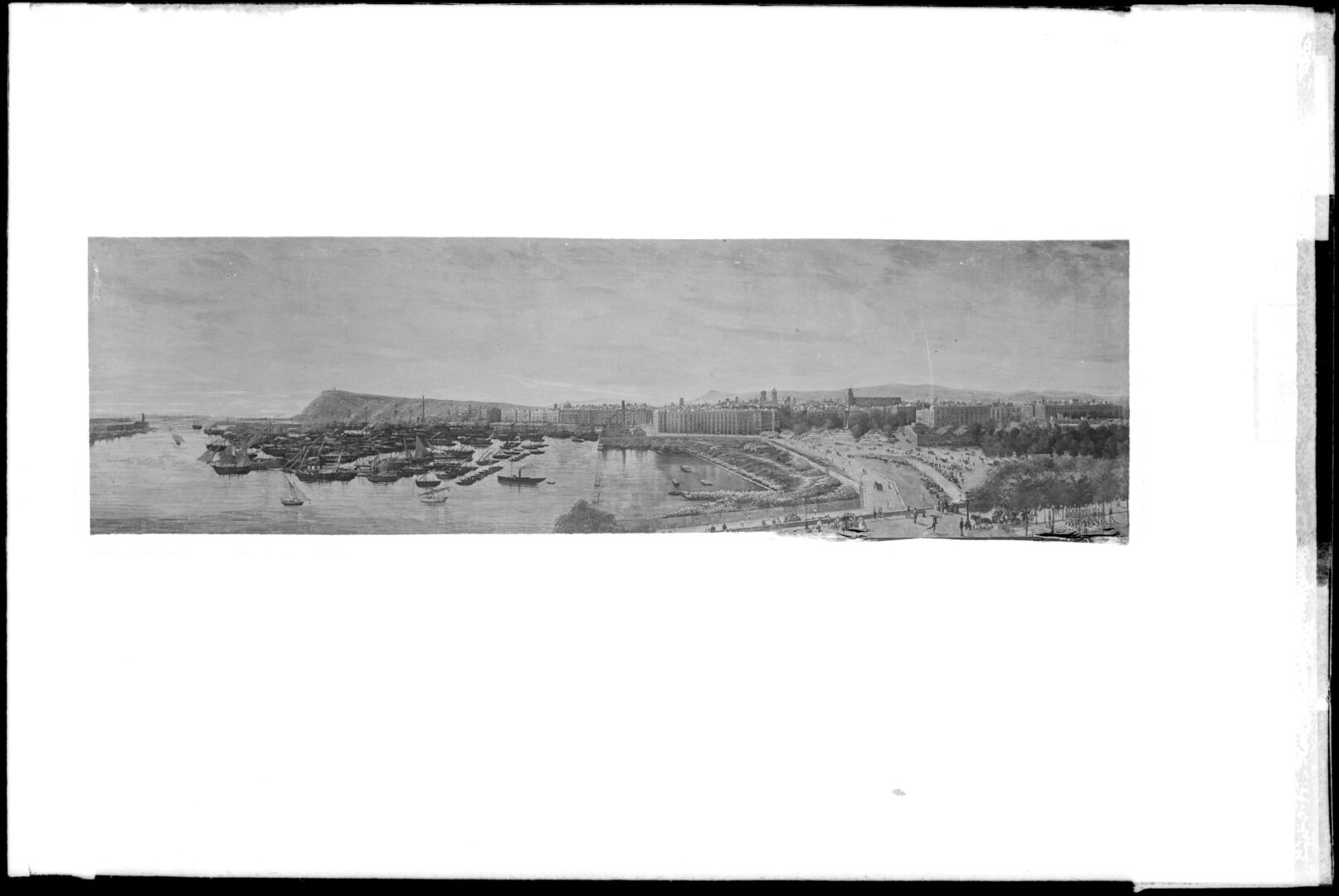
Gelatin and silver bromide negative on glass of the painting View of the Port of Barcelona, ​​dated around 1940 (MMB Archive). ARGO 15. Barcelona Maritime Museum.
Gelatin and silver bromide negative on glass of the painting View of the Port of Barcelona, ​​dated around 1940. Photo: MMB Collection.

Its state of conservation in 2006

In 2006 this painting was stored in the Museum’s reserve room. The canvas was mounted on a rigid support formed by three large wooden panels joined together, framed within a large custom-made frame, with two legs that allowed the painting to be exhibited free from the walls. On the back of the two side edges, two strips of the painted canvas (8 and 10 cm) could be seen that when constructing the wooden support it had been decided to hide by folding it backwards. At that time, and currently, the visible part of the work measures 2.18 x 7.30 m.

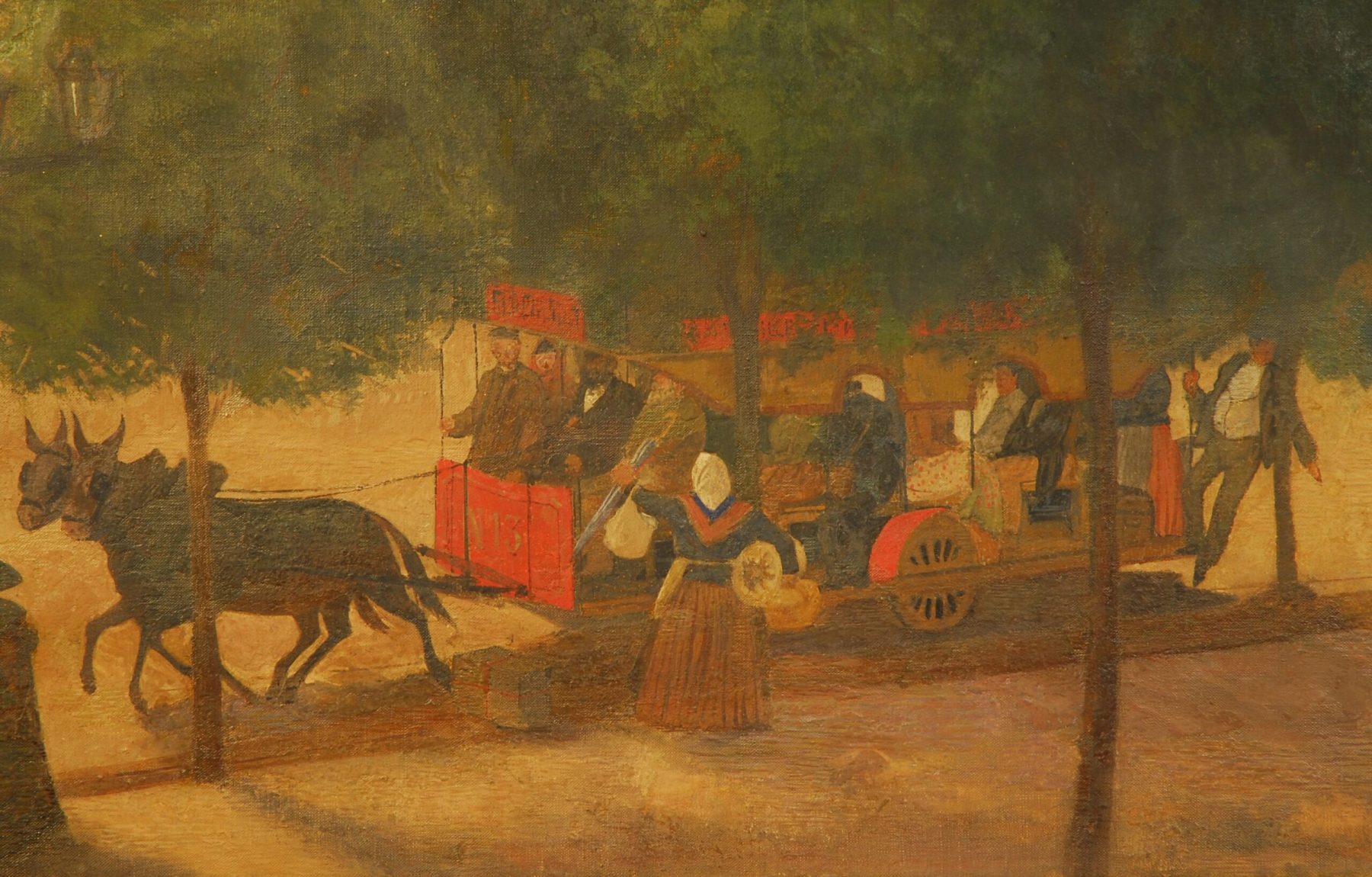
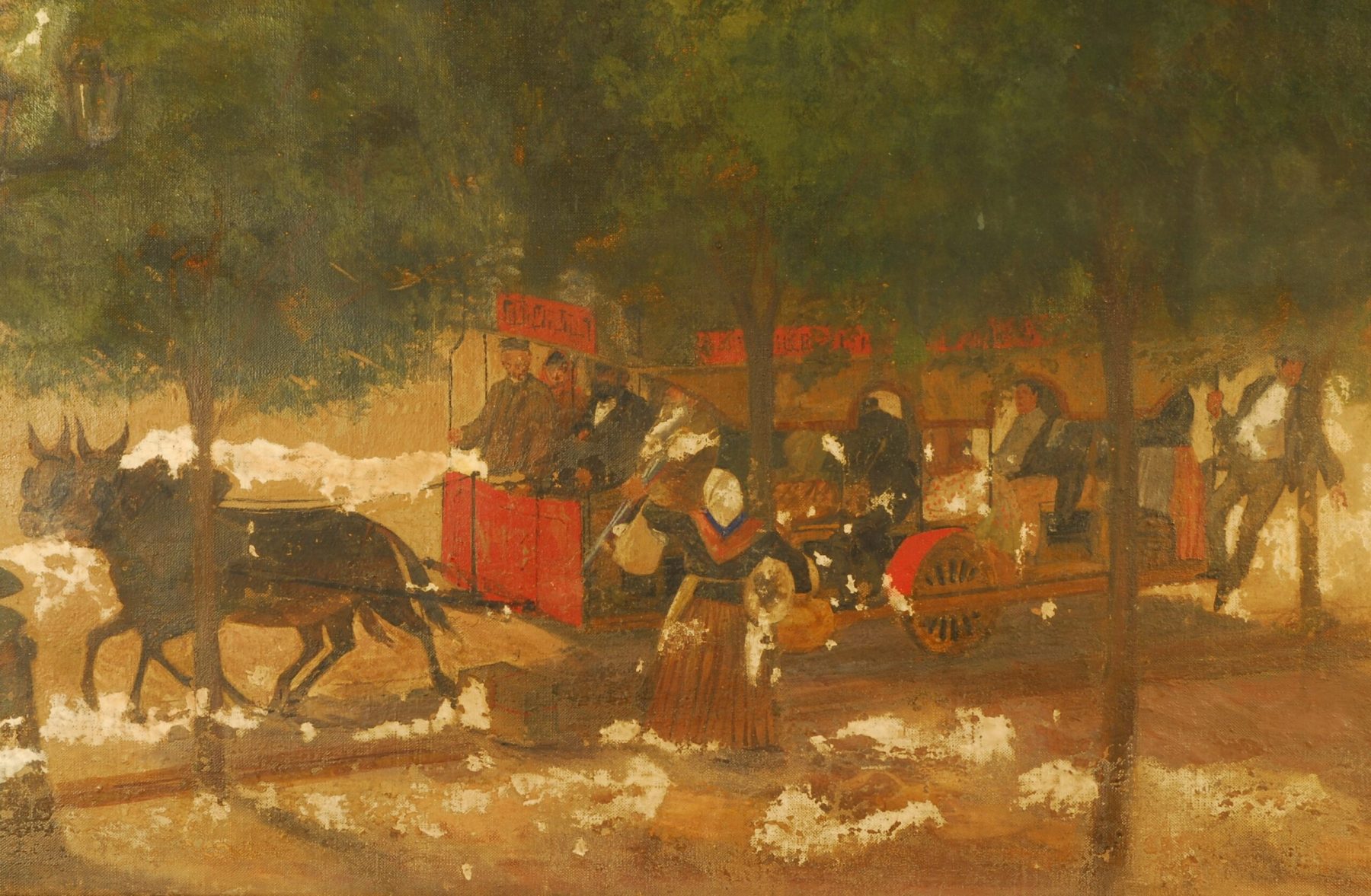
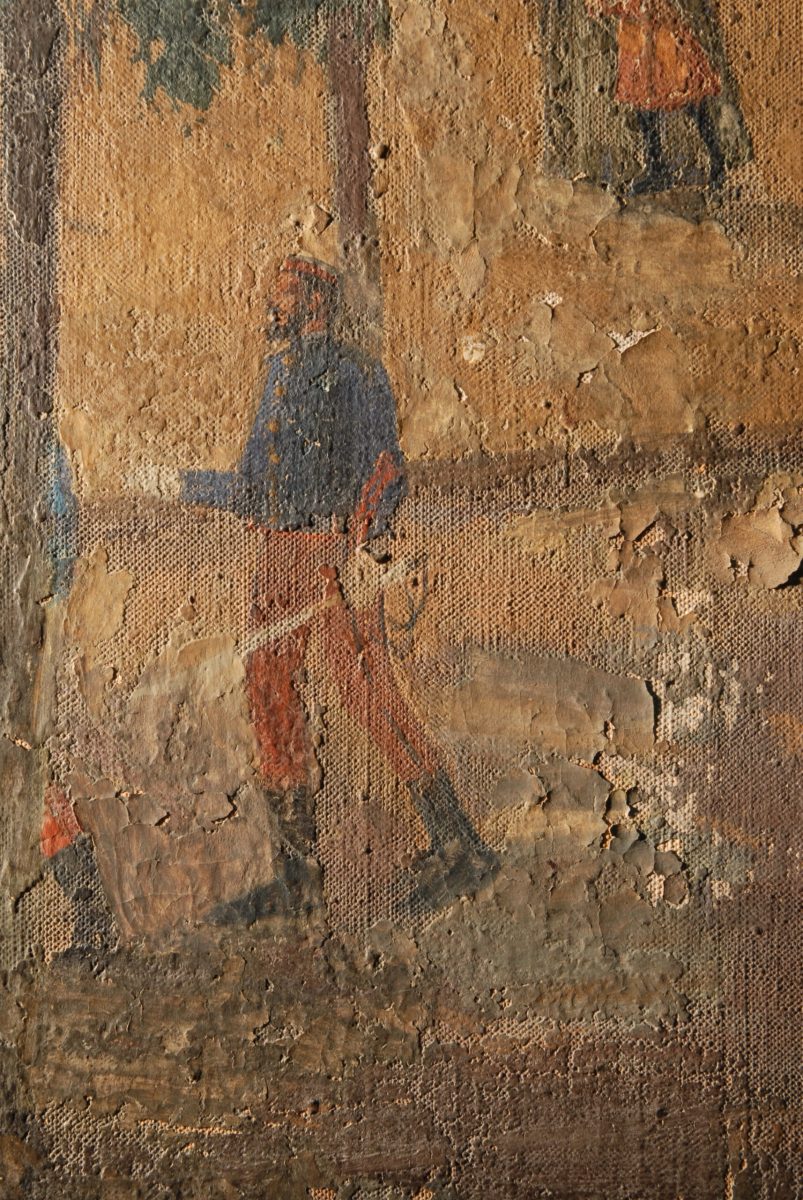
Its state of conservation was quite poor: it had many patches of paint in danger of falling off, especially in the lower section; in other areas part of the paint had been lost a long time ago, and it was evident that very different materials had been added to the original paint.

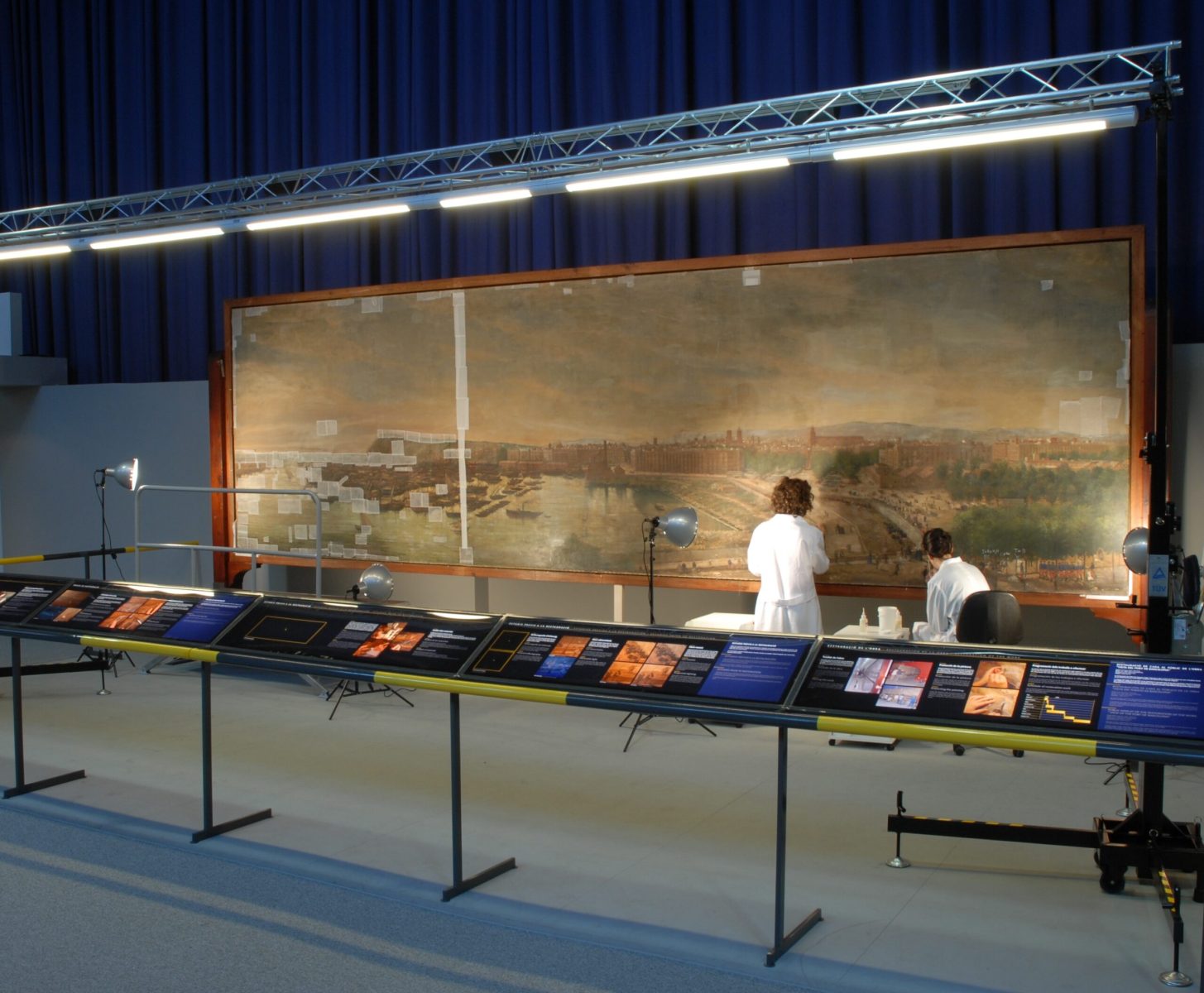
An initial emergency intervention was carried out to stop the painting from falling off. But to stop its deterioration it was necessary to find the reason that was causing it. The need to restore this spectacular view of Barcelona was immediately assessed, with the main objective of eliminating the materials that were causing the painting to lift, and then recovering, as far as possible, its original appearance to display it in the Museum.

Given its size, a space was set up within the Museum rooms where visitors could see the restoration live. To facilitate understanding of the work being done, panels were placed with information about the work and the author, and others with images and texts explaining the different phases of the restoration process, as well as the analyses and studies that were being carried out.

Studies prior to restoration

This work was created as a decorative element using a technique as delicate as tempera, a paint that is easily soluble in water, without any layer of varnish or protective material, as was used for stage sets. Like many other heritage assets that have survived to this day, this painting had undergone transformations that had modified both its appearance and the structure of the materials. For this reason, before starting the restoration, it was necessary to identify which materials Soler Rovirosa had used, and which materials had been added after its creation. It was also important to know what deterioration was hidden by the extensive repainting that had been carried out in interventions subsequent to its creation.

The previous studies had to give us enough information to know what the state of conservation of the original painting was and what restoration treatments should be carried out.

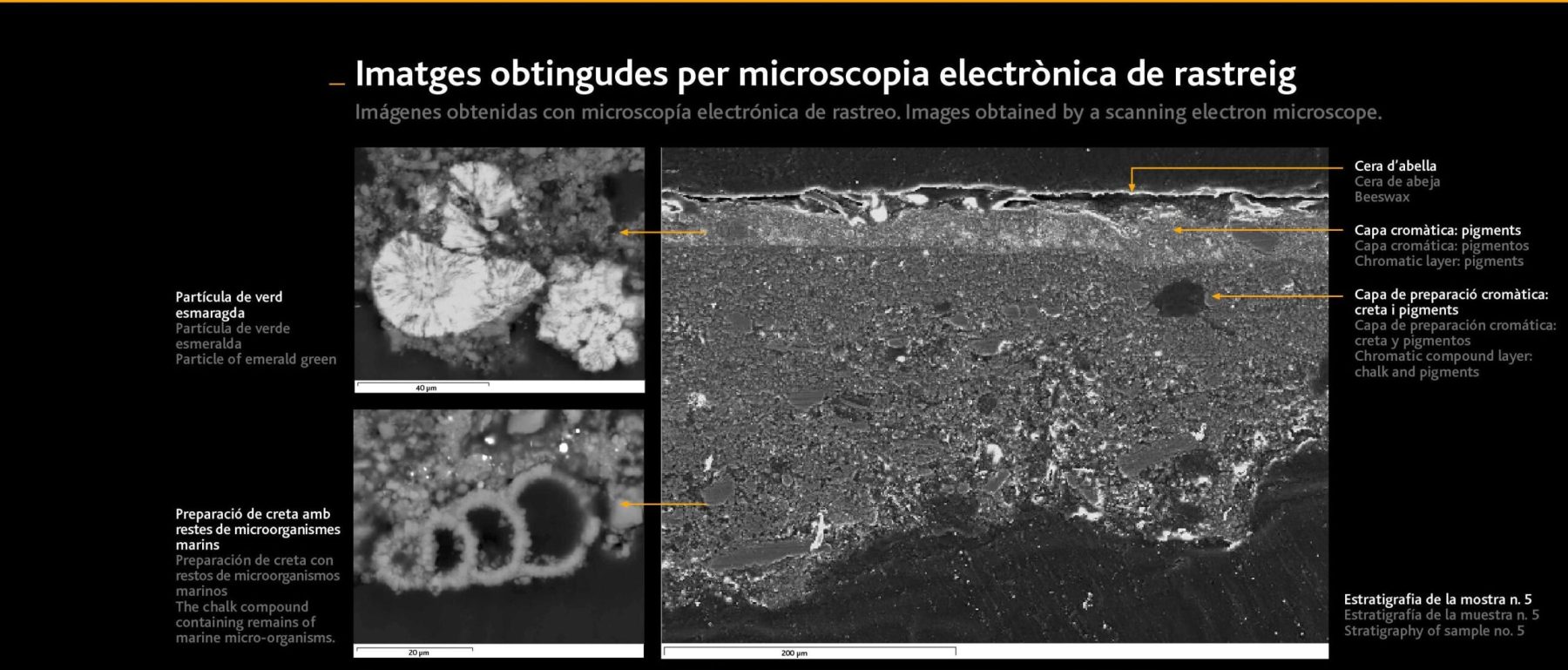
The physicochemical analyses of eight paint samples from significant points in the work, carried out by the Group for the Analysis of Cultural Heritage Materials of the Department of Chemical Engineering, of the Vilanova i la Geltrú Polytechnic School of Engineering, of the Polytechnic University of Catalonia, confirmed the existence of a highly absorbent preparation layer of calcium carbonate that presented different chromatic tones depending on the location of the samples (quartz particles, red cinnabar particles and green copper arcetoarsenite particles). In the original painting, common pigments in the 19th century were identified (emerald green, lead white, coal black, lead yellow, Prussian blue, cinnabar red, silicates and iron oxides) and the original animal glue binder. Pigments that had been discovered and used around 1920 (titanium white and cobalt blue) were identified in the overlaid paints, and alkyd and acrylic resins as binders that corresponded to added layers of paint. All samples confirmed the presence of beeswax, which in many cases had penetrated to the deepest layers.

Infrared reflectography, based on the optical properties of materials exposed to infrared radiation that allows the study of the underlying strata of the pictorial layers, carried out by the Painting Department of the Faculty of Fine Arts of Barcelona, ​​allowed us to appreciate how Soler i Rovirosa combined transparencies and thicknesses, see the drawing lines and locate the grid that he used to transfer the sketches to the large canvas.

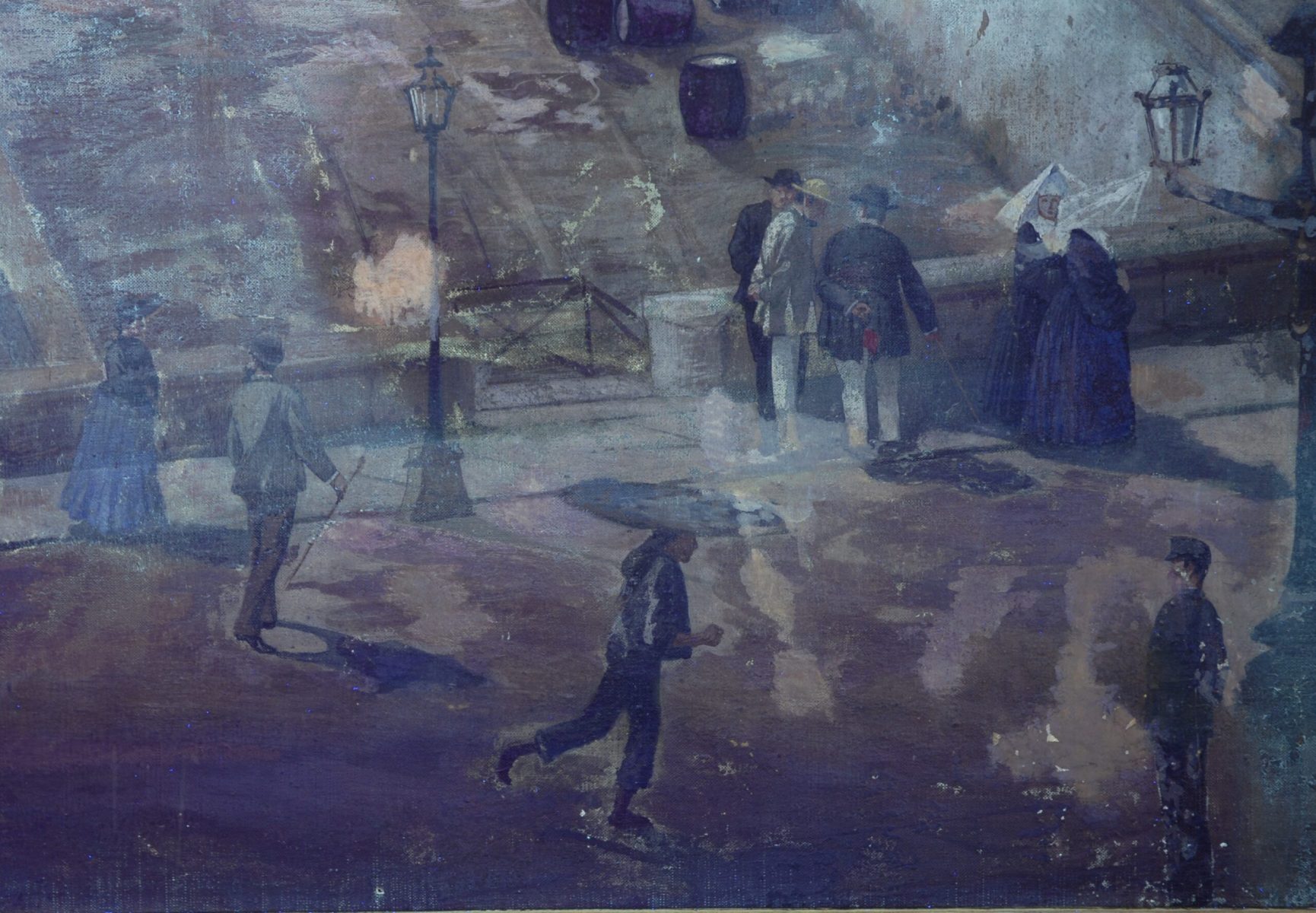
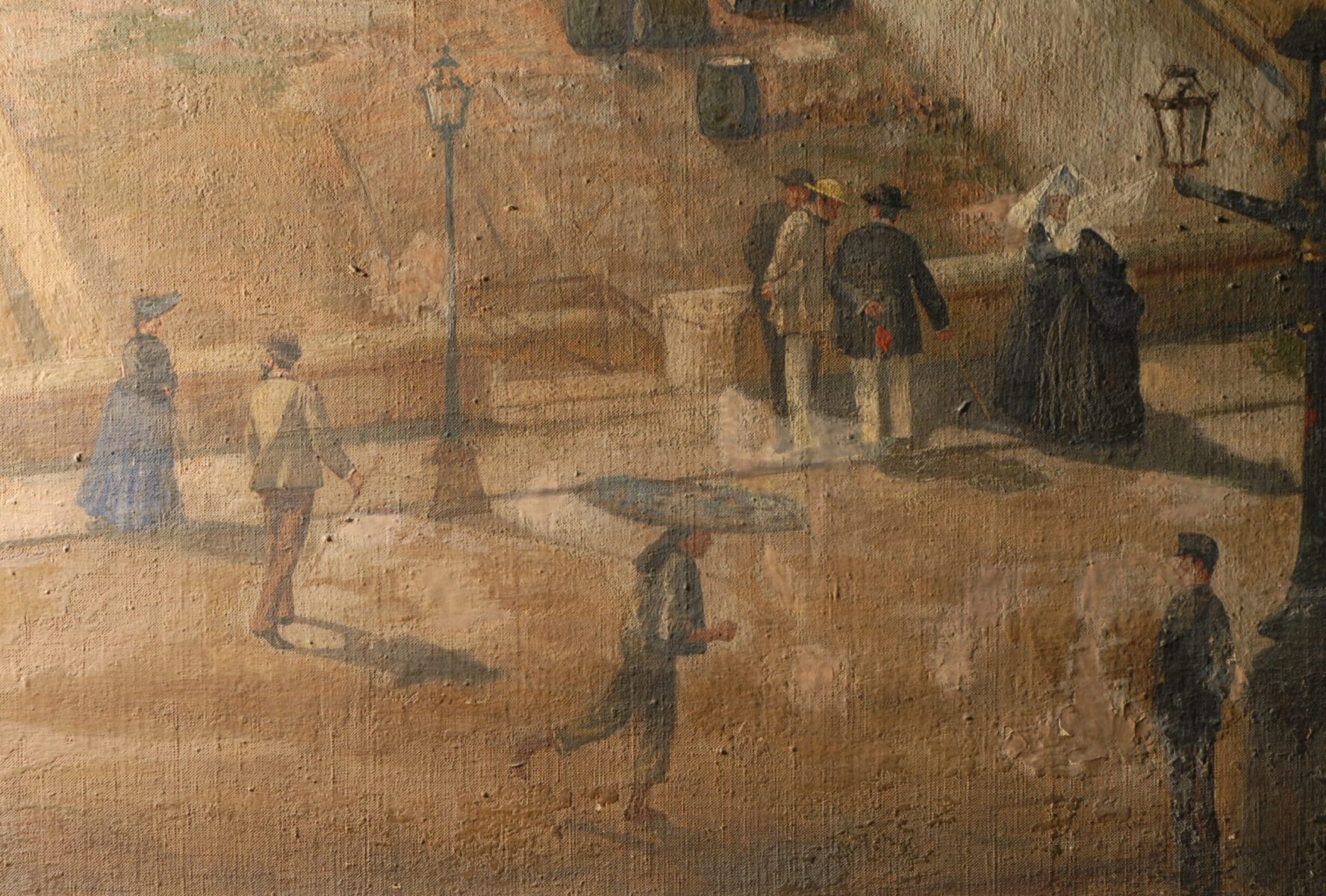
Before the restoration, the entire surface of the work was photographed. Throughout the entire process, numerous details were observed and photographed with different types of lighting: the grazing light that allowed the irregularities, cracks and paint losses to be clearly differentiated, as well as the added stuccos, and the ultraviolet spectrum light that allowed the additions, repaints and varnishes to be distinguished; therefore, it facilitated the location of non-original materials.

The restoration process

Its restoration was complex and laborious. Four conservators and restorers worked on it for more than a year, from October 16, 2006 to December 31, 2007.

The first two interventions aimed to stop the loss of paint and consolidate part of the canvas on the upper and lower margins in order to be able to turn the wooden panel and use the same frame as a support for the restoration. Some strips of canvas were added only where the margin was very damaged from having been nailed several times. Given the fragility of the painting, at that time it was not considered to remove or replace the wooden support, because it was very difficult to know whether the canvas was totally or partially adhered to the wood.

During the restoration process, some small tears and areas where fragments of fabric were missing were found, but in the central part, under layers of paint, plaster and glue, there was a tear measuring 18 x 21 cm. These materials were able to be removed and the tear closed using microsuture techniques and the addition of grafts.

The cleaning of the painting surface consisted of first removing the dirt adhering to the wax that covered the painting surface, and then removing the most visible repaints and added materials, which distorted the general view of the painting and hid much of the original painting. Some repaints covered paint losses, other tears and other areas where the painting had been damaged by a leak. In the negative from 1940, you can see how this damage caused by water leaks already existed.

The cleaning process was extremely complex, both due to the variety of materials added and the dimensions of this work. The repaints covered a significant percentage of the lower part of the painting and hid original details of the port and the sea, but in the upper half they completely covered the sky. The fact that there were materials such as acrylic resins, alkyds and virgin wax on a very absorbent tempera paint had meant that these materials were strongly adhered and, in some cases, it was not possible to completely remove them. Three restorations previous to the one being carried out could be clearly distinguished, but in general they had been carried out following different criteria from those that today define a conservation restoration process. However, it was decided to preserve some of the previous interventions in areas where there was no original paint and the repaint was chromatically well integrated into the work.

Finally, the paint losses were reinstated in order to facilitate the reading of the view of Barcelona without the visual distortion caused by the losses, but being aware that the work currently has a different chromatic appearance than it originally had.

The volumetric reintegration with stucco was very punctual, only in areas where the paint losses were thicker. The chromatic reintegration was done following the criterion of reversibility and legibility, so that it was distinguishable in the observation at a short distance but was not perceptible in the general observation of the work.

This piece is currently on display in the MMB’s ships within the exhibition Catalunya Mar Enllà . Three centuries of Catalan Navy. XVIII-XX, in the scope of The new Revolution .

OTHER ARTICLES
The return of the legend
Landscape, culture and maritime essence
The Yes We Sail project, promoted by Dani Anglada, aims to make sailing accessible to blind people.
Un projecte d’humanitats digitals i història marítima
One of the most dangerous jobs in the world, an environmental and human problem
The first naval-air amphibious operation in history