History of water skiing and wakeboarding in Catalonia
According to official sources, water skiing began in the United States in the early 20th century, but according to popular sources, its origin also comes from the French Mediterranean coast around very similar dates. In Catalonia, the origins date back to around the nineteen fifties, in parallel with the development of coastal tourism. The first exhibitions took place on the Costa Brava, where the calm waters and the availability of marinas made it possible to introduce the sport.
Over time, the practice became maintstream with the creation of the first clubs and centres specialising in lakes and rivers with calm waters. The nineteen seventies and eighties marked a time of expansion, coinciding with the increase in recreational boating and the use of motor boats specifically equipped for water skiing. Catalonia was at the forefront with the celebration of the World Water Ski Championship in Banyoles in 1971.
Currently, water skiing remains a niche sport, but one with a loyal following, which combines professional competition, amateur hobbyists and leisurely recreation.
Types of disciplines
Classic water skiing: slalom, tricks, jumps and overall.
- Slalom: this category consists of zigzagging around 6 buoys while the boat passes through the middle, always passing by the buoys at the same distance, leaving 3 on the right and 3 on the left. The objective is to get around the 6 buoys at the highest recorded speed on the boat and with the shortest possible rope distance.
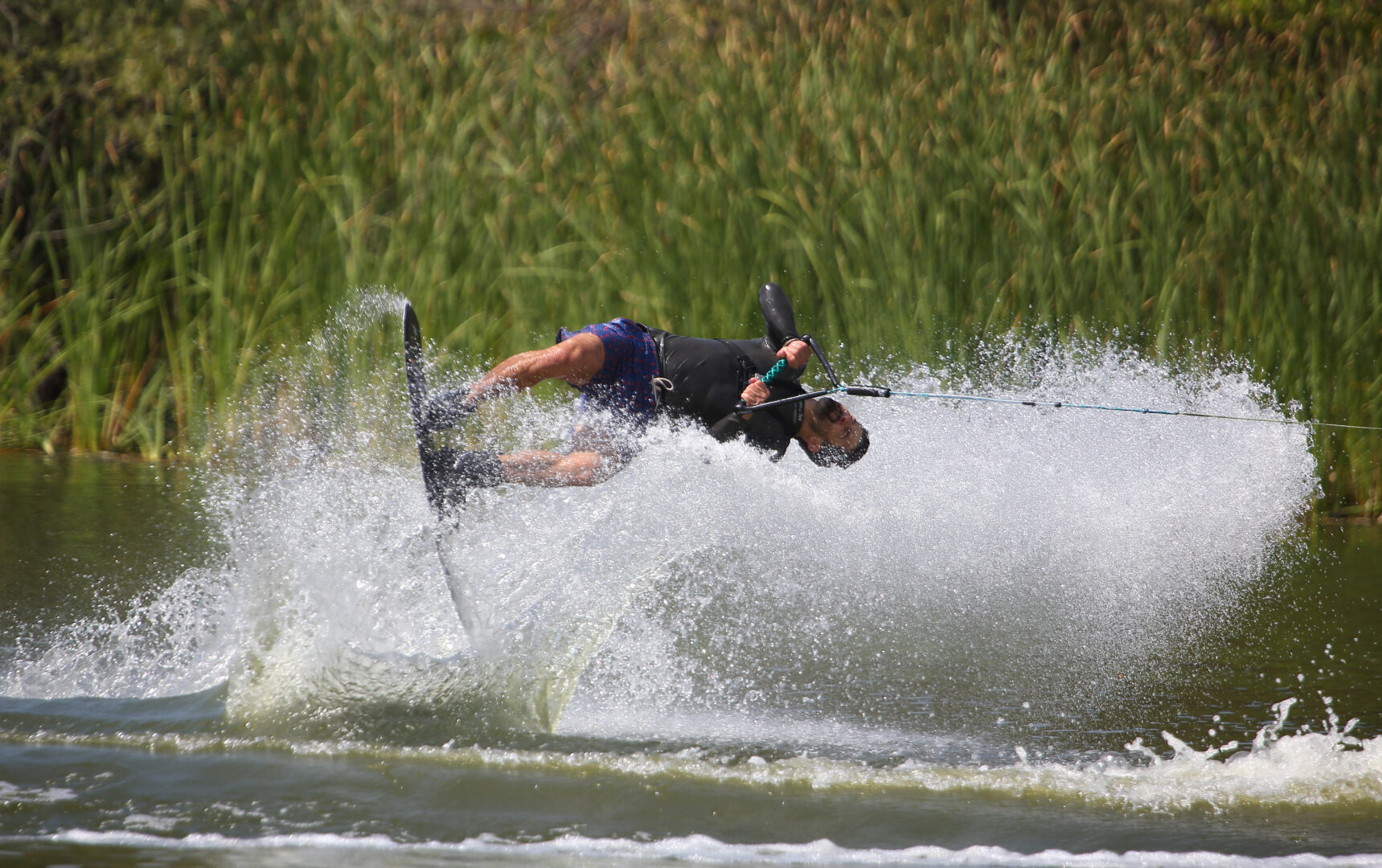
- Tricks: this event involves two 20-second turns, in which the skier must perform as many acrobatic tricks as possible without falling. Each acrobatic trick has an established score and whoever scores the most points wins.
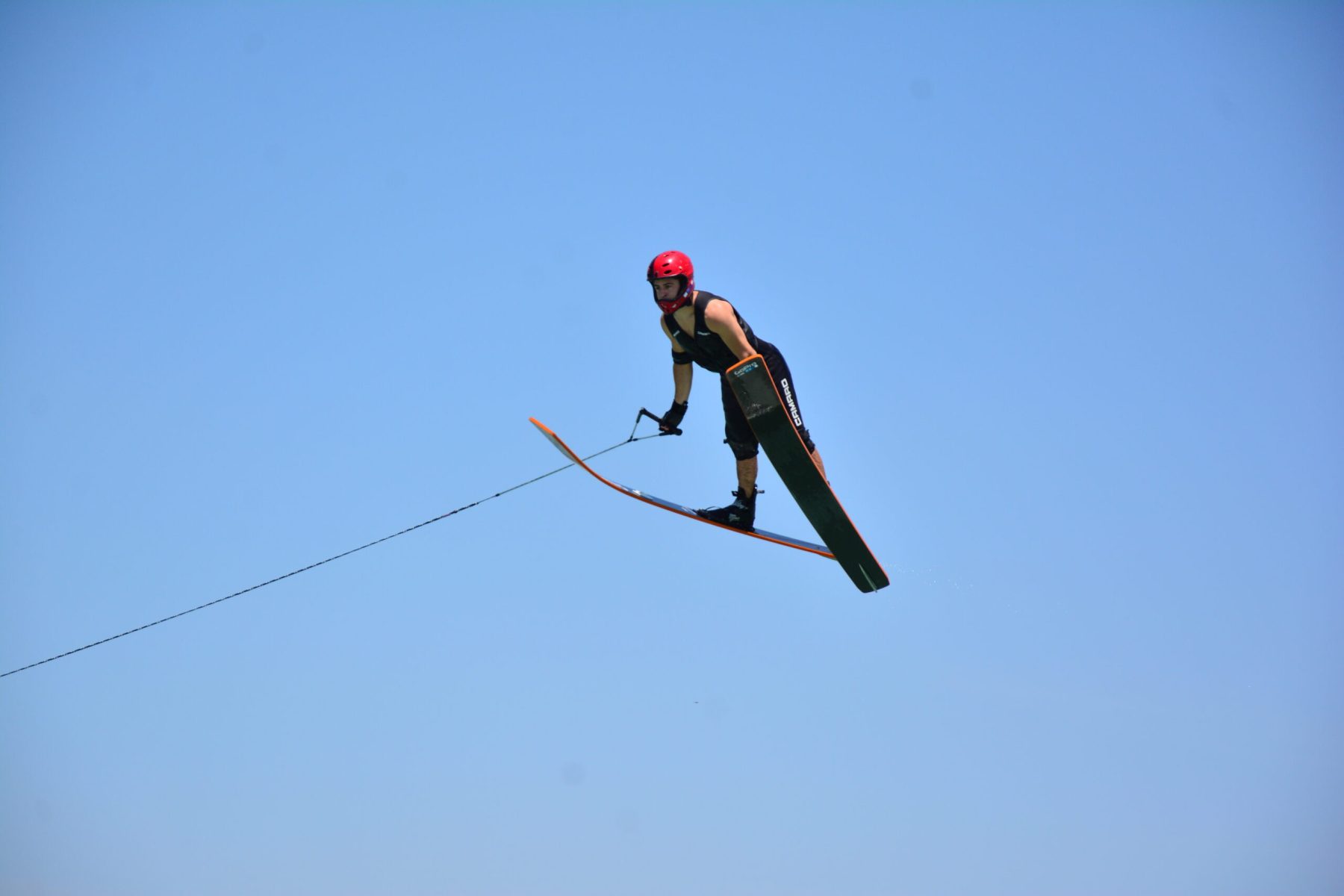
- Jumps: this contest involves a ramp about 6 metres long and almost 2 metres high, on which skier must make the longest long jump possible (the world record is more than 70 metres).
- Overall: this event involves the weighted sum of the scores from the 3 previous events. Only skiers who compete in the 3 previous categories can compete in this event; the overall competition is the most demanding and complete contest.
History of wakeboarding in Catalonia
The history of wakeboarding in Catalonia can be found in various reservoir in Catalan waters, such as the Baells and the Sau. After the opening of various cable ski parks, such as BCP in Barcelona, along with other facilities in Cubelles and Arboç i Montgat, one of the best sports facilities can be found in the Olympic Canal of Castelldefels. The site offers a 5-pulley cable ski, hosting regulated international competitions. This is the birthplace of the incredible wakeboarders who today continue to bring joy to our sport and disciplines.
Wakeboarding:
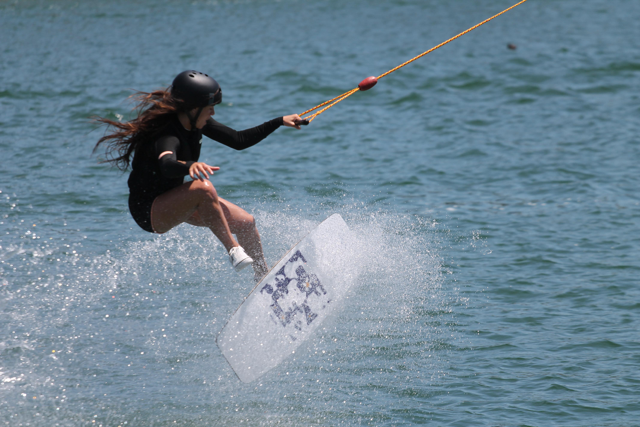
- Wakeboarding and wakeskating: Both sports involve skiers hold onto a trapeze-style handlebar behind a boat and they must perform jumps and tricks in the wake. These sports consist of performing the greatest number of tricks with the highest aesthetic quality, execution and height possible within a circuit.
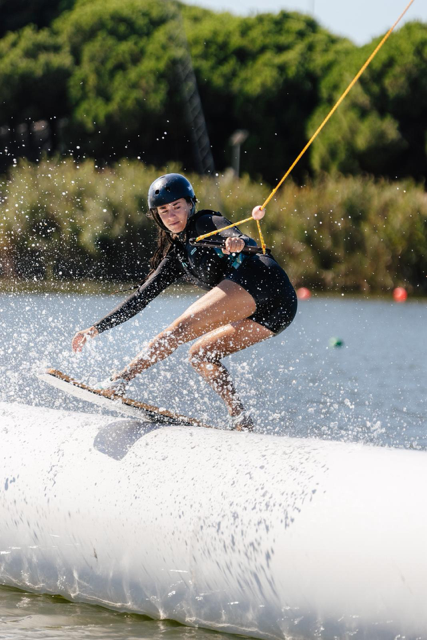
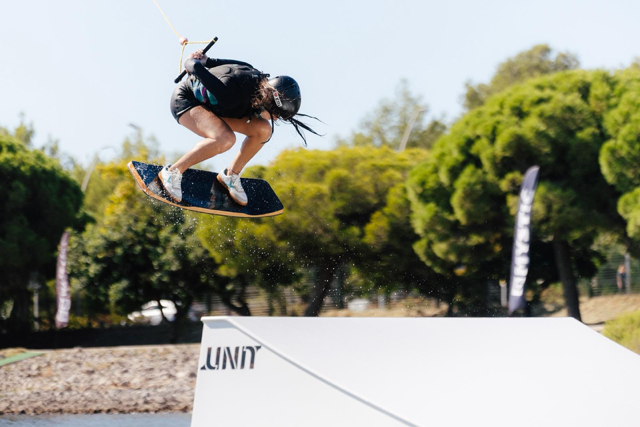
- Cable wakeboarding and wakeskating: In this sport, skiers also hold onto a trapeze-style handlebar but this time to a rotating cable ski along an established circuit with obstacles and they must perform tricks both in the water and in the different modules.
In both these sports, athletes are required to wear a helmet as well as a life jacket in all cases. They are also scored in both events as in the previous discipline and they have one full lap around the circuit to do it.
Water ski boats
Boats are key in these disciplines. Specialised boats have a hull designed to generate controlled wake and sufficient power to maintain constant speeds. They incorporate ski tow pylons and GPS speed control systems. Competition boats guarantee technical equality between participants.
A passionate community
Beyond competition, wakeboarding has created a cohesive community in Catalonia. Coaches, families and athletes share their experiences and effort, reinforcing the bond with the values of the sport. This collective spirit has been fundamental to keeping the practice alive over the years.
Clubs and locations in Catalonia
Catalonia has a network of clubs and spaces suitable for water skiing and wakeboarding. Some of the most important sites include:
- Olympic Channel of Catalonia (Barcelona)
- Ventalló Water Ski Club (Girona)
- 2Llacs Water Ski Club – Lleida Ski&Wake (Lleida)
- La Cabanya Wakepark (Tarragona)
- DeltingParks (Tarragona)
- El Rancho Wakepark (Tarragona)
Leading Catalan athletes
Catalonia has been the birthplace of athletes who have left their mark in the four disciplines of classic water skiing on a national, European and world scale, such as the Mill brothers (Xavi and Pep), the Morros siblings (Ivan, David and Andrea), the Ballús brothers (Roger and Jordi), the Noguera siblings (Àlvar, Lluís and Laura) and the De Medrano sisters (Júlia, Cristina and Sofia). All of them have contributed to placing Catalonia on the European and world water skiing map.
Prominent wakeboarding and wakeskating athletes include Enric Dosta, Luis Montana, Kike Cornejo, Israel Planas, Paco Bengerel, Raúl Lopez, Noa Tamaral, Elena Bodi and the current World champion, Telma Cester, who have all placed these two events on the European and world scene.