They may soon turn 100 years old, yet the dragons are still as youthful and energetic as ever, despite their slightly aristocratic appearance. They may no longer enjoy the aura of being Olympians, though that probably makes them even more attractive. Their health is still in ship shape.
In 1928 the Royal Gothenburg Yacht Club was looking for a type of sailboat that was affordable for young people. During a time of economic crisis, most designs were too expensive for young people. That is why it launched a contest to achieve a “relatively fast, attractive and seaworthy” keel cruiser, based on the standard of 20 square metres of sail. A year later, the first dragon was made by the Norwegian Johan Anker.
The design is reminiscent of a 6-metre FI (for example, it is relatively narrow, with large projections both fore and aft, and the rudder is attached to the keel), but it was simpler and less expensive. It allowed people to cruise (it had a small cabin with two bunks, so it could make trips along the coast) while the aim was to create a single type, so that everyone could compete on equal terms.
Although dragons were intended as a cruiser, they enjoyed notable success in regattas. At first they participated in club regattas —they were adopted by the Royal Gothenburg Yacht Club, the Royal Danish Yacht Club, and the Royal Norwegian Yacht Club— but regional competitions soon began, especially in the Scandinavian and Baltic countries, where the ship was first created.
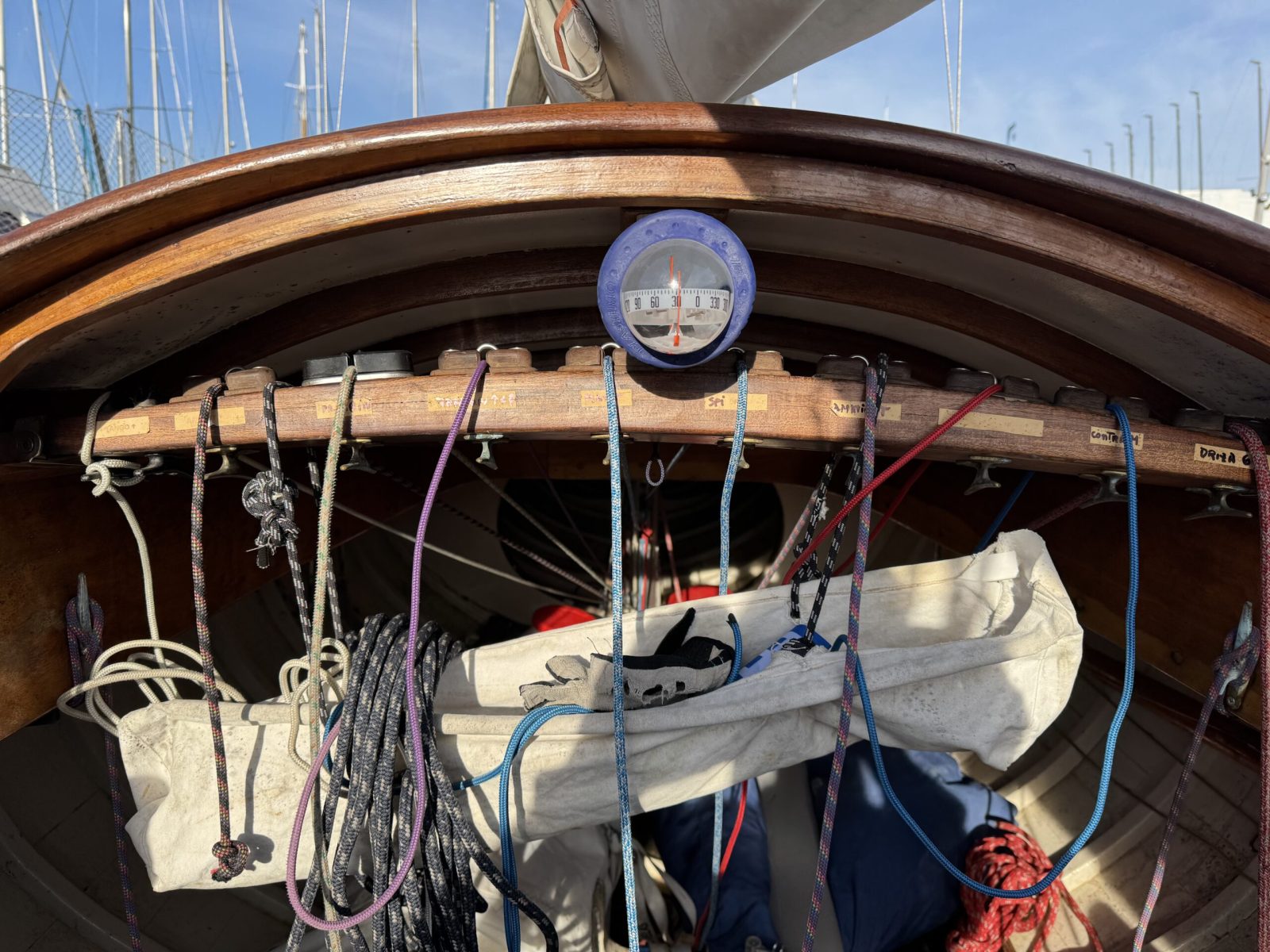
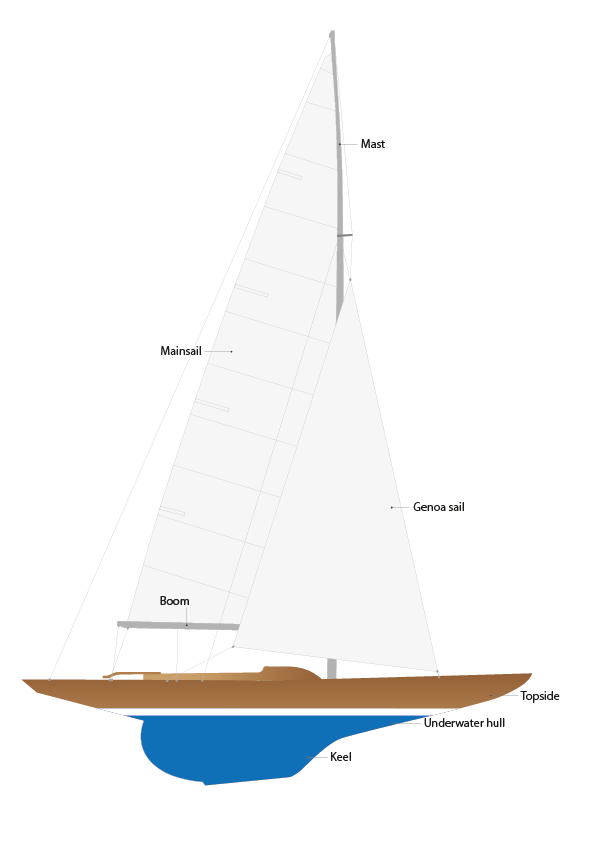
in order to sail in light winds, dragons lacked a bit of cloth, so the jib grew to become a Genoa sail. To keep the sail centred in the same place, the mast was moved back 40 centimetres. At the same time, the crossbeams were shortened to be able to catch the Genoa sail properly, and a fiddle block was added to the top of the mast, which makes it possible to control the bending of the sail and improve the performance of the mainsail.
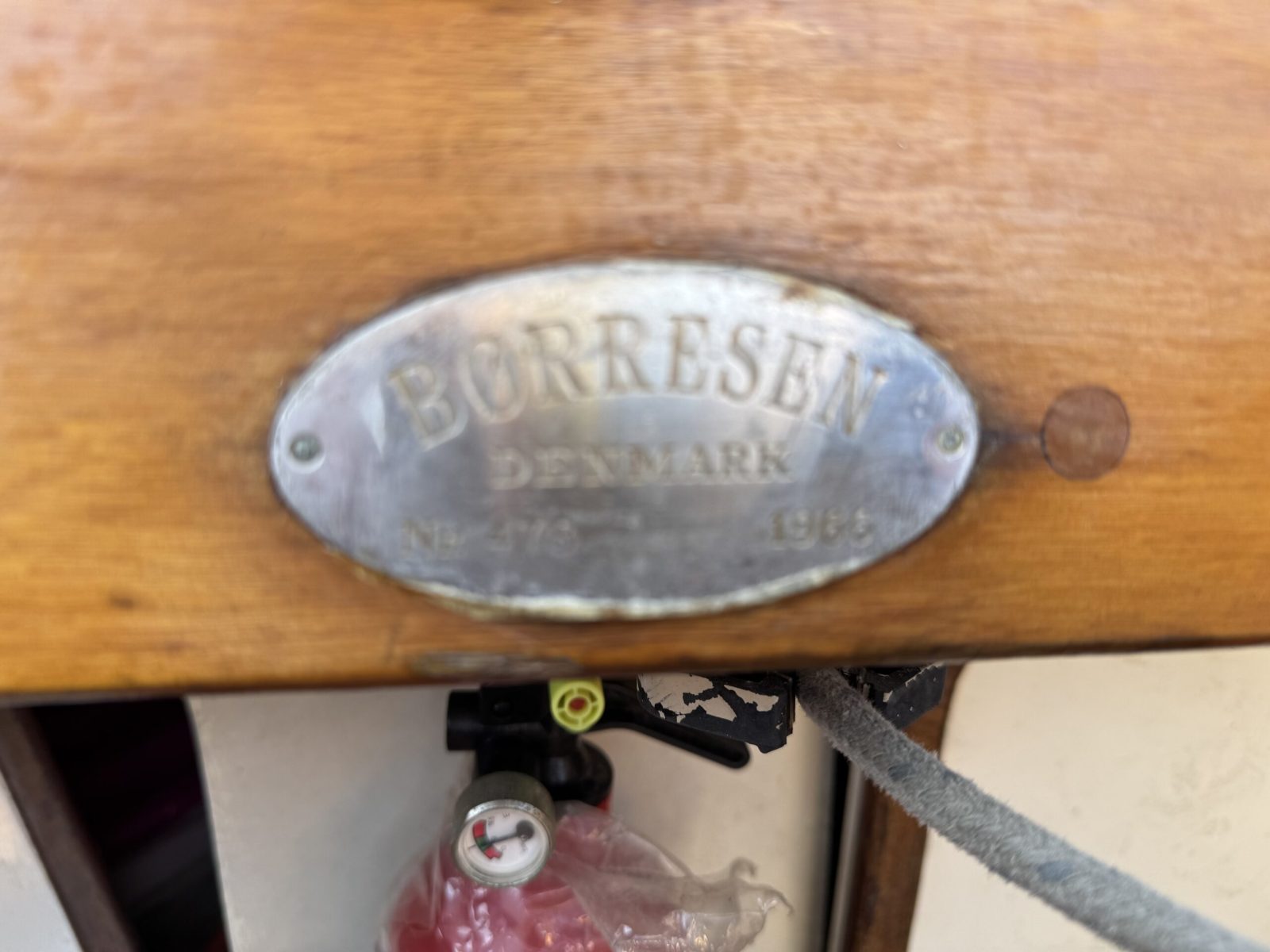
A Borrensen from 1966
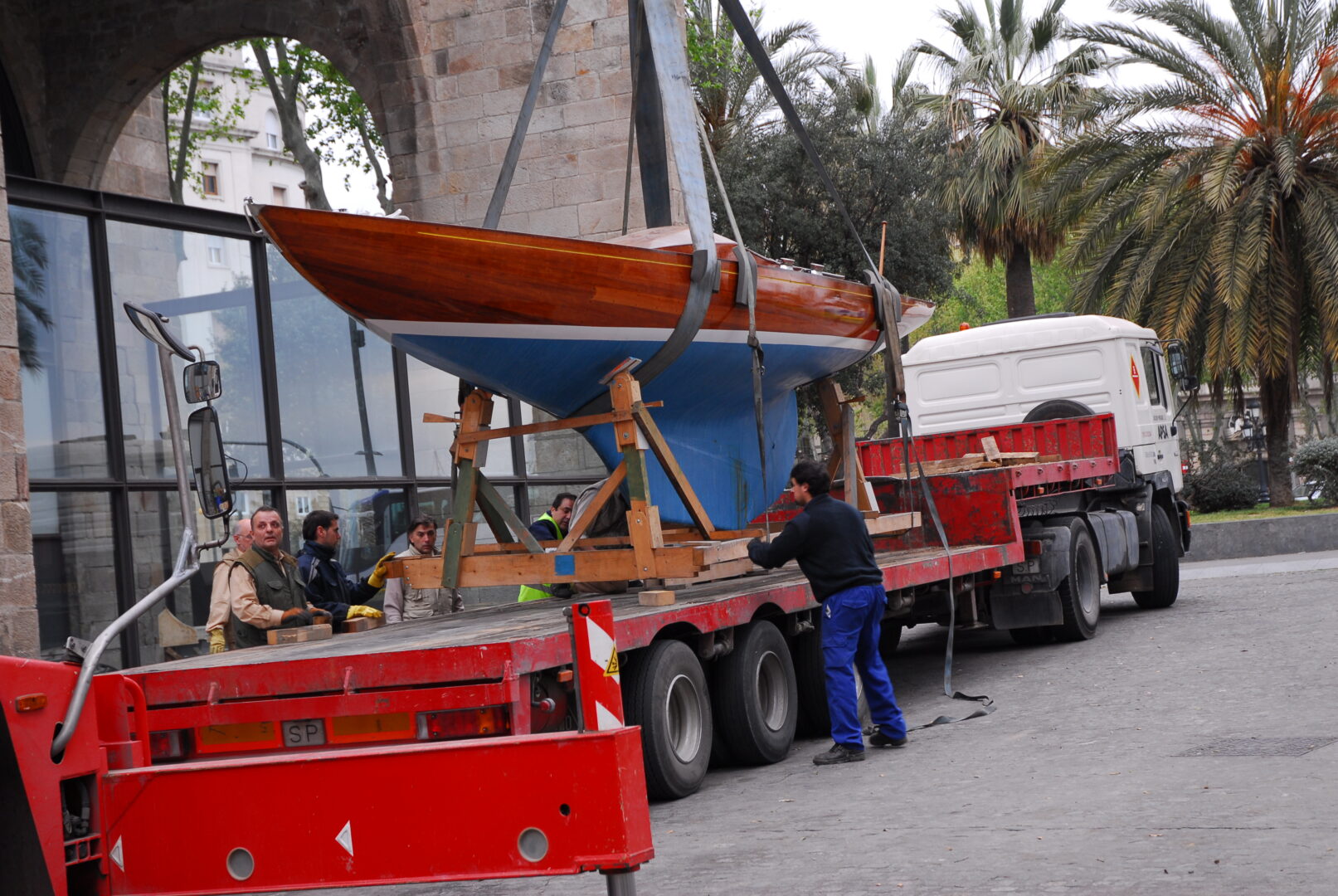
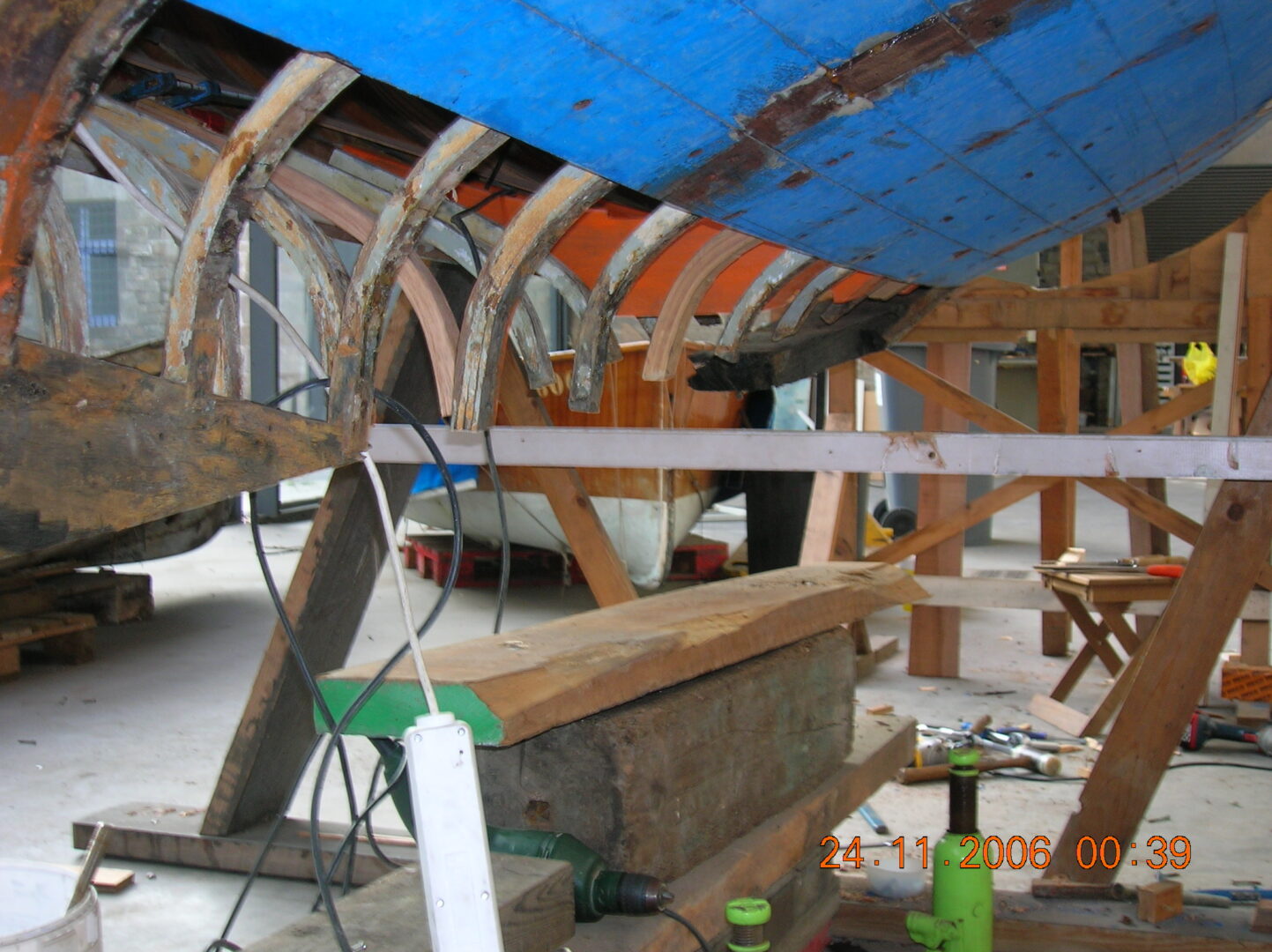
In 2003, the brothers Josep Maria and Enric Montal Costa offered the Museu Marítim de Barcelona a dragon that they owned in the port of Arenys. It is true that this sailboat was not in good condition and needed a thorough restoration —in fact, it turned out to be worse than it seemed— but it was a good opportunity to acquire a classic ship and get it sailing again.
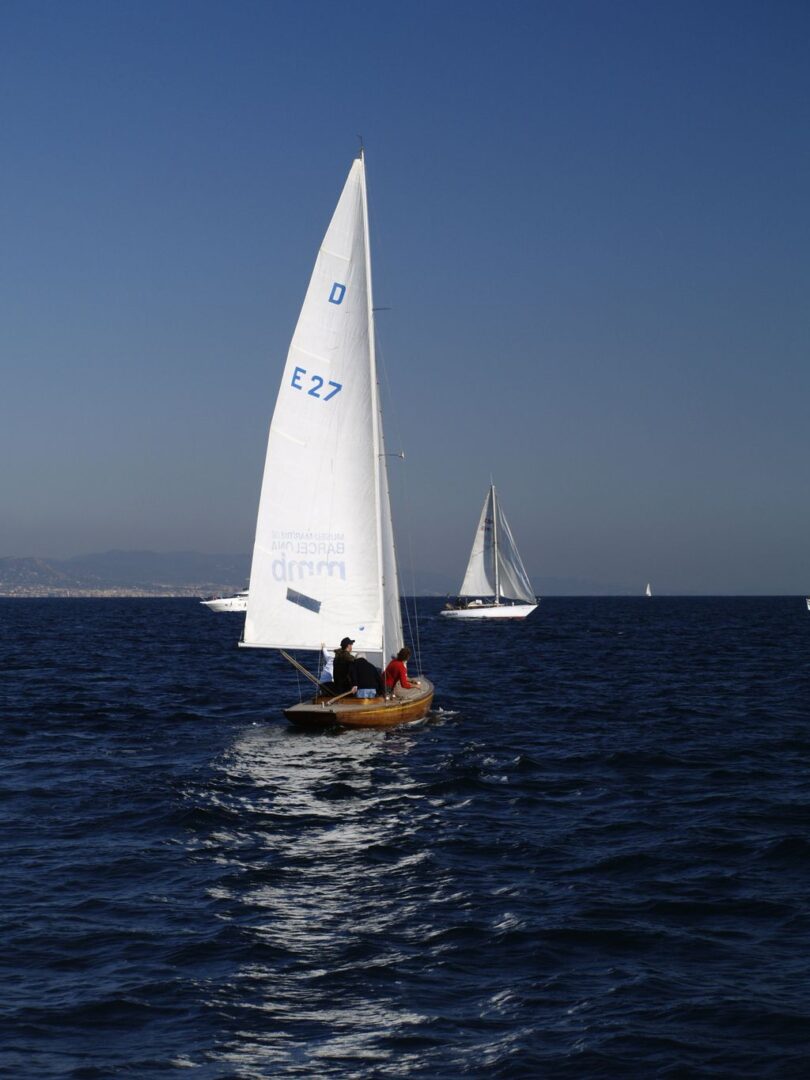
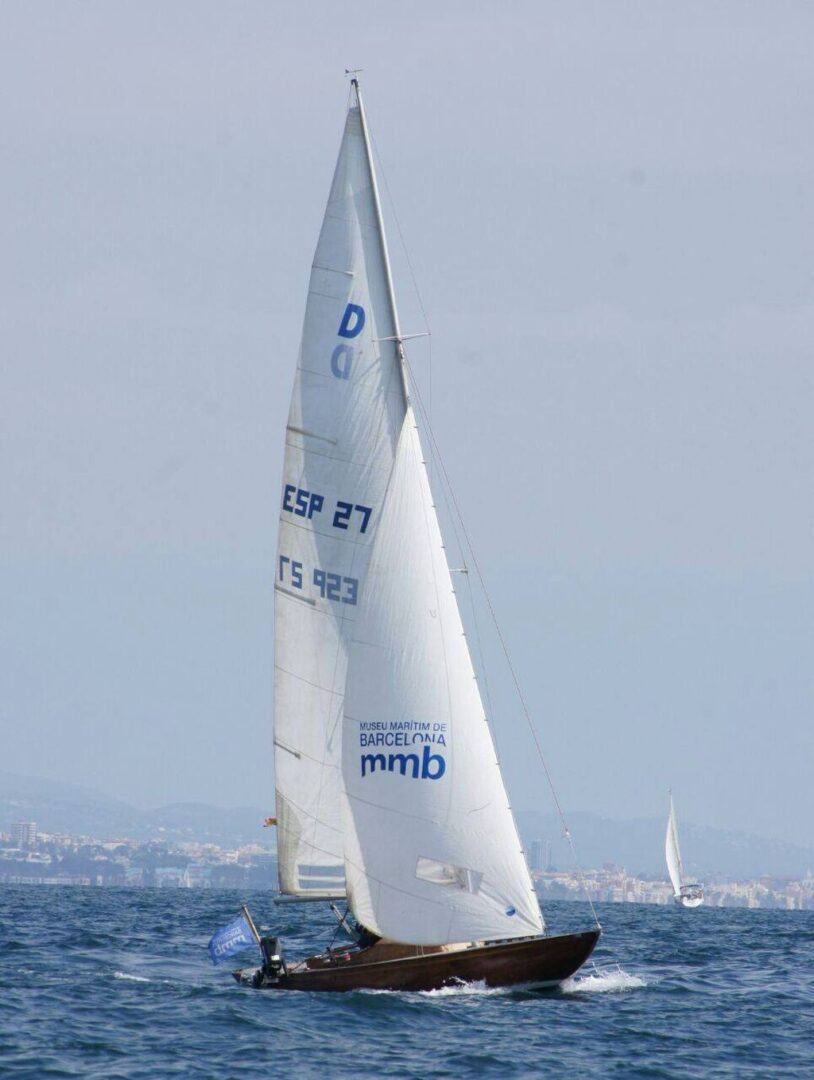
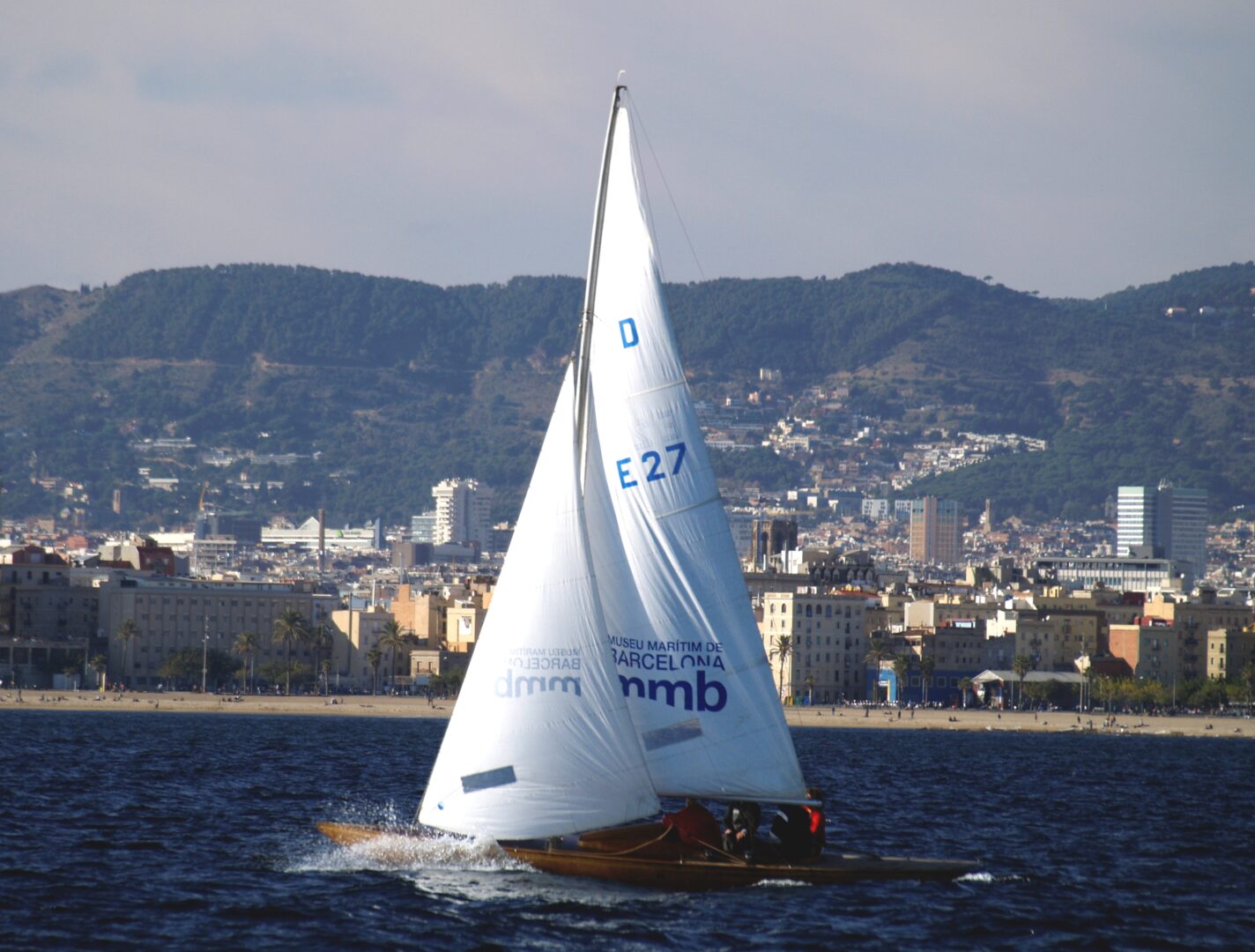
The Drac is a wooden dragon built in 1966 at the Borrensen shipyards in Denmark, when Borrensen was the most prestigious dragon manufacturer; fibreglass in the hull and aluminium masts were not introduced to this class until the early 1970s.
The Drac was imported in 1966 by the Spanish Sailing Federation and then belonged to various individuals, until it passed into the hands of the Museu Marítim de Barcelona in 2003, which thoroughly restored it in 2005. The museum changed the keel, replaced about 20 frames, replaced the rudder blade and stem, totally reconstructed the transom, deck and cabin, built two bulkheads to reinforce the hull, and added a general treatment of paint and varnish.
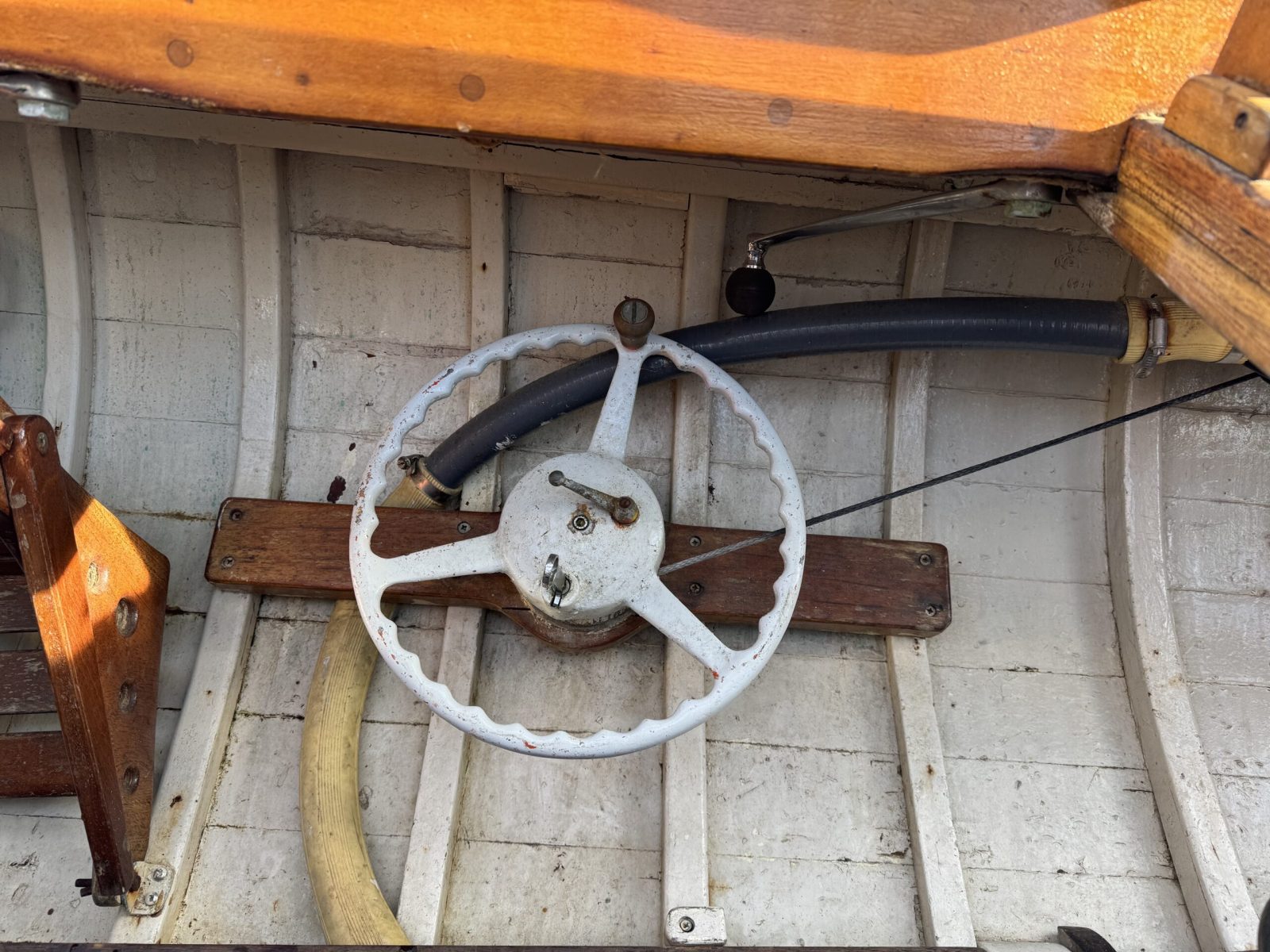
The Drac returned to the water in 2008. Since then it has participated in numerous regattas and has sailed through the waters of the city of Barcelona. From the very beginning, the MMB’s intention has been to bring the Drac back into active life.
The ship is moored at the docks of the Reial Club Marítim de Barcelona and will now enter the shipyard again for a thorough overhaul, which will basically entail checking the port transom, repairing a broken beam and rebuilding the deck, in addition to adding some coats of paint and varnish.
A fleet around the Fortuna
The Spanish Sailing Federation imported that dragon, bearing sail number E-27, to reinforce the fleet that was being formed in Barcelona, where the then Prince of Spain wanted to compete, with the intention of taking part in the Olympic Games.
Dragons thus experienced a golden age in Spain, especially around Barcelona, where a fleet of this class was formed, both at the Reial Club Nàutic de Barcelona (RCNB) and the Reial Club Marítim de Barcelona (RCMB). The dragon purchased by the Spanish Sailing Federation was part of this fleet.
Juan Carlos I of Spain owned the dragon christened Fortuna, also built by Borrensen, which had been given to him by the Greek royal family for his wedding to Sofia of Greece. Currently, the Fortuna is in the Museu de l’Esport, on Montjuïc. Juan Carlos I’s father, the Count of Barcelona, Juan de Borbón, also had a dragon (the Hispania VII ), built in the Abascal shipyards of Santander in 1961, with which he sailed in Cascais (Portugal). Santander is precisely the first place in Spain with dragons, starting in 1959. A few years later, Pau Ferrer built two in Mallorca while the Lagos shipyards of Vigo built three.
At that time there was already a Drac in the first dragon regatta in Spain, from 2 to 6 September 1959, which featured a Drac, built in Santander that same year, led by the brothers Santiago and José Pi and Joan Mirangels, from the Marítim de Barcelona. This Drac, with the same crew, won the first Spanish Championship of that class of vessel, organised by the RCMB in 1960.
Dragons were very popular in the Greek royal family. So much so that Prince Constantine won the gold medal in the Rome Olympics (1960) and his sister Sofia actively participated in training, to the point that she was part of the reserve crew in that competition.
In fact, Sofia of Greece sailed so well that she even won some regattas in Barcelona. Her competitors still remember that she excelled especially in light wind conditions, so much so that a rumour spread around the docks that she was asked to stop sailing so as not to hurt her husband’s results.